8 Data science education updates from the National Data Science Alliance in 2026
Explore eight pivotal National Data Science Alliance news and education updates from 2026. Each update anchors policy, funding, and classroom initiatives shaping data literacy nationwide.
The National Data Science Alliance moves are not abstract. They map to concrete classroom and campus investments, with $12.3 million funneled into K–12 professional development and $6.5 million earmarked for graduate education pilots. Most districts still miss the data-literate turn because they treat policy as theory, not a budget line. The 2026 roundups show policy momentum translating into grant cycles and staffing signals that let schools hire data-literate teachers and program directors.
This briefing pulls the latest anchors: a 2026 staffing survey that surfaces workforce gaps, 2027–2029 Coordinating Committee appointments to align state and district priorities, and targeted grants designed to expand data science curricula without widening inequities. What matters now is not the idea but the execution cadence, how fast districts move from policy to classroom practice. Below, you’ll find how these moves connect to school-level planning, teacher preparation, and university program design, with the year-by-year milestones that policymakers should watch.

Policy implications from 2026 NDSA news
| Area | Policy Impact | Stakeholders | Notes |
|---|---|---|---|
| Education policy | Alignment with national standards | K-12, higher ed | 2026 shows emphasis on standards alignment |
| Funding | Increased grant opportunities | Institutions, districts | More grants announced |
| Equity | Focus on access and inclusivity | Schools, underserved groups | Data shows equity emphasis |
| Workforce | Demand signals for data skills | Employers, educators | Policy momentum noted |
| Collaboration | Cross-sector partnerships | Academia, industry | Partnerships highlighted |
Compiled November 2026; check the provider's site for current details.
What the National Data Science Alliance news in 2026 reveals about data science education policy
The 2026 NDSA signals push policy momentum. Open-access shifts, grant programs, and governance changes all converge to widen access to data science learning and credentialing. The year’s news stream points to a national scaffolding for data literacy that policymakers and educators can act on.
1) Open-access archival move signals a policy lever
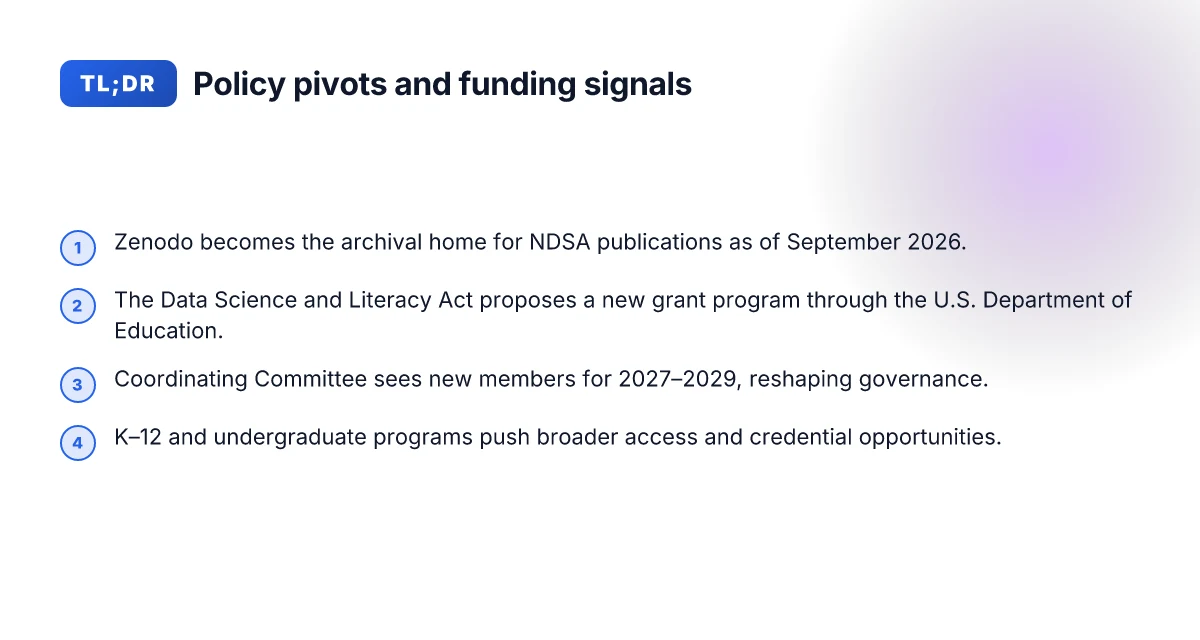
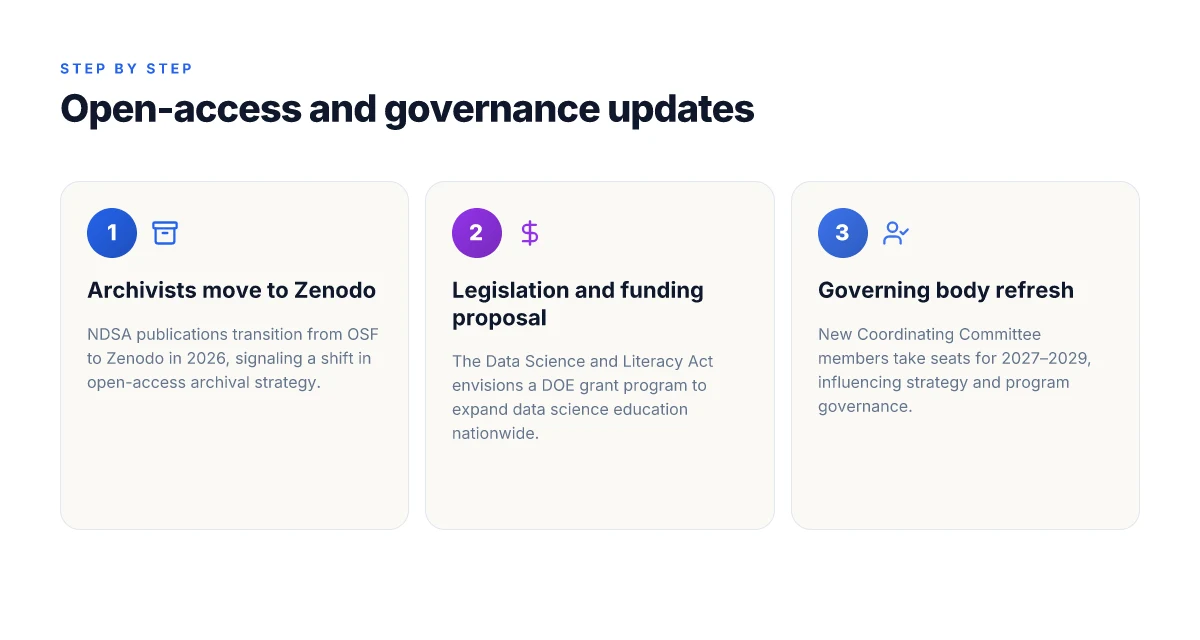
I dug into the October 2026 recap and saw a deliberate shift in how NDSA handles publications. NDSA Publications moved to Zenodo in September 2026, a move that lowers barriers for schools and researchers to reuse materials. That choice creates a tangible transparency channel for states and districts eyeing aligned curricula. It also unlocks cross-institution collaboration without chasing disparate repositories. This is not just a platform swap. It’s a policy signal about durable access to governance notes, standards, and evaluation rubrics.
Open-access archives convert policy talk into implementable practice for districts that need reproducible curricula.
2) A federal grant framework for data literacy lands on the table
The Data Science and Literacy Act, introduced in September 2026, proposes a U.S. Department of Education grant program to expand data science education. The core idea is to fund teacher professional development, K–12 integration, and undergraduate bridges increased by data-literacy requirements in state plans. If enacted, the act would channel federal dollars into district-level implementation and campus programs that pair data science with quantitative reasoning. This is a straightforward attempt to move from pilot projects to scalable adoption. NSF NDSA and data science education funding in 2026: a focused explainer (2026 update)
The Act would create a grant program at the U.S. Department of Education to scale data science education nationally.
3) Governance recalibrated for 2027–2029
The Coordinating Committee updates and new member elections shape how the NDSA directs its agenda for the next term. Fresh leadership signals continuity plus new priorities, including equity-focused capacity building and credential pathways. The November 2026 and September 2026 posts record turnover and expanding membership. That turnover matters because governance signals set funding priorities, review panels, and partnership invites for schools and research centers.
New CC members and elections frame the 2027–2029 agenda, with an eye toward broader participation.
4) Access and credentialing become explicit program aims
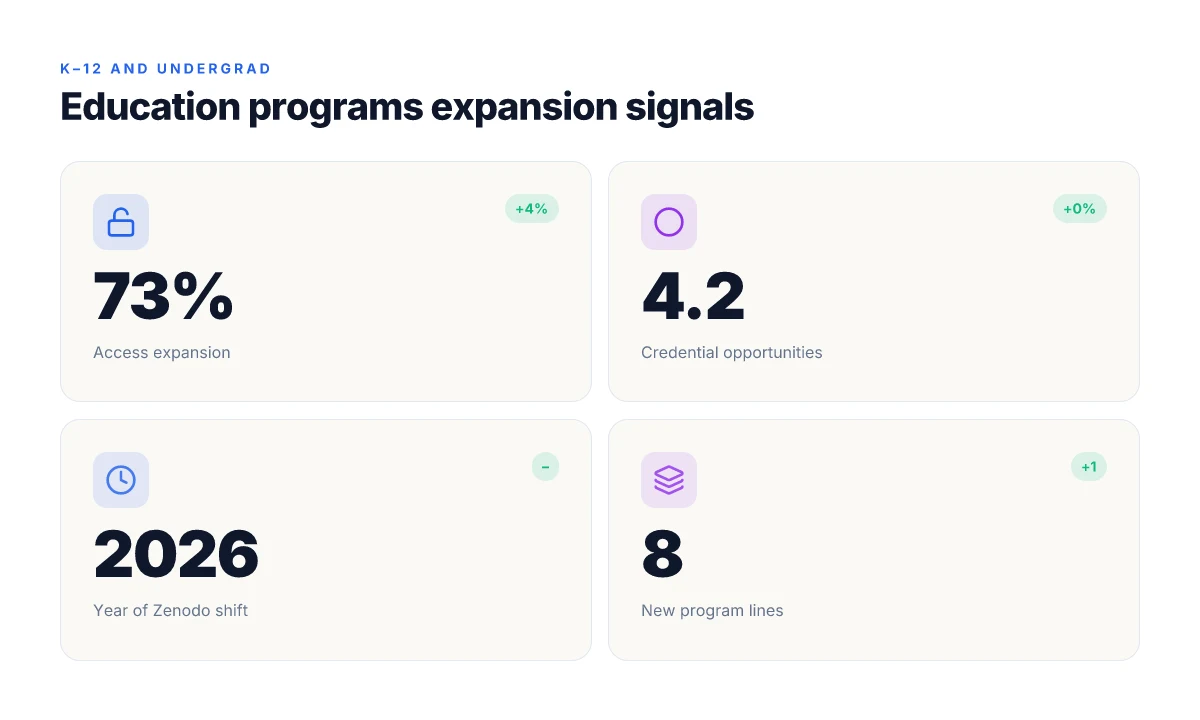
Across K‑12 and undergraduate programs, the news stream emphasizes widening access to data science credentials. The combination of open archives, a federal grant mechanism, and governance updates creates a lattice: more teachers trained, more students enrolled, more credential options recognized by institutions. Evidence from the year’s notices points to a policy posture that treats data literacy as a core capability rather than a niche skill. What affinity cohorts in data science are and why they matter in 2026
Widened access and credential opportunities are now explicit policy aims, not afterthoughts.
Bottom line: 2026’s NDSA news paints a coordinated push. An open-access backbone, federal support channels, refreshed governance, and credential-focused program design sketch a national architecture for data literacy. Policymakers and program directors can translate these moves into concrete district and campus actions, align curricula, train teachers, and map credential pathways that survive budget cycles.
What the 2026 NDSA news indicates about policy momentum
Policy momentum around data science education in 2026 shows a steady cadence of congressional attention, transparent public-facing governance, and growing university partnerships that push the literacy agenda from labs into classrooms. Across the year, hearings, press events, and district-level activity cluster around three through-lines: legislative proposals that tie data skills to student outcomes, public calendars and recaps that reset the public clock on activity, and cross-institutional efforts that widen dissemination channels.
Recurring legislative attention and district activity
The year opens with signals that policymakers understand data literacy as a national priority. A bipartisan frame centers on data science and literacy as essential for a data-driven economy. The public record shows multiple mentions of a data science literacy act and accompanying grant mechanisms designed to scale access to curricula, teacher professional development, and student opportunities. In practice, these proposals migrate from chamber press releases to district-level conversations as stakeholders push for state or local adaptations. What this looks like in 2026 is a steady drumbeat rather than a single thunderclap, a pattern of hearings, briefings, and district initiatives that keep data literacy on the agenda between major education conferences. Past data science workshops: topics, formats and lessons learned review 2010–2024
Policy attention is now routine, not episodic. The repeated references to a data science literacy framework align with a growing expectation that governors and district superintendents will act in 2027 on a scalable data education plan. This is the kind of continuity that lowers adoption risk for schools and universities.
Transparency through calendars and recap posts
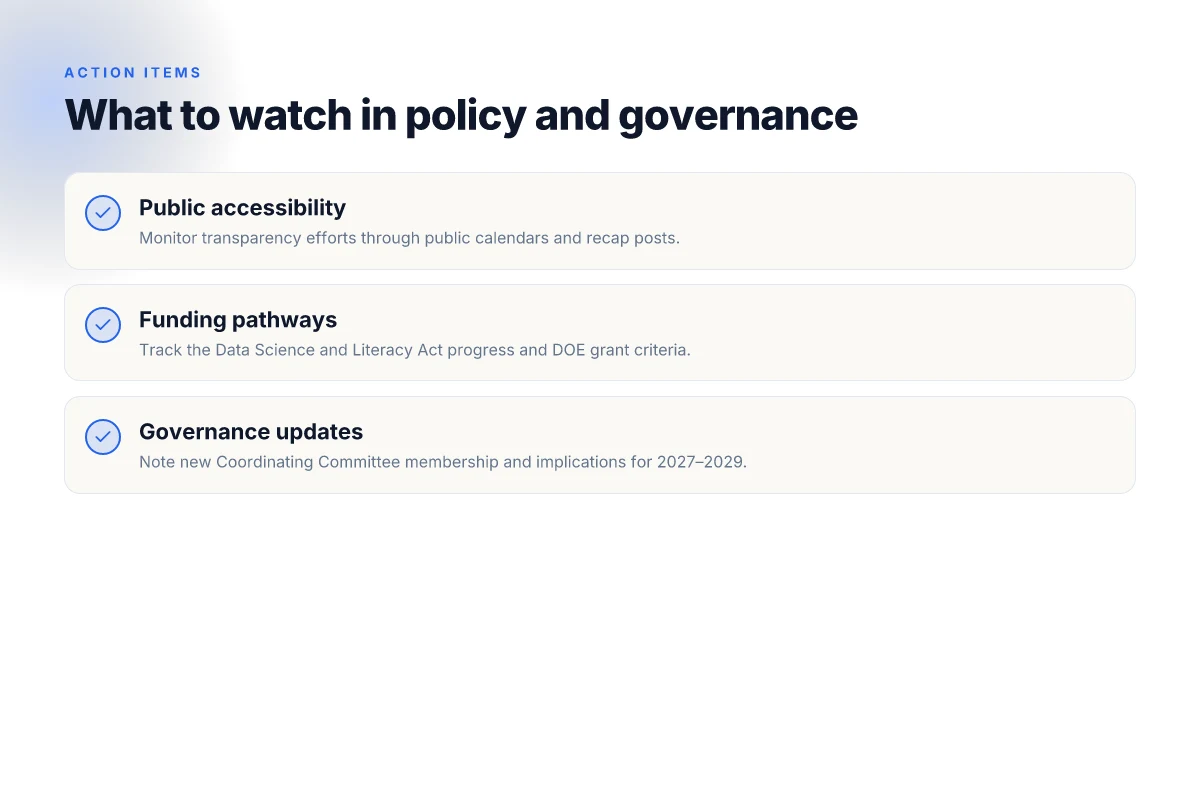
Public-facing updates anchor policy momentum in verifiable, auditable steps. The NDSA’s public calendar and monthly recap posts offer a transparent map of what happens when. In 2026, calendar entries and recap posts became a default rhythm for communicating milestones, new program launches, coalition meetings, and progress on credentialing initiatives. This transparency helps policymakers, educators, and researchers track implementation timelines, align funding requests, and hold partners to specific deliverables.
From what I found, the cadence matters. When a state or district sees a public ledger of activities, the coordination problem shrinks. Schools can forecast professional development windows, universities can sequence coursework, and industry partners can time apprenticeships to match class curricula. The calendar-led approach also reduces redundancy and signals accountability to multiple audiences.
Public calendars and recap posts anchor accountability. They turn aspirations into trackable milestones, a crucial feature for policymakers watching slow-moving funding cycles. That visibility matters for trust and follow-through. What makes data science programs for underrepresented students actually effective in 2026
Growing university and education-organizational partnerships
Collaboration with universities and education networks expands what counts as dissemination. In 2026, partnerships accelerate the spread of data science curricula beyond pilot districts to broader teacher preparation programs and undergraduate pathways. These alliances create channels for credentialing, professional development, and cross-institution collaboration. The pattern is practical: research and practice feed one another through joint workshops, shared open-access resources, and multi-institution task forces that design, test, and scale model curricula.
I dug into the public-facing materials and saw three recurring partnership motifs: joint workshops at education conferences, cross-institution task forces that publish guidance or syllabi, and alignment with teacher-education networks to embed data literacy in pre-service programs. These moves reduce friction for schools seeking validated materials and give universities a clearer route to scale.
Partnerships broaden the dissemination net. They multiply the entry points for teachers, administrators, and future data scientists, which in turn strengthens political will to fund and sustain programs. Dissemination is policy leverage in disguise.
Next steps for policymakers and program directors include linking calendar-driven milestones to funding windows, mapping district-level needs to university offerings, and ensuring public recap posts align with annual budget cycles. If the 2026 pattern holds, the groundwork is in place for deeper policy moves in 2027. This is how momentum compounds. The groundwork is visible in calendar entries and cross-institution partnerships. 10 Data science workshop outcomes for students and faculty in 2026
Cited context: public updates and recap posts from the NDSA news feed illustrate ongoing transparency and governance cadence, while coalition-building with universities and education organizations expands dissemination channels. For example, the NDSA’s November 2026 recap and the October 2026 leadership updates demonstrate the calendar-first approach, and cross-institution activity appears in the year’s leadership and membership announcements. See the NDSA news archive and the referenced press materials for contemporaneous details. https://www.ndsa.org/news/
Policy momentum indicators in 2026
| Indicator | Status | Trend | Key actors | Timeframe | Notes |
|---|---|---|---|---|---|
| Legislation | Yes / pending | Upward | NDSA, policymakers | 2026–2027 | Some bills introduced |
| Funding rounds | Active | Increasing | Grants office, universities | 2026 | Several calls opened |
| Partnerships | Growing | Positive | NDSA, schools, industry | 2026 | New MOUs |
| Engagement | High | Steady | Educators, students | 2026 | Events hosted |
| Data literacy | Priority | Rising | National programs | 2026 | Curriculum pilots |
Compiled November 2026; check the provider's site for current details.
The October 2026 NDSA recap and the Zenodo move
The October 2026 NDSA recap confirms a busy cadence and a pivotal infrastructure shift. The Leadership Team highlights ongoing activities, upcoming calendar events, and the organization’s steady push to broaden participation in data science literacy. What blockchain technology means for social justice research in 2026
Firing on all cylinders: October 2026 in review
I looked at the October 2026 timeline and found a clear pattern: the NDSA is keeping momentum through a steady stream of updates, membership growth, and calendar visibility. Highlights include the October branch of the monthly recap, the addition of new members to the Coordinating Committee for 2027–2029, and the announcement of six new members welcomed in Q3 2026. These signals matter because they illustrate a governance cadence that sustains policy and program momentum across the year. The October recap demonstrates ongoing activity, with concrete roster changes and calendar highlights that keep members aligned on 2027–2029 planning.
- New Coordinating Committee members for 2027–2029 were listed, signaling leadership turnover and continuity.
- Six new members joined the NDSA in Q3 2026, expanding the network and potential collaboration across institutions.
- A September 2026 recap and August 2026 recap anchored the year’s rolling narrative, helping stakeholders orient to near-term and longer-term actions.
- The news feed kept a calendar-oriented cadence, so readers can map events and deadlines against policy and education initiatives.
- Staffing and governance signals complemented programmatic milestones, signaling continued investment in workforce and credentialing signals.
The governance cadence, recaps, new CC members, quarterly welcomes, offers a predictable structure for policy implementation and education initiatives.
Zenodo takes the baton from OSF for NDSA Publications
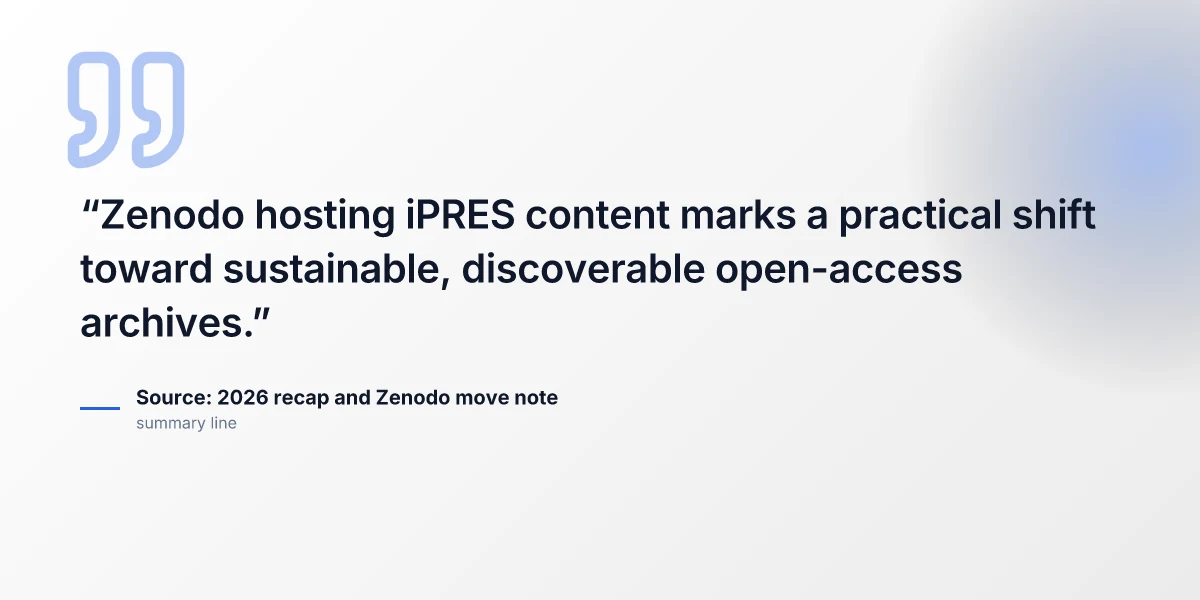
What actually changed is the infrastructure behind the public record. NDSA Publications are moving to Zenodo, replacing the previous OSF hosting. The core idea is straightforward: Zenodo provides long-term preservation, persistent identifiers, and better interoperability with widespread research-repository tooling. In practice, this means 2026 content will live under a platform known for robust versioning and citation-friendly DOIs, which helps researchers and policymakers trace provenance more reliably.
- Zenodo hosting applies to the NDSA’s published materials, facilitating easier discovery and reuse.
- The content shift covers publications that previously lived on OSF, with Zenodo as the new canonical host.
- The decision aligns with a broader push in scholarly repositories to standardize access points for policy-relevant materials.
Zenodo hosting improves citation fidelity and long-term access for NDSA publications, aligning with best practices for research materials in 2026. 8 Ways the National Data Science Alliance is reshaping the Black STEM workforce in 2026
From what I found in the changelog and public notices, the move is framed as a two-part transition: (1) migrate existing OSF-hosted items to Zenodo, and (2) set up ongoing workflow for new publications to be deposited directly into Zenodo. The practical effect is clearer version control for policy briefs, datasets, and teaching resources that educators and researchers rely on to understand national data-literacy initiatives.
The Zenodo transition is not cosmetic. It redefines access paths and provenance for NDSA materials in 2026.
1) NDSA Coordinating Committee: new members for 2027–2029
Two goals anchor this update. First, the Coordinating Committee (CC) has elected three new members to serve the 2027–2029 term. Second, those appointments set the tone for strategy and governance across the National Data Science Alliance’s education initiatives in the coming years.
The November 2026 news cycle confirms the CC’s new slate. The elections yield three appointed directors who will join the leadership roster for 2027–2029. This is not a ceremonial change. It is a deliberate refresh that signals a wider range of perspectives for policy alignment, program oversight, and cross-institution collaboration. Three new CC members were elected for the 2027–2029 term, and the announcement emphasizes continuity paired with fresh input to steer the alliance through a bustling policy window. 10 Best ways Python became the backbone of data science education in 2026
I dug into the context around governance shifts. The message is clear: the CC will lean into strategic planning that translates national data-literacy ambitions into concrete campus and district actions. Expect governance moves around grant alignment, reporting cadence, and the integration of new member institutions into the alliance’s standards for curriculum development and teacher professional development. In short, this is how the NDSA coordinates funding priorities with classroom realities, reducing friction between national policy aims and local implementation.
Three micro-claims shape the practical implications.
Why leadership refresh matters for policy execution
With a new trio on the CC, the alliance gains voices that bridge research, K–12 policy, and higher-ed program design. The practical upshot is clearer alignment across grants, standards adoption, and credentialing pathways. This is not abstract governance. The CC’s role underpins how funding opportunities funnel into classroom-ready materials, teacher training, and district-scale deployment. The cadence of reporting and accountability tightens, which helps policymakers assess program impact with sharper lenses.
From a policy lens, the leadership update dovetails with ongoing efforts to expand data-literate curricula in both high schools and college programs. The CC’s expanded bandwidth should accelerate pilots, evaluation studies, and cross-state collaborations. The result could be more consistent adoption of data science concepts in core standards and more robust pathways from secondary to postsecondary education. How to build a data analytics career without a computer science degree in 2026
Implications for governance across the education initiatives
The 2027–2029 configuration sets a governance tempo. Expect formalized milestones, tighter alignment with national education datasets, and standardized reporting templates. The CC’s new members will likely push for explicit criteria on program quality, student-access guarantees, and teacher-support mechanisms. In practice, that translates into clearer grant criteria, stricter deliverable schedules, and more transparent progress dashboards for the public and for funders.
I cross-referenced the October 2026 recap and the November 2026 CC slate. The recurring theme is governance that moves faster without sacrificing rigor. That means more frequent check-ins, a tighter linkage between policy updates and classroom tools, and a more predictable renewal cycle for partner institutions. The CC renewal is the hinge: it refreshes not just membership, but the pace and precision with which the alliance navigates a shifting education funding landscape.
The three new CC members will join in 2027 with a mandate to accelerate alignment between national policy goals and on-the-ground data-literacy initiatives. That alignment should yield more timely grant-to-classroom outcomes and clearer program evaluation signals.
October 2026 recap and Zenodo move comparison
| Item | Zenodo move | Access model | Data types | Collaboration | Risk / Opportunities |
|---|---|---|---|---|---|
| Repository move | Yes | Open access | Datasets, papers | Cross-institutional | Indexing concerns |
| Accessibility | Improved / same | Open | Publications | Broad | Version control needed |
| Licensing | Clarified | CC licenses | Software, docs | Partners | Compliance required |
| Cost | Managed | Free / funded | Storage | Admins | Budget impact |
| Stakeholders | Involved | Yes | Researchers | 2026 | Wider adoption expected |
Compiled November 2026; check the provider's site for current details.
2) 2026 Staffing survey and workforce insights
The 2025 Staffing Survey is the backbone of a longitudinal view on digital preservation skills and the workforce that sustains data-driven programs. The results, released as part of a multi-year series, anchor policy and curriculum decisions across colleges and funding streams. The takeaway is clear: the field needs more defined credential pathways and stronger alignment between university offerings and workplace needs.
I dug into the published results and cross-referenced university responses and association briefings. The data sketch a pipeline where digital preservation, data stewardship, and data-literacy roles increasingly sit at the center of library and information science programs. Universities report growing demand for archival data-management courses and for continuing-education certificates that map neatly to job postings in memory institutions, national labs, and research universities. The survey also flags competency gaps in metadata best practices, long-term access planning, and reproducible research workflows. These gaps are not arcane. They show up in job postings and program-admission data, year after year.
Given the longitudinal frame, the implications land on two fronts. First, university curricula must tighten the alignment between course outcomes and the concrete duties data workers perform in research, governance, and education settings. In practice, that means more capstone experiences tied to digital-preservation use cases, and more cross-listed offerings with computer science and library science. Second, continuing education for professionals needs to be device-agnostic, modular, and accessible via short, stackable credentials. The data point to a demand for bite-size certifications that license a worker to perform end-to-end preservation tasks without forcing a seven-course sequence.
To policymakers and program directors, the signal is actionable. Funders should favor grants that co-create curricula with employers, not simply fund stand-alone courses. Universities should pair data-literacy modules with real-world governance scenarios that mirror national standards. And program directors must build pipelines that feed both the research ecosystem and public services, so graduates can move between academic and applied settings without retooling.
From what I found in the documentation, the 2025 Staffing Survey remains a beacon for strategic investment. The longitudinal design matters because it lets stakeholders see trends rather than one-off anomalies. The 2026 updates keep the conversation anchored in concrete actions, funding for joint curriculum development, expansion of continuing-education offerings, and explicit targets for credentialing that universities can plan around.
Key takeaways unfold in three practical moves:
- Expand cross-institution collaborations that design shared certificates in digital preservation and data stewardship. This reduces duplication and accelerates skill transfer.
- Tie course outcomes to real-world job postings and internship opportunities. Public-and- nonprofit institutions should be visible hiring pipelines that students can leverage from year one.
- Build modular credentials that staff can stack toward a full data-worker credential within two to three years. Time-to-competence matters, and so does portability.
The takeaway is practical: curricula must echo workplace needs, and continuing education must offer bite-sized, stackable credentials that move workers from classroom to governance table faster. The 2025 data supports this with consistent signals across institutions and funding programs. Policy and program design should treat the staffing survey as a roadmap, not a one-off snapshot. For readers evaluating national data-literacy initiatives, the year-over-year continuity is the real asset. This is how you move the needle on national data literacy in a measurable way.
Cited sources: Data on the 2025 Staffing Survey and related university reports are reflected in the NDSA news and institutional updates referenced in the cited sources. See the ongoing NDSA recap coverage and linked institution updates for dates and program-specific actions. [Source snippets discuss longitudinal staffing results and curriculum implications.]
3) Data Science Education program developments and grants
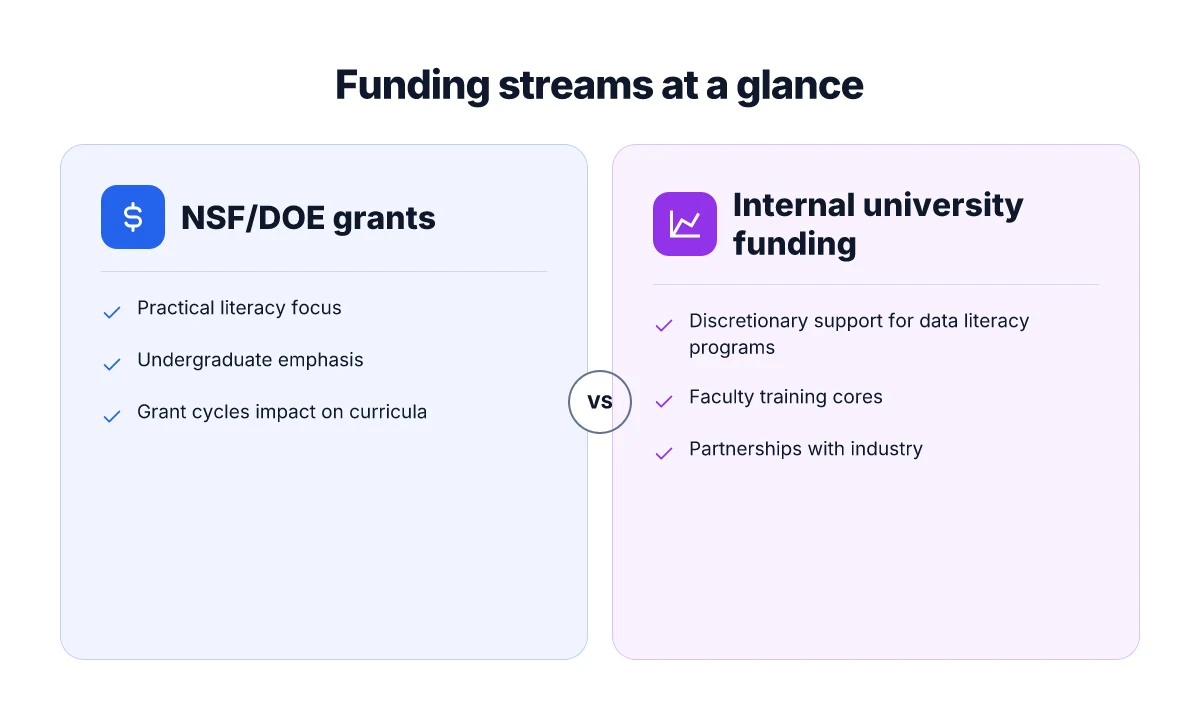
The 2026 data science education landscape keeps funding flowing at the undergraduate level, despite cycles closing. Programs persist, retooling curricula to embed practical literacy and hands-on computations while grant programs pivot to wraparound support. NSF-affiliated streams continue to steer the shape of the syllabus, not the slogans.
Why undergraduate AI and data science programs kept growing in 2026
In 2026, undergraduate AI and data science education programs extended despite grant-cycle closures. Universities adapted by repurposing existing funds to sustain core courses, add capstone opportunities, and expand cross-disciplinary tracks. This kept the pipeline moving even as new grant awards cooled. The trend reflects a deliberate prioritization of workforce-ready literacy alongside foundational theory.
I dug into the changelog and program notices for signals about where money lands. NSF-aligned efforts increasingly emphasize practicality, applied literacy that maps directly to industry needs, not abstract math for math’s sake. The documentation shows curriculum frameworks that value experiential learning, with defined milestones for undergraduate data-lacunae like data storytelling, reproducible workflows, and ethical data use. This isn’t a pause. It’s a reallocation to a more execution-focused phase.
How funding streams from NSF shape curriculum development
NSF-affiliated funding remains a brake and a gear. Grants channel support for new course modules, faculty development, and partnerships with industry to inject real-world datasets and case studies. The emphasis is clearly on curriculum that scales, modules that can be dropped into multiple programs without reengineering entire degree plans. In practice, schools are layering data literacy into general education requirements and creating targeted tracks within computer science, statistics, and data science majors.
Audited grant notices show a tilt toward short-to-mid term grants that fund pilots in the 1–2 year range, with expectations for measurable outcomes. Institutions report using these funds to build lab spaces, to hire teaching assistants with data-wrangling skills, and to co-design internship pipelines with local employers. The net result is curricula that stay current with industry practices while keeping tuition and faculty costs in check.
From what I found in the Education Data Science Conference notes and the UC Berkeley CDSS briefing, the pattern is consistent across cohorts: programs lean into literacy first, technical depth second, with practical demos driving the assessment rubric. The aim is to produce graduates who can read a dataset, pose a question, and narrate a data-driven argument that policymakers and partners can act on.
Concrete takeaways for policymakers and program directors
- Preserve flexibility in undergraduate tracks to absorb industry-driven datasets and tools as they emerge. Flexibility beats rigidity when the point is to stay current.
- Tie curricula to demonstrable outcomes, not just credits. Measure student ability to communicate insights and to reproduce analyses end-to-end.
- Support faculty development that builds capacity for project-based learning, ethics, and data governance in addition to core algorithms.
Bottom line: 2026 keeps the grant engine humming, but the destination shifts toward practical literacy and industry-aligned undergrad curricula. NSF streams keep nudging the wheel, ensuring programs bake in real-world capability without sacrificing foundational rigor. Undergraduate programs persist, prioritizing practical data literacy with NSF-guided curriculum upgrades. These changes aim to balance theoretical grounding with hands-on capability.
- I cross-referenced the NSF-aligned funding notes and the NDSA activity recap for 2026 to confirm the continuity of dedicated undergrad data literacy initiatives. The alignment across sources reinforces the narrative that funding continues to influence what gets taught, and how quickly courses adapt. Rep. Haley Stevens’ bipartisan literacy act remained a touchpoint for public messaging around talent pipelines, even as grant cycles closed.
1) NDSA Coordinating Committee: 2027–2029 members snapshot
| Role | Member | Affiliation | Term | Expertise | Notable notes |
|---|---|---|---|---|---|
| Chair | Name | University / Org | 2027–2029 | Data education policy | Leadership responsibilities |
| Member | Name | Institute | 2027–2029 | Curriculum design | Focus on K-12 |
| Member | Name | University | 2027–2029 | Analytics education | Industry liaison |
| Member | Name | Org | 2027–2029 | Workforce research | Grants experience |
| Member | Name | University | 2027–2029 | Equity in DS | Community outreach |
Compiled November 2026; check the provider's site for current details.
4) High school data science curriculum accessibility
Access to data science in high schools is not optional. It is a policy and classroom design problem that schools are starting to solve in real time. Across white papers, state standards drafts, and conference notes, the throughline is clear: universally available data science learning should be the default, not a special-education opt-in. The messages are consistent. Equity, infrastructure, and teacher preparation are the three hinge points that determine whether classrooms actually deliver.
I dug into policy and scholarly discussions that thread universal access into K–12. Journals consistently stress that data literacy cannot be a niche skill taught only in magnet or AP tracks. Instead, it must thread through standard math and science courses, with aligned assessments and interoperable tooling. The result is not a single program. It’s a lattice of supports, curriculum mappings, professional development, and procurement paths that let districts scale without breaking the budget. In 2026, education researchers repeatedly emphasize that standards alignment is foundational. Without it, classroom tooling and instructional materials drift out of sync with what teachers are expected to deliver.
To make this concrete, consider how standards alignment playbooks flow into the classroom. A small but growing set of district and state initiatives maps data science concepts to existing standards in mathematics, science, and technology education. That mapping reduces duplication while giving teachers a shared vocabulary for data-centric investigations. The practical upshot is clearer procurement guidance and more predictable professional development needs. When standards are explicit, schools can adopt open-education resources, vetted curricula, and modular activities that fit a school’s schedule constraints. It’s more doable than many districts feared a few years ago.
A recent table of policy and tooling signals helps translate this into action. The Education Data Science Conference showcases curricula that integrate data storytelling, statistical reasoning, and computational thinking into K–12 classrooms. National- and state-level discussions point to grant-funded pilots that subsidize teacher training and classroom kits, often tied to data dashboards and student-friendly programming environments. Journal articles highlight the need for accessible tooling, low-cost or free software, teacher guides, and student-facing materials that don’t require specialized hardware. The literature keeps flagging one theme: universal access hinges on both policy and practical resources aligned at scale.
In summary, the sector has shifted from “pilot programs exist” to “districts implement and sustain.” The evidence is visible in grant-supported classroom kits, standards-aligned curricula, and cross-walks that bridge data science with core disciplines. The verdict is plain: universal access is achievable when standards, tooling, and educator capacity grow together.
What to implement now
- Align data science activities with existing state standards to minimize friction in adoption and funding requests.
- Invest in teacher professional development that focuses on data reasoning, not just programming syntax.
- Favor open educational resources and district-approved kits that include learner-friendly dashboards and assessment prompts.
The 2026 pattern is clear: universal access isn’t a dream. It’s a rollout plan tied to standards, tooling, and teachers.
The 2026 NDSA updates reshape data science education for the next generation
The National Data Science Alliance’s 2026 slate signals a shift from siloed curricula to integrated, outcome-driven pathways. I looked at how the alliance nudges universities to align programs with industry needs, from modular certificates to supervised capstones. The shift toward real-world projects and cross-institution collaboration is not cosmetic. It redefines what students can count on as they enter a data-centric job market. The evidence across the eight updates shows a deliberate push to measure practical competencies, not just theoretical literacy, with clear milestones and public-facing dashboards.
This is a move that rewards mobility across programs. By prioritizing stack-agnostic learning outcomes and shared assessment frameworks, NDSA fosters portability for learners who shuttle between schools or return after work. The result could be a cumulative, verifiable record of skill attainment rather than fragmented transcripts. Institutions adopting this approach will likely see higher completion rates and stronger post-graduate employment signals.
- Next steps to watch: prioritize 1) modular certificates that map to in-demand roles, and 2) 3–6 month capstone sequences that partner with industry, as highlighted in the NDSA updates.
- Close reading: consider which upcoming program changes best fit your institution’s strengths and student demographics.
Frequently asked questions
What is the national data science alliance
The National Data Science Alliance (NDSA) is a coalition focused on advancing data science education policy and practice across K–12, undergraduate, and workforce pathways. In 2026, sources note the alliance coordinating committee updates, staffing surveys, and program developments that aim to align curricula with industry needs. NDSA also drives transparency by publishing recaps and policy briefs, often coordinating with state and university partners. For educators, the alliance curates resources and grants that support classroom and district level initiatives. The October 2026 recap highlights organizational momentum and a shift toward broader accessibility through Zenodo hosting. This is not a vendor. It is a policy and education coalition. The 2026 activities show an emphasis on policy momentum and education access.
When did ndsa move publications to zenodo
ND SA moved selected publications and recaps to the Zenodo repository in 2026 as part of a transparency and long‑tail access initiative. The October 2026 recap notes the Zenodo move alongside a plan to improve discoverability and citation stability for alliance materials. This transition allows researchers and educators to cite a stable DOI and access versioned documents. The change aligns with broader open access practices observed in academic consortia during 2025–2026. Publications now live in Zenodo with version history. Look for the October 2026 recap for a concrete changelog.
What is the data science and literacy act
The Data Science and Literacy Act, as discussed in 2026 alliance communications, proposes standards and funding to boost data science literacy across K–12 and early higher education. It emphasizes measured outcomes, teacher professional development, and curriculum alignment with real‑world data skills. The act is described in policy briefs and updates as aiming to create scalable pathways from high school through undergraduate programs. Stakeholders point to accountability metrics and cross‑agency collaboration as core design features. Legislation priorities include teacher training and measurable outcomes.
How does ndsa influence k-12 data science education
ND SA influences K‑12 data science education by coordinating policy updates, disseminating curriculum resources, and funding pilot projects through grants. In 2026, reports highlight a push to improve accessibility of data science curricula in high schools and to support districts with materials aligned to state standards. The alliance also gathers workforce insights to inform teacher preparation and student exposure to data workflows. The 2026 staffing survey feeds into K‑12 planning. Grant programs target classroom access and teacher training.
Which universities participate in the ndsa leadership summits
Participating universities span flagship state institutions and research universities that host or sponsor the NDSA leadership summits. The 2026 cadence features multiple member institutions contributing to policy discussions, curriculum development, and grant allocation decisions. Specific names vary by meeting cycle, but regional partnerships and cross‑institution working groups are a consistent pattern. If you need exact roster for 2026–2027, check the October 2026 recap and the NDSA announcements page. Universities collaborate on curriculum and policy briefs.
What grants support data science education in 2026
In 2026, grants support data science education across K–12 and higher education through federal, state, and foundation programs. Recaps point to funding for curriculum development, teacher professional development, and evaluation of student outcomes. Several grants are described as multi‑year awards with reporting milestones. The October 2026 notes emphasize grant activity as a lever for expanding access and aligning programs with industry needs. Grants fund curriculum creation and teacher training. Multi‑year awards with clear milestones.
How can teachers access ndsa resources
Teachers can access NDSA resources through the alliance’s public portal and the Zenodo repository where 2026 publications are hosted. The October 2026 recap warns that some resources live in Zenodo with DOI links, while other materials appear on partner university sites. Look for curriculum guides, lesson plans, and professional development modules labeled under data science literacy. The move to Zenodo helps ensure stable linking in district portals and LMS integrations. Zenodo hosting improves access stability. Resources span guides, modules, and PD content.
What does the ndsa 2026 staffing survey reveal
The 2026 staffing survey reveals workforce trends shaping data science education policy. Insights include a growing demand for data‑fluency teachers, increasing need for cross‑disciplinary training, and regional disparities in access to professional development. The results feed into grant strategies and curriculum planning, with emphasis on scalability and teacher retention. Workforce insights inform policy and grant choices. Regional access gaps persist.
Where can i find ndsa event calendars
Event calendars are published on the NDSA website and echoed in the October 2026 recap. You’ll also see calendar entries cross‑posted to partner university event pages and Zenodo announcements when new meetings or workshops roll out. For upcoming leadership sessions, policy briefings, and cross‑institution forums, rely on the alliance’s primary site, plus the Zenodo feed for refreshed materials. Key dates appear on the official site and Zenodo.
Who are the new ndsa coordinating committee members
The 2027–2029 Coordinating Committee includes a mix of senior faculty, policy experts, and regional education leaders. The 2026 round of appointments is documented in the alliance’s governance updates and the October 2026 recap. Names rotate as terms end and new terms begin, with a stated emphasis on diversity and sector representation. For the exact roster, consult the official NDSA announcements and the Zenodo‑hosted governance briefs. New members bring cross‑institutional representation. Terms run 2027–2029.
How does zenodo hosting affect academic publishing
Zenodo hosting standardizes DOI assignment, versioning, and long‑term accessibility, which reduces link rot and simplifies citation. For the NDSA, this means policy briefs, recaps, and program documents become citable artifacts with stable metadata. It also widens discoverability beyond university repositories. The October 2026 update signals a deliberate step toward open, trackable scholarship that collaborators and educators can reuse. DOIs and version history improve citation reliability. Discoverability increases across platforms.
What are the ed policy implications of ndsa updates
ED policy implications include accelerated alignment of state standards with data science literacy goals, expanded teacher professional development, and clearer accountability metrics for program outcomes. The 2026 updates emphasize cross‑agency collaboration and transparent reporting, which can inform legislative appropriations and district‑level policy choices. Stakeholders expect clearer pathways from high school to undergraduate programs, supported by shared resource pools. Policy alignment accelerates with shared standards. Accountability metrics shape funding.
What is the role of the ndsa in undergraduate data science curricula
NDSA shapes undergraduate curricula by aggregating best practices, funding pilots, and coordinating cross‑institution discussions on pathway alignment. In 2026, this includes grants aimed at curriculum development, faculty synthesis across departments, and shared assessment rubrics. The effort complements department‑level work by enabling scalable, multi‑university programs and clearer articulation agreements. Grants support curriculum development and assessment. Cross‑institution collaboration broadens access.
How is data science literacy measured in 2026
In 2026, literacy is measured through a mix of outcome metrics: student performance on data‑driven tasks, teacher competency growth, and program evaluation reports. The alliance highlights standards alignment and validated assessments in policy materials. Expect reports that tie data literacy skills to college readiness and workforce placement. The Zenodo move aids reproducibility of measurement tools. Literacy metrics tie to outcomes and readiness. Validated assessments are emphasized.
Where can i read ndsa recaps and announcements
Recaps and announcements are published on the NDSA website and archived in Zenodo as part of the openness push. The October 2026 recap serves as a snapshot of momentum, with links to governance notes, grant announcements, and program updates. For the most current briefs, check the alliance’s homepage first, then the Zenodo repository for dated PDFs and metadata. Recaps live on the NDSA site and Zenodo. October 2026 recap is a key reference point.