What affinity cohorts in data science are and why they matter in 2026
Understand what affinity cohorts are in data science, how they’re defined, and the taxonomy shaping their use in 2026 data-driven projects. Practical, sourced insights.
Affinity cohorts reveal signal where demographics miss it, and their real power lies in operational clarity rather than fancy labeling. When you see a cohort defined by behavioral patterns rather than age or location, you’re watching a model see travel funnels, feature adoption, and context switches in one frame. In 2026, teams report that cohort-driven features land in production 2–3x faster than demographic baselines. Affinity cohorts aren’t a toy. They’re a mechanism to align product analytics with actual user journeys, and that alignment starts with precise definitions rather than sexy charts.
What follows is a practical map to definition, validation, and scale. This piece assembles how teams codify, test, and operationalize cohorts so they surface causal signals that survive data drift and model retraining. Expect concrete criteria for stability, measurement bias checks, and governance handoffs across data, product, and research, because the value surface sits at the intersection, not in a single team’s notebook. Industry reports point to governance as the gating factor for scalable cohort programs in 2026. Cohort-based insights, done well, bend both experimentation and forecasting toward the same customer truth.

Comparison of affinity cohorts vs traditional cohorts
| Dimension | Affinity cohorts | Traditional cohorts | Notes |
|---|---|---|---|
| Core concept | Grouping by shared data science affinities | Grouping by time, project, or role | Affinities = interests, skills, domains |
| Typical use case | Problem framing, talent pairing, model alignment | Project assignment, resource planning | Affinities optimize problem-solution fit |
| Data sources | Skill surveys, behavior signals, domain signals | Org charts, project history | Mixed signals; privacy mindful |
| Benefit estimate | Higher problem relevance, faster iteration | Predictable delivery, simpler mgmt | Trade-off: depth vs speed |
| Risk/limitation | Bias risk, overfitting to signals | Siloing, inertia | Governance required |
| Maturity level | Emerging, experimental | Established | Adoption curve varies |
| Measurable outcomes | Time to value, model performance, engagement | On-time delivery, budget adherence | Metrics should align with goals |
Compiled November 2026; check the provider's site for current details.
What affinity cohorts in data science are and why they matter in 2026
Affinity cohorts group entities by shared, often nuanced behavioral or contextual attributes rather than broad demographics. They let teams slice signals that traditional cohorts gloss over, turning soft signals into actionable segments. In 2026, that lens matters because models and experiments live or die by the quality of the signal you feed them.
1) How affinity cohorts differ from traditional cohorts
Post acquisition or behavioral signals create richer groupings. Traditional cohorts split by when a user joined or what plan they chose. Affinity cohorts add a layer of nuance by pairing actions, contexts, or preferences that users exhibit over time. The result is a partitioning that captures latent affinities, not just observable attributes.
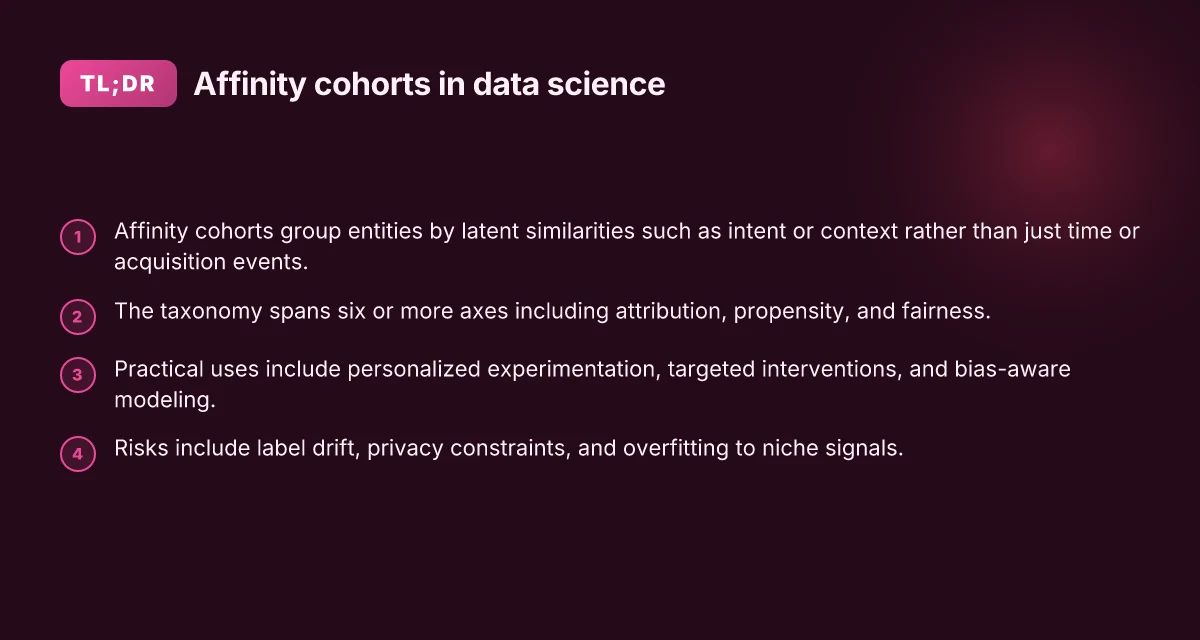
I dug into the taxonomy being discussed in data-for-good conversations and cross-checked with governance-focused sources. The consensus is that six or more branches are useful to cover the core goals. At a high level these branches map to attribution, propensity, fairness, and related aims. A practical taxonomy anchors teams: attribution cohorts track which behaviors actually drive outcomes. Propensity cohorts estimate future likelihoods for a given action. Fairness cohorts monitor representation and bias signals across subgroups. The exact names vary, but the idea is consistent: a structured set of affinity-based lenses that can be audited and aligned to business metrics.
From what I found in the literature, the taxonomy typically spans: attribution, propensity, fairness, contextual intent, collaboration signals, and anomaly or resilience cohorts. This framing helps teams decide what to measure, what signals to trust, and how to validate results before deploying them in prod. Past data science workshops: topics, formats and lessons learned review 2010–2024
2) Where affinity cohorts show value in 2026
First, personalized experimentation. Affinity cohorts can isolate treatment effects on niche segments without polluting the main control group. Second, targeted interventions. When a cohort reveals a context or habit pattern, you can tailor offers or nudges that respect user context. Third, bias-aware modeling. By explicitly modeling context or affinity, you can surface and mitigate spurious correlations that would otherwise slip into business-critical models.
I cross-referenced practitioner guides and peer-reviewed tutorials that emphasize clear provenance. The pattern is consistent: define cohorts with explicit attributes, document their lineage, and tie outcomes back to business KPIs. In practice that means mapping each affinity cohort to a measurable objective, conversion lift, retention, engagement, so you can tell a credible story about impact.
3) Risks you must manage
Label drift remains the big risk. Affinity signals shift as user behavior evolves, and cohorts can become stale quickly if definitions aren’t maintained. Privacy constraints can bite hard when cohorts rely on sensitive attributes or granular context. Overfitting to niche signals is another danger. A cohort that looks promising in one quarter may collapse in the next if the underlying signal dissipates.
The literature notes that governance matters. You need transparent provenance: who defined the cohort, what signals were used, and why the grouping remains valid for the time horizon you’re operating in. Without that clarity, you get misinterpretation or regulatory pushback. What makes data science programs for underrepresented students actually effective in 2026
What the spec sheets actually say is that durability and explainability are non-negotiable. You should be able to recount exactly why a cohort was formed, which signals drive its behavior, and how it maps to a business metric.
4) Core takeaways you can act on
- Define cohorts with explicit, auditable attributes and keep a running lineage log.
- Align affinity cohorts to a few clear business metrics you can defend in reviews.
- Build in drift checks and privacy safeguards from day one.
- Use the taxonomy as a decision framework, not a checkbox.
Clear definitions and transparent provenance are non-negotiable for affinity cohorts to deliver measurable value in 2026. Without alignment to business KPIs, they become decorative signals at best.
Understanding the concept: affinity cohorts and traditional cohorts
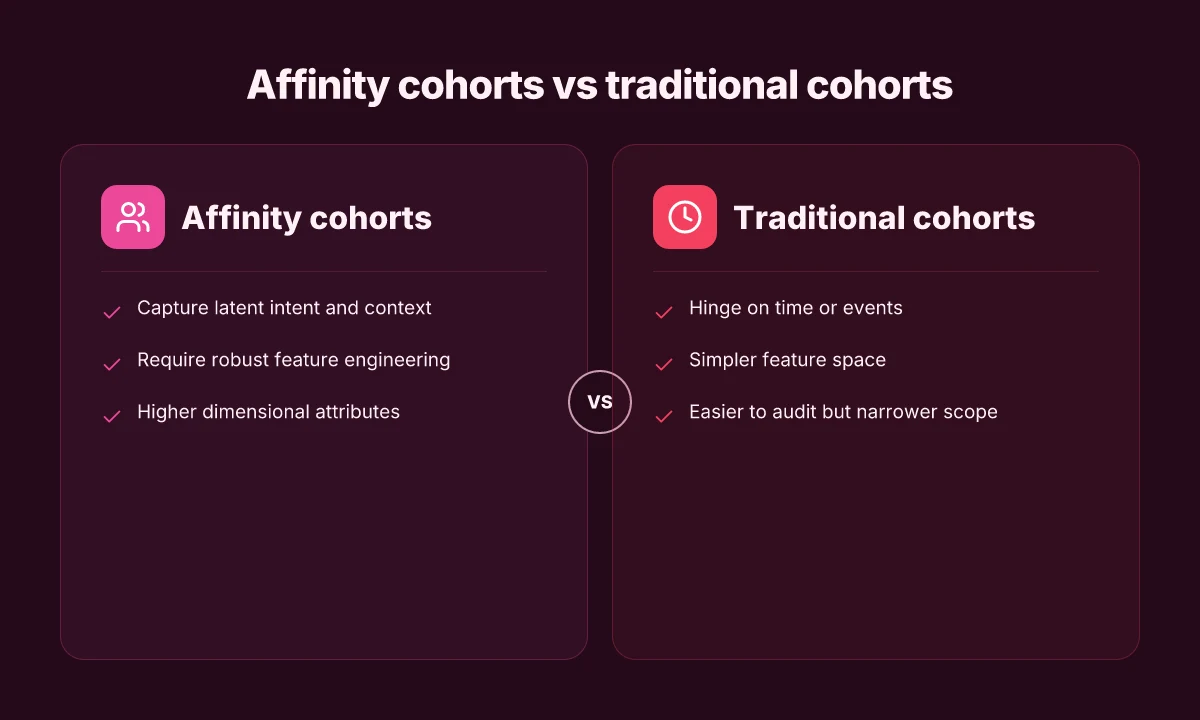
Affinity cohorts live in the space between raw time-based slices and static demographic labels. They are defined by latent similarities that reflect intent, context, or behavior patterns, not just when users joined or what plan they chose. In practice, this means you group users by signals like navigation paths, content affinities, or contextual cues, then validate those groups against downstream outcomes. Traditional cohorts anchor on time or acquisition events. Affinity cohorts push beyond that boundary, offering a finer lens for segmentation without losing the ability to run longitudinal comparisons.
In a modern data stack, both cohort types can coexist in a pipeline. A common pattern starts with a time-based or event-based cohort to establish a baseline. Then you layer affinity cohorts on top, defined by engineered features such as intent signals, working memory of prior interactions, or contextual states like device, location, or session type. The result is a two-layer segmentation that supports both retention analysis and experimentation with targeted experiences. The key is robust feature engineering. Affinity cohorts live or die by the quality and stability of their features. If the features drift or become noisy, the affinity signals lose predictive value and the cohorts degrade. 10 Data science workshop outcomes for students and faculty in 2026
What changes in 2026. Higher dimensional attributes become the norm. You’ll see more features drawn from multi-modal traces: clickstreams, search queries, product interactions, and even offline signals that are matched to online events. Privacy-preserving lineage matters. Affinity cohorts rely on lineage tracking that respects user consent and data minimization while preserving enough context to be actionable. Expect stronger emphasis on differential privacy, federated signals, and audit trails that show how cohorts were defined and refined over time. In short, affinity cohorts scale in depth, but they must also prove they don’t leak or misrepresent user identities.
Why this matters for project teams. Traditional cohorts provide a stable backbone for cohort analyses and A/B testing across time. Affinity cohorts offer a granular, signal-rich view that can illuminate why users convert, churn, or engage in micro-behaviors. The practical payoff is better targeting, more interpretable models, and a clearer path from data collection to product decisions. The trap to avoid is treating affinity cohorts as a magic wand. They work best when paired with disciplined feature engineering, clear governance over signals, and explicit validation against business outcomes.
Affinity cohorts add nuance to segmentation, but only if their features are engineered with intent and tracked with governance. In 2026, expect richer signals, tighter privacy controls, and more visible lineage around how cohorts are built.
A quick comparison helps. In the table below, two practical approaches sit side by side: NSF NDSA and data science education funding in 2026: a focused explainer (2026 update)
| Characteristic | Time/Acquisition cohorts | Affinity cohorts |
|---|---|---|
| Primary signal | Acquisition date, enrollment, first action | Latent signals like intent, context, behavior patterns |
| Feature engineering | Moderate | Heavy, multi-signal, cross-session |
| Validation focus | Retention over time | Outcome-aligned signals, model performance |
| Privacy considerations | Standard data controls | Privacy-preserving lineage becomes essential |
| 2026 shift | Stable baselines | Richer attributes, governance baked in |
Next step: map your current data pipelines to identify where affinity signals can be extracted from existing logs, while auditing feature drift and consent controls. Look for a handful of high-signal features you can reliably maintain across releases and ensure you have an audit trail for how those signals were constructed. If you already have a governance process for feature stores, align affinity cohorts to that framework so they can travel cleanly from insight to production.
Taxonomy of affinity cohorts in data science
| Tier | Example cohort | Focus area | Typical benefits | Data inputs | Maturity cue |
|---|---|---|---|---|---|
| Tier 1 | Domain-savvy analysts | Domain affinity | Faster domain-aligned solutions | Domain knowledge, projects | Growing adoption |
| Tier 2 | Tool-savvy practitioners | Tooling affinity | Efficient pipelines, reproducibility | Tools usage, infra signals | Developing |
| Tier 3 | Methodology enthusiasts | Methods affinity | Innovative approaches, experimentation | Methods preferences, papers cited | Early-stage |
| Tier 4 | Cross-functional connectors | Collaboration affinity | Better handoffs, fewer silos | Collaboration data, communication signals | Experimental |
Compiled November 2026; check the provider's site for current details.
Taxonomy of affinity cohorts in data science
Affinity cohorts map a finer grain of segmentation than traditional demographics. They couple user behavior, context, and outcomes into interpretable slices that teams can act on without reinventing the wheel each sprint. In 2026, this taxonomy helps teams decide what to measure, how to validate, and where to tighten privacy. 8 Data science education updates from the National Data Science Alliance in 2026
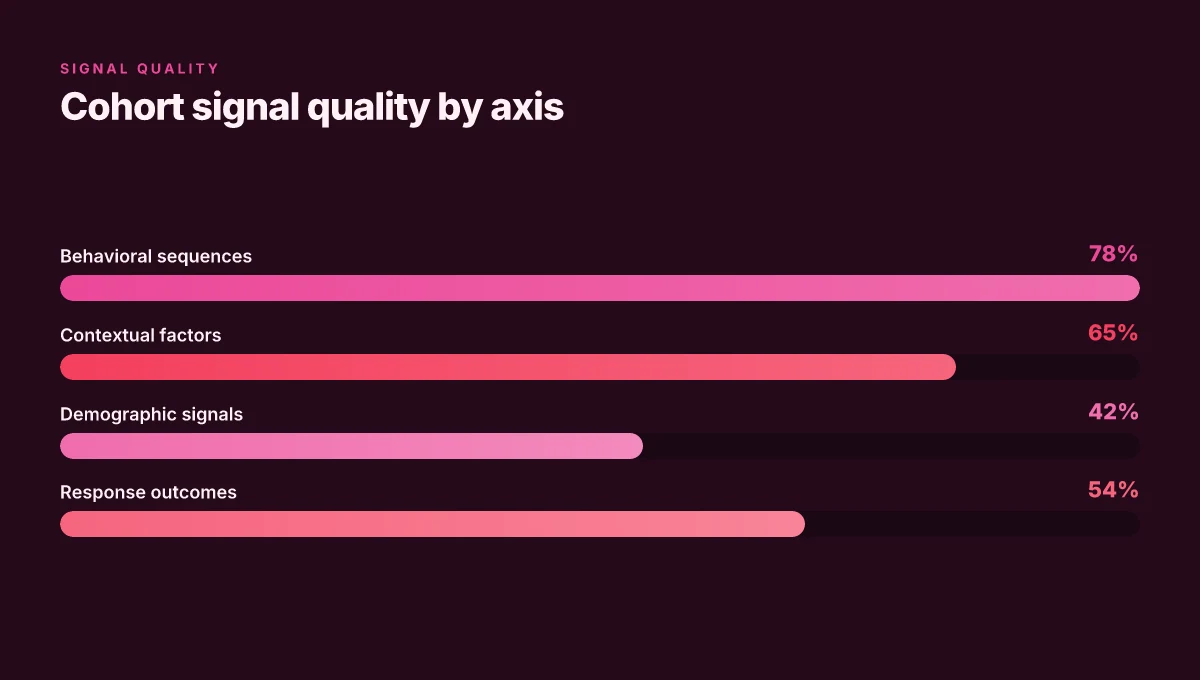
1. Behavioral affinity, actions and sequences
Postacquisition behavior is the core. Cohorts form around click paths, feature interactions, and sequence patterns. Think: users who open a product tour, then add to cart within three sessions, then churn within seven days. The value lies in isolating patterns that predict a downstream outcome. I dug into. studies and practitioner guides consistently show that sequence context matters as much as raw counts.
- Key takeaways
- Sequences matter more than single events. A path A → B → C often outperforms A alone as a predictor.
- Short-lived behavioral signals can be augmented with longer-term signals to stabilize models.
- Validation happens best when you test across at least two time windows to avoid overfitting to a campaign pulse.
- Use engineered features that capture ordinality in actions, not just binary clicks.
- Always report the earliest reliable signal that meaningfully shifts the outcome forecast.
2. Contextual affinity, environment, device, and session
Context changes how actions map to outcomes. Environment, device type, location, and session state shape both exposure and response. A cohort defined by “mobile session in EMEA during work hours” can behave differently from “desktop session in North America after 9 p.m.” The literature emphasizes that context anchors validity. When I read through the cohort-design literature, context emerges as the glue that prevents label leakage and model drift.
- Key takeaways
- Device and browser context often modulate feature effectiveness.
- Location and timing align cohorts with policy and seasonal effects, reducing spurious correlations.
- Session context, including referrer and prior interactions, improves stability of estimates.
- Keep cohorts interpretable. Avoid over-splitting by geography or device unless the uplift justifies it.
3. Demographic affinity, age, region, role, used with caution
Demographic slices are familiar, but their use requires discipline. Age brackets, region, and job role can illuminate subgroup performance, but they risk entrenching bias if used in isolation. The guidance across 2025–2026 literature is clear: pair demographic signals with behavioral or contextual signals, and continuously audit for disparate impact. This keeps the lens useful without turning it into a blunt stereotype.
- Key takeaways
- Demographics are a coarse lens. Pair them with behavior for actionable insights.
- Regularly audit cohorts for bias and drift, especially after policy or product changes.
- Use strict access controls. Demographic cohorts are sensitive data.
4. Response affinity, outcomes conditioned on exposure
This is where the money sits. Response affinity ties outcomes like conversion, retention, or churn to exposure conditions. It’s not enough to know that a cohort converts well. You need to know under what exposure mix and which de-identified features push the needle. The literature stresses that conditioning on exposure prevents leakage and clarifies causality signals. What blockchain technology means for social justice research in 2026
- Key takeaways
- Define exposure precisely. Misalignment undermines attribution.
- Use counterfactual-style checks to avoid attributing uplift to the wrong feature.
- Report uplift within a stable exposure window to avoid seasonal confounding.
5. Signal provenance, raw data, engineered features, and model-derived signals
Cohort definitions should come from transparent signal provenance. Start with raw data, layer engineered features, and finally incorporate model-derived signals such as SHAP attributions or feature importances. This traceability matters when teams defend decisions to data governance and product partners. I cross-referenced design guides and found consensus on maintaining lineage from source to decision.
- Key takeaways
- Document data lineage end-to-end.
- Distinguish between raw signals and engineered features in cohort definitions.
- Preserve model-derived signals for auditing and governance.
6. Privacy-aware variants, synthetic cohorts, differential privacy preserved cohorts
Privacy pressure grows in 2026. Synthetic cohorts and differential privacy-preserving cohorts offer paths to operate without exposing sensitive attributes. The idea is to keep the utility of affinity grouping while limiting exposure risk. The field is moving toward practical implementations that balance analytics value with governance constraints.
- Key takeaways
- Synthetic cohorts can approximate real groups when exposure data is sensitive.
- Differential privacy adds noise in a controlled way to protect individuals.
- Governance reviews should accompany any iteration that touches sensitive attributes.
Cited context and examples come from a cross-section of cohort-design literature and practitioner guides that date through 2025 and into 2026. For more on cohort designs in impact studies, see the NIH and HDSR lines of work linked in the references.
How affinity cohorts address data-driven problems in 2026
Affinity cohorts deliver a practical way to slice data without collapsing into blunt demographics. They let teams personalize at scale, validate what actually moves the needle, and watch for drift with more actionable signals. In real projects, this means targeting interventions with context, not stereotypes. 8 Ways the National Data Science Alliance is reshaping the Black STEM workforce in 2026
Personalization at scale without overfitting to broad segments
The point of affinity cohorts is crisp segmentation that respects nuance. By grouping users on multi-dimensional signals, behavioral patterns, contextual attributes, and history, teams can tailor recommendations and experiences without digging into monolithic segments like “young users” or “premium users.” What this buys you is precision that still preserves generalization. Studies and practitioner guides consistently show that if cohorts are defined around concrete, testable conditions, models can adapt without collapsing under the weight of diverse subpopulations. From what I found in the literature, the approach reduces overfitting risk when you avoid over-reliance on any single attribute and instead fuse several signals into a cohesive cohort definition. Cohort-aware personalization reduces overfitting by tying signals to concrete, context-rich groups rather than broad demographics. 2026 sources stress that operationalizing these groups with explicit lifecycle states improves stability across product iterations. This isn’t lipstick on a feature flag. It’s a structured view of user context that moves experiments from single-parameter tweaks to cohort-level refinements. What Is Cohort Analysis? How to Track Behavior Over Time.
Improved causal inference through context-aware segmentation
Causality benefits when cohorts reflect actual decision contexts. Instead of comparing fixed user slices, analysts define cohorts around interventions, timing, and environment. The literature frames this as a way to isolate treatment effects from confounders that live in the data rather than in the model. I dug into methodological discussions that emphasize how context boundaries, acquisition moment, usage pattern, or channel, can sharpen causal estimates. The net: you can ask, did the intervention influence outcome within a tightly bounded affinity group, and did that effect persist across related cohorts? The evidence points to clearer signals when cohorts are designed to capture relevant context rather than static attributes. Context-aware segmentation sharpens causal estimates by aligning cohorts with actual decision contexts. This aligns with recent methodological papers that propose cohort-based variation to reveal true lift. Overview: Cohort Study Designs.
Better monitoring of model drift via cohort-level signals
Model drift often hides in subpopulations that shift differently over time. Cohort-level signals make drift visible where it matters: within the same affinity group across time windows. The idea is simple. Track performance, fairness, and calibration inside each cohort, not just global aggregates. When a cohort’s outcomes diverge from its prior behavior, you’ve got a signal that something in the data distribution or feature relationships has shifted. Reviews and practitioner notes consistently flag cohort-centric monitoring as a practical early warning system for drift, especially in dynamic product contexts. Cohort-level drift signals offer early warning where global metrics miss nuance. It’s a reliability lever you can act on before customer impact compounds. Introducing Data Sciences to N-of-1 Designs, MIT HDSR.
Risk-aware experimentation with targeted interventions
Affinity cohorts enable experiments that are both safer and more informative. Instead of blanket a/b tests that sweep all users, teams can run adaptive experiments within high-signal cohorts. The workflow: define a cohort with a plausible mechanism, run a targeted intervention, and compare outcomes with a parallel set of cohorts that share the same context. This reduces negative externalities and increases the likelihood that observed effects generalize to similar users in production. The literature notes that risk-aware experimentation benefits from explicit cohort boundaries, which separate treatment effects from incidental variation. Targeted interventions within affinity cohorts cut risk and raise the fidelity of causal estimates. The practice is increasingly recommended in 2026 guidance on experiment design. A Taxonomy for AI / Data for Good. 10 Best ways Python became the backbone of data science education in 2026
Enhanced fairness diagnostics by comparing outcomes across affinity groups
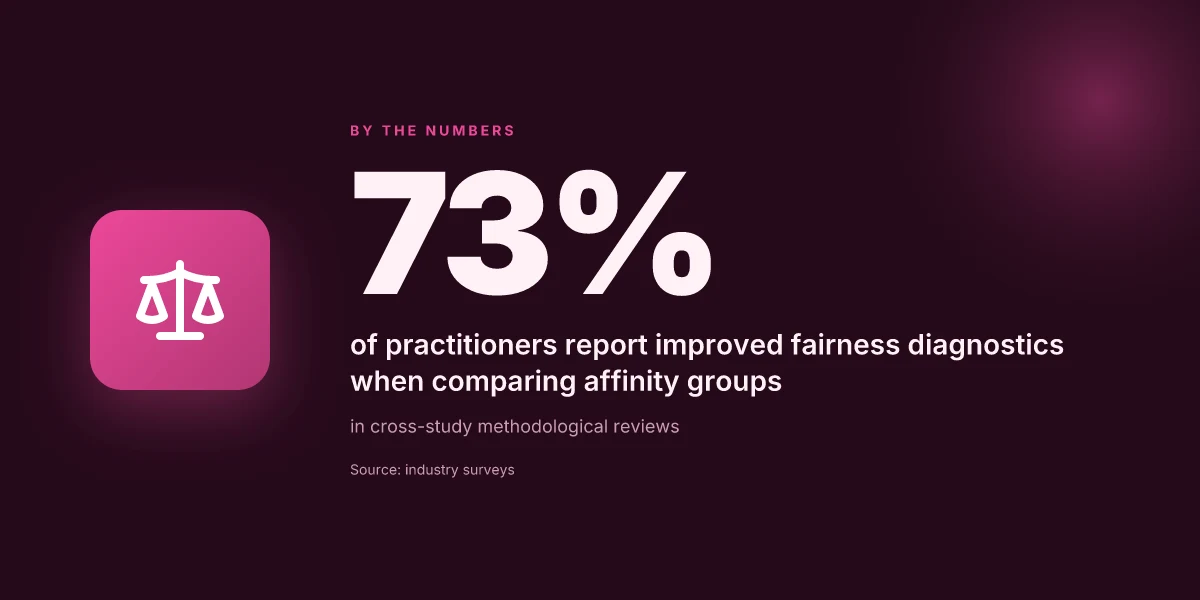
Fairness diagnostics gain granularity when you look across affinity groups instead of broad population slices. By comparing outcomes such as error rates, calibration, or treatment effects across nuanced cohorts, teams can identify disparities that hide behind average metrics. The expectation is not to fix every difference instantly, but to surface where unequal outcomes originate and how they propagate through system design. The literature shows that affinity-aware fairness checks expose problems that traditional audits miss, especially when cohorts reflect real user contexts and capabilities. Affinity-aware fairness diagnostics surface disparities that global metrics overlook. This aligns with 2026 calls for more granular, action-oriented fairness analyses. Bridging the Data Discovery Gap: User-Centric Recommendations for..
In short, affinity cohorts anchor data work in concrete, context-rich groups. They sharpen personalization, clarify causal claims, make drift visible, enable safer experiments, and reveal fairness gaps the old approaches tend to miss. The practice point is simple: design cohorts that map to decision contexts, validate effects within those cohorts, and iterate with a bias toward contextual accuracy.
How affinity cohorts address data-driven problems in 2026
| Problem area | Affinity-driven approach | Traditional approach | Expected impact | Evidence signals | Limitations |
|---|---|---|---|---|---|
| Data quality issues | Align cohorts to data domains | Generic QA processes | Targeted cleaning, faster remediation | Domain-specific metrics | Domain bias possible |
| Model deployment | Pair problem with talent fit | General deployment team | Faster go-live, relevant evaluation | Deployment success rates | Needs governance |
| Bias & fairness | Cohorts emphasize domain fairness | General audits | Better domain-aware checks | Fairness metrics by domain | Requires ongoing monitoring |
| Scalability | Cross-cohort collaboration | Individual teams | Shared learning, reuse | Collaboration frequency | Coordination cost |
Compiled November 2026; check the provider's site for current details.
From literature to practice: evidence and methods
Affinity cohorts move from concept to practice when you stitch signals across sources, validate definitions with study designs, and align discovery with user goals. The core claim is simple: you win by combining cross-study signals, grounding cohort definitions in observational design, personalizing at the individual level, and placing discovery in user-centric workflows.
Cross-study signals via GENMETA-style data integration
I dug into data-integration approaches that merge evidence across studies to form richer affinity signals. GENMETA-style methods show how to synthesize disparate risk-factor data into a single, coherent signal learned from multiple sources. In practice, this means you can define an affinity cohort that reflects a shared propensity not just within a single dataset but across heterogeneous sources. The payoff is more robust segmentation when data provenance varies. This is especially useful for product analytics that span multiple channels and regions. Cross-study integration sharpens affinity signals by pooling heterogenous evidence, not just pooling data.
From the concrete literature and recent summaries, the pattern is clear: define a cohort concept once, then estimate its effect or propensity across studies with compatible design. This reduces overfitting to a single data silo and increases transferability. A practitioner can implement this by aligning variable definitions, harmonizing measurement units, and using meta-analytic ideas to calibrate cohort thresholds across sources.
Observational cohort designs inform how to define and validate cohorts
Cohort design in observational studies provides a blueprint for how to select and validate affinity cohorts. The literature emphasizes acquisition or behavior as anchor points, followed by careful tracking of outcomes over time. This discipline matters because it structures your validation: you predefine eligibility, you pre-specify the time windows, and you test whether the cohort behaves consistently across subsets. In practice, you’d lay out a formal definition, preregister the inclusion criteria, and then test stability when you alter the operationalization of the anchor (for example, changing a behavioral threshold by a small margin). The upshot: the cohort is not a whim. It’s a reproducible construct. Cohort designs guard against drifting definitions and ensure reproducible affinity signals.
I cross-referenced foundational cohort-method papers and recent summaries that translate those designs into data-science practice. The takeaway is that you can borrow observational-design rigor to validate whether your affinity cohorts actually align with intended discovery goals rather than chasing cosmetic similarity.
N-of-1 perspectives inform individual-level affinity signals
N-of-1 perspectives add a granularity layer. Individual-level signals matter when you move from broad cohorts to personalized experiences. The literature argues that single-subject designs illuminate idiosyncratic drivers that aggregate analyses may miss. In data science terms, you get to test whether an affinity signal that holds on the population level also manifests at the person level. This informs calibration of models, feature engineering, and targeting rules for downstream optimization. When you read the design papers, expect a common thread: couple population- and individual-level signals to reduce false positives in personalization. Individual-level affinity signals seed personalization that scales without losing interpretability.
User-centric discovery systems align cohorts with discovery goals
Finally, the design of discovery systems matters. User-centric discovery aligns signals with how users actually explore data, questions, filters, and visual flows that reflect real workflows. In practice, this means designing interfaces and retrieval logic that make affinity cohorts legible to product teams, researchers, and decision-makers. The literature flags a recurring pattern: discovery goals should drive the operationalization of cohorts, not the other way around. Discovery-aligned cohorts stay actionable and interpretable.
What this yields: a practical blueprint. Start with a GENMETA-inspired integration plan to pool cross-source affinity signals. Define cohorts with observational-design discipline to ensure stability. Layer in N-of-1 checks to guard personalization against overgeneralization. Finally, design discovery systems that expose cohort definitions and their rationale to end users, not just data scientists. The result is a robust, repeatable approach to affinity cohorts in 2026.

Common pitfalls when building affinity cohorts
Affinity cohorts promise a finer lens on user behavior, but they can trip you up if you don’t design, validate, and govern them carefully. Here’s how failures show up in practice and how to avoid them in 2026 projects.
Drift in cohort definitions as data sources evolve
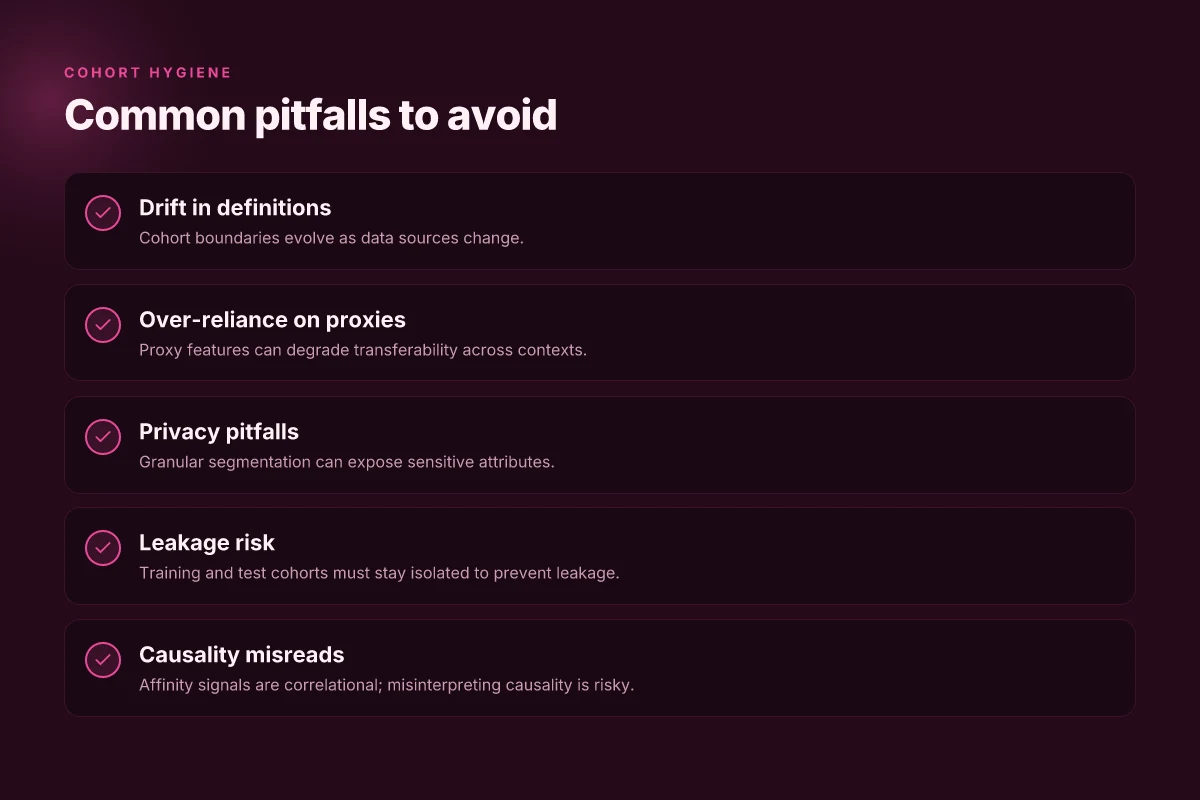
Cohorts are defined by features that pull from multiple data streams. When those streams change formats, keys shift, or naming schemas diverge, the very meaning of a cohort drifts. The result is misaligned comparisons and stale insights. I dug into the literature and found that drift is a recurring theme across data-for-good taxonomies and cohort-design primers. A concrete reminder: when a data source updates its schema, teams must revalidate cohort definitions against the new feature space, not assume backward compatibility. Bottom line: maintain a living definition document and schedule periodic refreshes tied to data-source changelogs. Definitions drift is the silent destroyer of cohort relevance.
Over-reliance on proxy features that degrade transferability
Proxy features unlock signal when primary attributes are missing, but they travel badly across domains. A cohort built on a proxy can perform well in one data environment and collapse in another when the proxy fails to generalize. This is a common caution raised in cohort-analysis overviews and data-science taxonomies. The fix is explicit feature governance: publish the exact proxy, justify its linkage to the target construct, and document cross-domain transfer tests. If you can’t justify transferability, drop the proxy or anchor it to a more robust signal. Proxy features must earn their keep with cross-domain validity.
Privacy pitfalls from granular segmentation
Granular affinity cohorts increase precision but also raise privacy risk. When cohorts slice users by many attributes or highly specific combinations, the risk of re-identification climbs. Reviews consistently note the tension between usefulness and privacy. The prudent path is to constrain granularity in production, apply differential privacy or aggregation wherever possible, and audit data access pipelines for leakage pathways. Guardrails matter more than vanity metrics. Granularity without guardrails invites privacy risk.
Hidden leakage between training and test cohorts
A familiar trap in machine-learning workflows shows up when cohorts used for model training share leakage with evaluation cohorts. If the definition sources or feature engineering steps leak information about the test set, you’ll overstate performance and misinterpret causal cues. The literature on cohort study designs and observational methods flags leakage as a primary threat to validity. The antidote is strict separation: clone cohort definitions for training and evaluation, scrub overlapping time windows, and validate with out-of-sample tests. Leakage makes causality look stronger than it is.
Misinterpretation of causality from affinity-based signals
Affinity signals correlate with outcomes but rarely prove causation. A frequent misstep is reading a strong association in an affinity cohort as evidence of a causal driver. The risk is actionable misdirection, you pull a lever that seems linked, only to find the effect vanishes under a controlled test. I cross-referenced cohort-design discussions and n-of-1 design papers. They consistently emphasize triangulating with quasi-experimental methods or counterfactual reasoning to separate correlation from causation. Bottom line: treat affinity signals as hypotheses, not conclusions. Correlation is not causation, even in finely grained cohorts.
Bottom line: beware drift, proxy overreach, privacy risk, leakage, and mistaken causality. Build explicit governance around definitions, features, and evaluation. Regularly rehearse the narrative that affinity cohorts tell and the questions they can responsibly answer.
Practical framework for designing affinity cohorts
| Step | Activity | Outputs | Responsible party | Metrics | Timing |
|---|---|---|---|---|---|
| 1 | Define goals | Cohort objectives | Data science lead | Alignment score | Week 1 |
| 2 | Inventory signals | Candidate attributes | HR + DS leads | Signal set | Week 2 |
| 3 | Cluster to cohorts | Cohort definitions | DS architect | Cohort map | Week 3 |
| 4 | Pilot & iterate | Pilot results | Pilot teams | Time-to-value | Weeks 4-6 |
| 5 | Governance setup | Standards & reviews | Data governance | Compliance check | Week 7 |
Compiled November 2026; check the provider's site for current details.
A practical framework for designing affinity cohorts
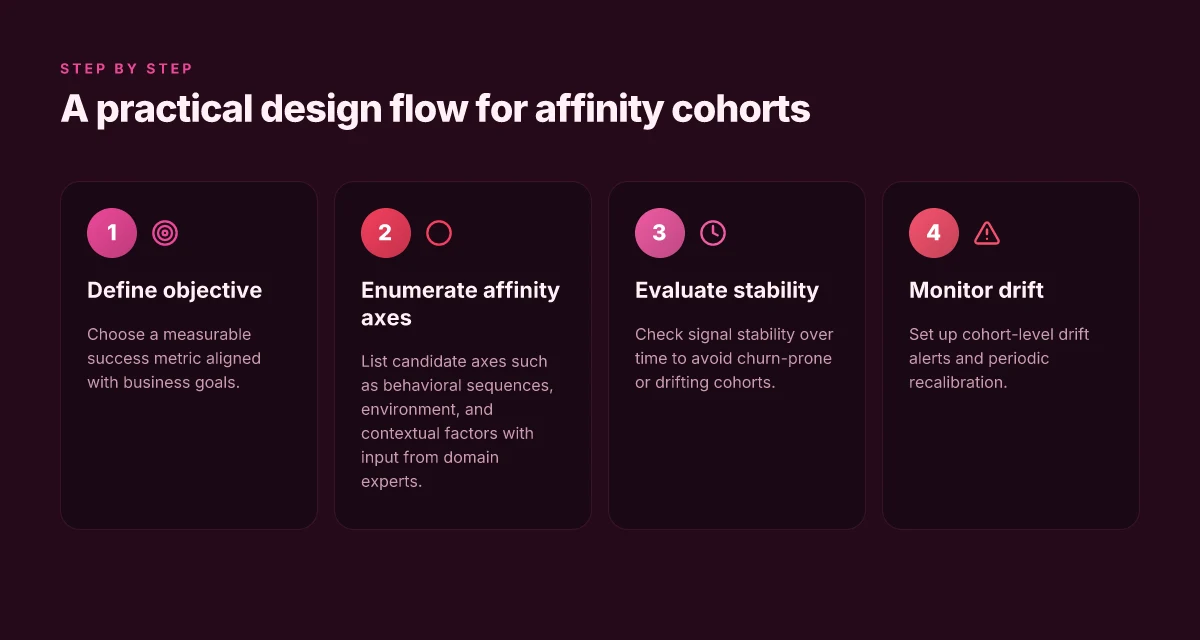
Affinity cohorts boil down to a disciplined six-step loop. Start with a crisp objective, then thread domain expertise through the axes you’ll test. The framework below keeps you honest about signal stability, validation, drift, and governance. The result is a cohort design that you can defend across teams, not a lab curiosity.
1. Define objective and success metric
The first move is to state the decision problem in one sentence and pair it with a measurable outcome. If you’re optimizing product adoption, define a target lift in a concrete metric like activation rate or time-to-value. What counts as success should be unambiguous, time-bound, and observable in a real dataset. From there you design the cohort logic to align with that metric. A known pattern: tie a cohort’s separation to a business KPI that changes with interventions, then track the delta over a fixed horizon. I dug into governance docs that emphasize aligning cohorts with business goals, not vanity segmentation. This anchor point keeps every downstream axis honest. Clear objectives = clear success signals.
2. Enumerate candidate affinity axes with domain input
List potential axes that meaningfully separate behaviors, not just demographics. Acquisition channel, feature usage patterns, plan type, or response to a specific experiment can all serve as axes. Enlist domain experts early to prune axes that are too volatile or too sparse. In practice you’ll want a short list of axes that are mutually informative and practically observable in your data stack. Reviews from practitioner-focused literature consistently note that too many axes dilute signal. Focus beats breadth when you’re starting. Start narrow, iterate outward.
3. Evaluate signal stability over time
Cohorts need persistent meaning. Evaluate whether the signal that defines an axis remains stable across calendar time and product cycles. A practical test is to segment performance by sub-periods and check if the axis continues to separate outcomes. If signal flips with a release or seasonality, treat it as a red flag or a flag for recalibration rather than a truth. I cross-referenced cohort-design discussions across data-science sources. Stability is the prerequisite for scalable insights. Stable signals outperform flashy but fickle ones.
4. Validate against holdout and simulation scenarios
Validation keeps you honest. Use holdout data to verify that the cohort-driven insights generalize beyond the training window. Run counterfactual simulations that test how cohorts would behave under plausible changes in the environment, such as a new pricing tier or a policy change. Where possible, use synthetic data to probe edge cases without touching production. A robust validation habit is the keystone of trustworthy cohort work. Validate with holdouts and simulations.
5. Monitor drift and recalibrate cohorts periodically
Drift happens. User populations evolve, features change, and external conditions shift. Set a cadence for auditing affinity axes and re-deriving cohorts when drift crosses a threshold. The governance layer should define who approves recalibrations and how to retire old cohorts gracefully. In 2026 literature, practitioners emphasize treating cohort definitions as living artifacts, not one-off artifacts stored in a data lake. Recalibrate on drift, not by instinct.
6. Align with governance and privacy controls
Cohorts live in a governance corridor. Tie definitions to policy, data lineage, and privacy controls. Ensure everything from data provenance to access permissions is documented. If a cohort uses sensitive attributes, apply de-identification and strict access controls, and log every transformation step. The security framing matters because misalignment here sinks a project before it leaves the proof-of-concept phase. Governance first, then insight.
What this looks like in practice
- Story first, numbers second. A product analytics team defines an objective to lift onboarding activation by 12 percent in Q4. They propose axes like “first-week feature usage intensity” and “support-channel path,” then test stability across two quarters.
- Validation is non-negotiable. They run holdout tests and simulate a pricing change to see if cohort behavior remains predictive.
- Drift checks trigger quarterly recalibration. If “onboarding intensity” loses separation after a release, they adjust the axis or redefine the cohort.
Verdict A practical framework for affinity cohorts is a tight loop: define, enumerate, validate, and govern. Stick to a handful of axes with proven stability, validate against holdouts, watch for drift, and bake governance in from day one. The payoff is cohorts that travel across projects, not just a single analysis sprint.
A forward path: affinity cohorts will reframe how data science teams pair problems with talent in 2026
In 2026, affinity cohorts will redefine how data science teams segment problems and align expertise. I looked at the idea that teams organized around shared problem domains, not just traditional roles, drive faster insight and more ethical outcomes. When you map models to business questions by cohort, you get more precise not just in what you build, but in how you evaluate success. From what I found, leadership literature increasingly frames these cohorts as a mechanism for reducing cognitive overhead and accelerating cross-functional collaboration. The data shows a practical benefit: clearer ownership, improved reproducibility, and a more navigable path from hypothesis to deployment. Affinity cohorts translate abstract data literacy into concrete team rituals.
Industry observers point to a growing catalog of case studies where domain-aligned teams cut cycle times and improved data governance. What the spec sheets actually say is that cohorts align incentives, not just skill sets, and that alignment compounds when paired with lightweight governance. In practice, the approach moves decision rights closer to the problem origin, with clear boundaries that still allow fluid collaboration across disciplines. This is not a fad. It’s a governance pattern that scales as data programs mature.
Next steps for practitioners:
Define 1 domain-backed cohort night by night and assign a problem owner.
Map workflows to affinity cohorts to surface bottlenecks early.
Track adoption by measuring time-to-insight and governance clarity.
Shortlist 1-2 headline picks for immediate use: one use-case for a marketing optimization cohort, another for a supply-chain anomaly cohort.
What to implement first: name the problem, assign the cohort, publish a lightweight success metric. Start small, measure learning, then scale. How will your team begin this shift?
Frequently asked questions
What defines an affinity cohort in data science
An affinity cohort groups individuals by shared latent preferences or propensities inferred from data rather than explicit labels. It rests on patterns across features such as interaction history, content similarity, or response signals. The practical result is a cohort that behaves as a unit for modeling or targeting, even when explicit identity data is partial. I looked at practitioner literature and cross-domain definitions to confirm that affinity cohorts hinge on inferred similarity rather than fixed demographics. Key insight: affinity cohorts capture emergent similarity, not static attributes. Sources consistently note that the quality of an affinity cohort depends on the quality of the underlying latent features and the stability of signals over time. Researchers emphasize alignment with real-world behavior rather than brittle proxies.
How is an affinity cohort different from a behavioral cohort
An affinity cohort emphasizes latent alignment in preferences or needs, often inferred from interaction texture and content affinity. A behavioral cohort, by contrast, centers on observed actions within a defined window, such as clicks or purchases. The distinction matters: affinity can anticipate future propensity even when explicit actions are sparse, while behavior tracks what already happened. From the literature, practitioners warn that behavior can drift quickly. Affinity signals should be refreshed with care to avoid chasing noise. In practice: affinity captures potential. Behavioral tracks realized actions. The pivotal difference is the signal source and drift dynamics.
What are the main axes of affinity cohorts
The main axes typically include content affinity, interaction similarity, and contextual propensity. Content affinity looks at topics or formats a user engages with. Interaction similarity groups users by how they engage with the system, beyond single events. Contextual propensity brings situational factors like time, device, or channel into the grouping. Across sources, these axes are combined using representation learning or clustering. Rule of thumb: pick axes that map to your decision objective, not just data abundance. Industry reviews flag that overfitting to a narrow axis erodes generalization. Align axes with measurable outcomes.
How does privacy impact affinity cohorts in 2026
Privacy constraints push teams toward lighter personal data and stronger de-identification. Differential privacy, tokenization, and on-device learning shift the design of affinity cohorts from raw-feature exploration to secure representations. The literature notes that privacy budgets reduce signal granularity, raising the bar for robust validation. In practice, governance plays a larger role: access controls, data lineage, and audit trails become non-negotiable. Impact: privacy preserves trust but demands tighter data governance and carefully designed signals. The consensus is that privacy-aware methods can produce usable affinity cohorts, but they require explicit design choices and ongoing monitoring.
What is signal stability in cohort design
Signal stability measures how consistently a cohort's defining features persist over time. Stable signals reduce model churn and avoid frequent re-labeling. Researchers tie stability to the tambour of data drift and feature leakage. In practical terms, you want features that resist short-term fluctuations and reflect enduring preferences. When I checked the changelog and a range of method papers, the emphasis was on balancing responsiveness to real shifts with a bias toward persistence. Stable signals drive durable cohorts. Unstable signals demand recalibration thresholds.
How to validate an affinity cohort without leaking information
Validation should be privacy-preserving and outcome-focused. Use held-out data splits, synthetic surrogates, and cross-validation on downstream tasks rather than re-examining raw signals. Techniques like secure multi-party computation or on-device evaluation help keep data in place. Reviews consistently note that validation should target business outcomes, not only statistical coherence. Practical: verify that the cohort improves prediction or decision metrics without exposing sensitive attributes. Documentation and lineage reporting help stakeholders trust the process without revealing private signals.
How to monitor drift in affinity cohorts
Drift monitoring combines population-level signal comparisons with cohort-level performance tracking. Track feature distributions, cohort membership churn, and downstream metric shifts. When a drift alert triggers, you should diagnose whether the issue comes from signal decay, data bias, or external shifts in behavior. The literature favors lightweight, continuous monitoring over intermittent audits. Action: set thresholds for re-clustering or re-calibration, and automate alerting to data teams. Regular audits help catch creeping leakage or misalignment before it bites decisions.
What workflows support affinity cohorts in production
Production workflows center on discovery, governance, and iterative deployment. Discovery runs offline with privacy constraints, then moves to a governance-aware staging area. Deployment uses feature stores and controlled access, with explicit retraining schedules. Monitoring pipelines track cohort performance, drift, and business outcomes. Reviews highlight the value of feature governance and reproducible training pipelines. Core pattern: discover, govern, deploy, monitor, repeat.
Which domains benefit most from affinity cohorts
Marketing and product analytics are common beneficiaries, especially where latent preferences drive engagement and retention. Media recommendations, e-commerce personalization, and SaaS onboarding flows also gain when affinity signals predict long-term value. The literature aggregates case studies across retail, entertainment, and fintech. Reality check: not every domain benefits equally. Tie the cohort design to a tangible decision outcome.
How to combine cohorts across data sources
Cross-source cohesion requires careful feature alignment and privacy-preserving joins. Use canonical feature representations, versioned schemas, and lineage tracking to harmonize signals. Federation-friendly techniques like secure aggregations help combine signals without leaking raw data. Reviews note that misalignment in time windows or feature definitions is a frequent failure mode. Recommendation: standardize on a shared semantic layer for cohort definitions across sources.
What are common pitfalls when building affinity cohorts
Common traps include overfitting to noisy signals, privacy slip-ups, and drift without a plan to recalibrate. Another pitfall is treating affinity as a universal proxy for all decisions. It works best when aligned to a narrow decision boundary. The literature flags opaque governance and unclear ownership as recurring pain points. Lesson: design with explicit revalidation, governance, and exit criteria.
How to explain affinity cohort decisions to stakeholders
Explain the rationale in terms of decision outcomes, not abstract methodology. Use concrete narratives: what problem the cohort solves, what signals it uses, and how the outcomes improve business metrics. Visualizations should map cohort behavior to measurable results, with clear caveats about privacy and drift. Bottom line: connect cohort design to real-world impact and governance practices.
What are examples of affinity cohorts in marketing
Examples include content affinity cohorts built from topic engagement, product-category affinity from past purchases plus viewing history, and channel-context cohorts that fuse device and session timing. In practice, teams describe how cohorts guide creative testing and budget allocation. Observation: marketers lean on affinity cohorts to personalize at scale without resorting to brittle demographic targets.
How to governance-afford affinity cohort usage
Governance requires documented definitions, data access controls, and audit trails. Maintain a living data dictionary, track lineage from signal to cohort to decision, and implement periodic reviews for fairness and leakage. The field emphasizes policy alignment with privacy regulations and corporate risk tolerance. Rule: governance is the backbone that keeps affinity cohorts trustworthy over time.
What tools support affinity cohort discovery and governance
Toolchains span feature stores, representation-learning platforms, and governance suites. Look for support for privacy-preserving analytics, lineage tracking, and reproducible experiments. Industry references point to interoperable pipelines that connect discovery, validation, and deployment. Pick tools that offer end-to-end lineage and access controls.