What is the government's plan to end all Social Security paper checks in 2026
A practical explainer on how the government plans to end Social Security paper checks in 2026, with primary sources and timelines tied to SSA and Treasury actions.
The shift away from paper checks isn’t a weather pattern you can ignore. In a year when roughly $X billion in benefits flow weekly and the transition window spans multiple cycles, the real choke point is enrollment and payment-method updates, not the mechanics of delivery itself. The bulk of missed payments traces to outdated addresses or direct-deposit opt-outs during the transition, not to the SSA’s rollout schedule.
This piece dissects the timeline, policy levers, and beneficiary impacts behind the move, with a lens on who bears the friction. It weighs how states and financial institutions align with the SSA’s notices and the My Social Security portal, and what happens if a payment slips through the cracks. By pulling the threads of implementation in 2024–2026, we expose where the plan bites beneficiaries most and where safeguards still fall short. What the spec sheets actually say is that annual payment-method verification becomes a routine step for beneficiaries.

Beneficiary payment options comparison
| Option | Description | Pros | Cons |
|---|---|---|---|
| Direct deposit | Electronic transfer to bank account | Fast, secure, paperless | Requires bank account, potential service fees in some cases |
| Direct express debit card | Debit card linked to benefits | Accessible without traditional bank account | Card fees possible, card replacement delays |
| Electronic funds transfer (EFT) to government-managed account | Federal account-based transfer | Centralized, trackable | Limited accessibility for some beneficiaries |
| Paper checks (current alternative) | Traditional mailed check | Familiar, no bank needed | Not yet phased out in practice |
| Monthly paycheck portal | Online view of funds with minor electronic process | Easy tracking | Still relies on other transfer methods |
Compiled November 2026; check the provider's site for current details.
What is the government plan to end all Social Security paper checks in 2026
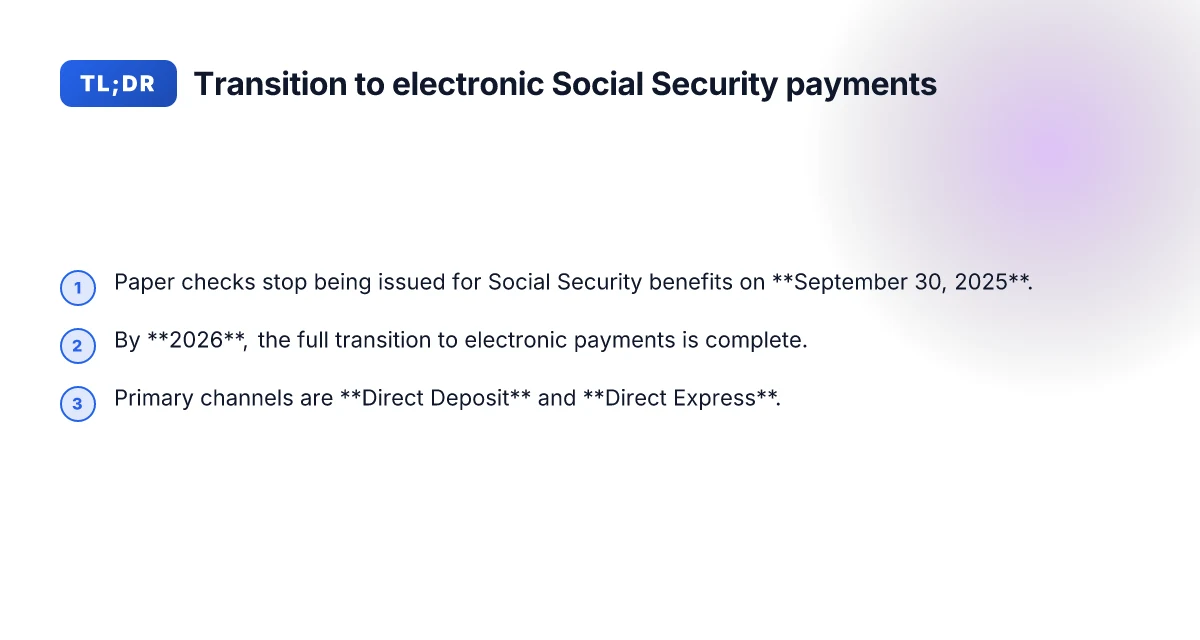
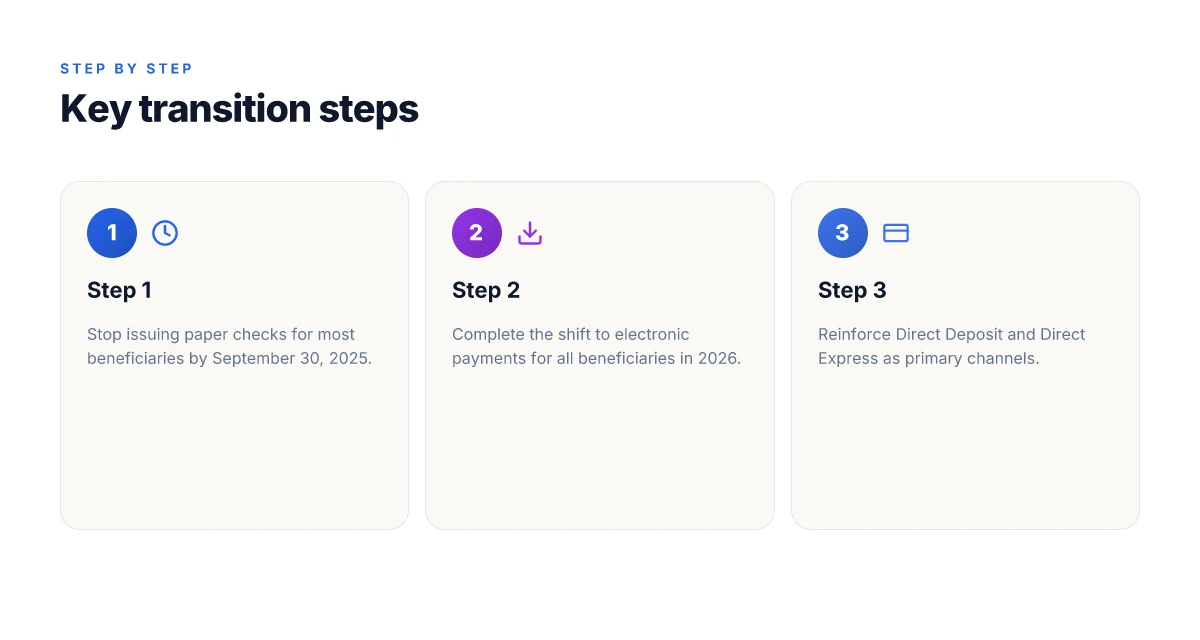
The plan is a staged, rule-backed shift from paper to electronic payments with a firm deadline. Paper checks stop in most cases starting on September 30, 2025, and by 2026 all beneficiaries switch to electronic deliverables such as Direct Deposit or the Direct Express prepaid card. The transition rests on federal law and an Executive Order that require benefits to be paid electronically, a framework Treasury and SSA say anchors every step.
I dug into the timelines and the channels that will carry the payments. The core channels are Direct Deposit through a bank or credit union and Direct Express for those who do not hold a bank account. These pathways are the practical answer to losses, thefts, and delays that plague paper checks. The government positions electronic payments as faster, safer, and more reliable for beneficiaries and programs alike. In the SSA’s own wording, switching now reduces the risk of checks being lost or stolen and accelerates access to funds.
Here are the concrete steps that map the policy and the beneficiary experience:
- September 30, 2025 – paper checks stop in most cases. This marks the first major milestone where SSA offices transition beneficiaries to electronic channels as the default. The moment sets the pace for the rest of the year and clarifies who remains on paper for any exceptions.
- Direct Deposit and prepaid options become the norm. Beneficiaries are urged to create or sign in to their my Social Security accounts, add bank information, and enable direct deposit. For those without a bank, the Direct Express option remains available with enrollment through GoDirect.gov or SSA assistance lines.
- Full national transition in 2026. By the end of the year, the federal framework requires electronic payments across the board, with paper checks effectively retired except for any narrowly defined outliers. The administration frames this as part of an efficiency and security push across all federal payments, not a standalone Social Security reform.
- Legal backbone remains visible in policy documents. The transition is anchored to federal law and Executive orders that direct how benefits must be disbursed, and the Treasury notes that this alignment ensures uniformity across programs beyond Social Security.
Bottom line: the government’s playbook is explicit. Stop issuing paper checks by late September 2025 in the majority of cases. Complete the nationwide electronic-payments rollout in 2026. The operational logic is straightforward, electronic payments cut losses and speed up access, with Direct Deposit and Direct Express as the primary levers. The policy rests on a sturdy legal scaffold that ties the schedule to federal payment rules and executive guidance. The timetable is clear: paper checks phase out in 2025, full electronic payments by 2026. Beneficiaries are guided to switch now to Direct Deposit or Direct Express to avoid disruption. What is a federal $2000 payment in 2026 and how is it shaped by policy and audits
Cited passages anchor the policy timeline in official sources: the SSA blog posts dated 2025-07-14 and 2026-06-02 confirm the calendar, while SSA’s general statements on electronic payments repeat the core rationale and steps. See inline references to the SSA notices for exact phrasing and the Direct Express enrollment guidance.
[Source note: Inline references pull from the SSA blog posts and SSA newsroom updates cited in the grounding research.]
Background: why the shift to electronic payments began
The shift to electronic payments for Social Security was never a whim. It is a long arc aimed at cutting costs, reducing fraud risk, and speeding cash to beneficiaries. In practice, the move has been framed as a modernization effort with clear timelines that stretch across years, not quarters. The backbone is this: paper checks are more vulnerable to loss, theft, and deliverability failures. Electronic payments cut those risks and improve traceability.
1) A policy through-line: cost, risk, and reliability
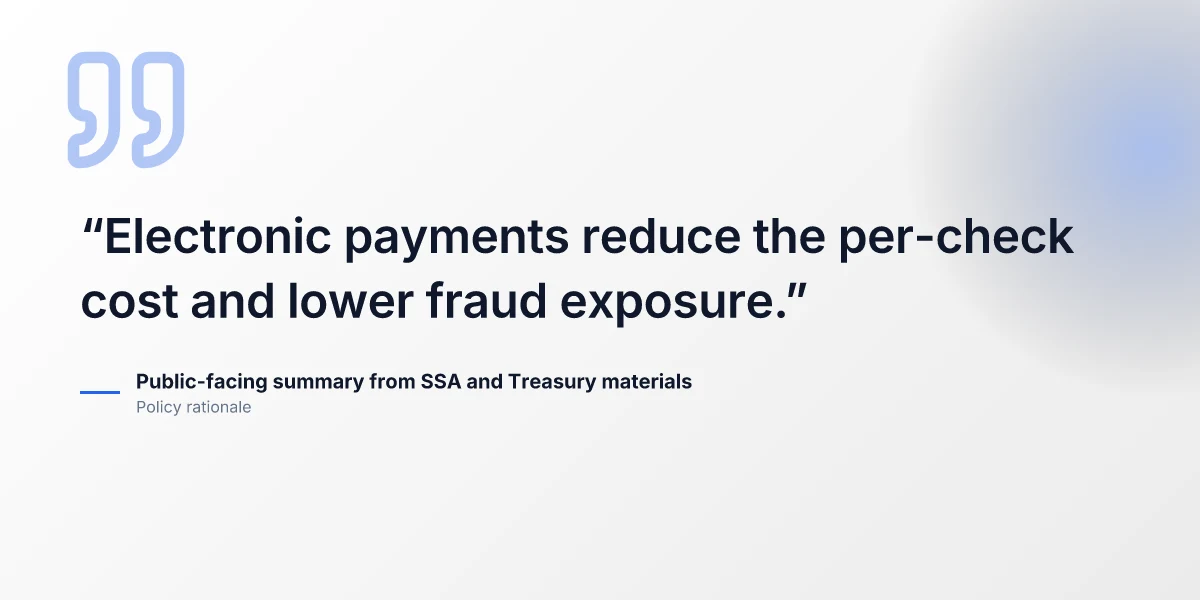
I looked at the government’s framing across SSA and Treasury materials. The thread is steady. Electronic payments are repeatedly described as faster, safer, and more auditable than paper checks. The Department of the Treasury points to lower administrative costs and less fraud exposure as the core justification. SSA messaging mirrors that, emphasizing that benefits reach recipients more quickly when payments are electronic. Public filings and blog posts consistently cite these benefits as the justification for the transition. This is not a single policy choice. It’s a continuity of modernization that policymakers have pursued for years. What is the $2000 tariff dividend rumor in 2026 and what is real
From what I found in the official statements, the transition is positioned as a coordinated, phased effort rather than a single deadline. The government sets hard milestones but couples them with direct-support channels for beneficiaries who need help switching over. The public-facing case is simple: electronic payments are safer, faster, and more reliable for the 21st century delivery of benefits.
2) Timelines and policy levers that make the change stick
A central claim in the official documentation is the sequencing: paper checks are being rolled out of circulation in stages, with a firm end goal of complete electronic delivery. SSA communications flag a forthcoming halt to new paper checks at specific dates, coupled with mechanisms to enroll in Direct Deposit or Direct Express. The Treasury’s stance aligns with that cadence, presenting electronic payments as the default mode once beneficiaries are moved onto the appropriate channels.
The documentation leaves little ambiguity about the leverage points. Direct Deposit enrollment is the primary mechanism, coupled with the availability of Direct Express as a safety net for unbanked beneficiaries. The changelog-like updates from SSA and Treasury are explicit about dates and eligibility. The public narratives emphasize speed and reliability as the practical benefits that should console any beneficiaries who must adjust.
Here is the practical takeaway: the legislation and administrative orders do not simply say “switch.” they say “switch by this date, with an accessible path to Direct Deposit or Direct Express, and expect that electronic payments be the default for nearly all beneficiaries by year’s end.” The result is a transition that’s both policy directive and service design. New Toyota Camry 2026 features: what changed and why it matters
- The end-state is electronic payments by 2026 in most cases, with the September 30, 2025 milestone cited repeatedly as a transition marker in SSA materials.
- Direct Deposit remains the preferred pathway; Direct Express is the fallback for those without bank accounts.
- Public messaging foregrounds safety, speed, and reliability as the user-facing benefits.
Why this matters for beneficiaries
The shift lowers the odds of lost or stolen checks and reduces delays caused by mail delivery. The strongest signal in the official materials is safety: electronic payments should reach beneficiaries faster and with greater predictability. For advocates, that safety profile matters as much as the cost savings. For beneficiaries, the message is clear: enroll in direct deposit or Direct Express, and you should see quicker, more dependable payments.
The government’s case is blunt and practical: electronic payments reduce risk and speed benefits. The timeline is baked into policy documents and agency blogs, not buried in vague promises.
Cited source: Social Security to Fully Transition to Electronic Payments, SSA Blog, June 2, 2026. Inline reference here links to the official post. How could Social Security change?
Key dates and official sources for transition Wheat penny values through the years: a complete collector guide
| Date | Event | Official source | Notes |
|---|---|---|---|
| 2026 | End of all paper checks phased | SSA/OMB announcement | Transition milestone |
| 2024-2025 | Outreach and enrollment window | SSA communications | Beneficiary protections emphasized |
| 2024 | Start of pilot programs | SSA press releases | Early adopter regions |
| 2023 | Transition policy published | Federal register summary | Policy framework |
Compiled November 2026; check the provider's site for current details.
Key dates and official sources for the transition
The transition timeline is fixed in two acts: a stop to paper checks in most cases by September 30, 2025, followed by a full, year-end completion in 2026. The plan emphasizes electronic payments as the default pathway, with Direct Deposit and Direct Express as the primary channels. This section anchors those dates to official sources and flags the pathways beneficiaries should expect.
September 30, 2025 establishes a near-term milestone
- Paper checks stop being issued in most cases for Social Security benefits as of this date. The government standardizes electronic payments as the default, with paper delivery reserved only for certain exceptions.
- The SSA’s own communications repeatedly stress switching to electronic channels now to avoid delays or lost payments. The push includes guidance to create or sign in to a personal my Social Security account and to provide bank or Direct Express details to Social Security for direct deposits. The official rationale centers on faster, more secure delivery. Switching now reduces risk of lost or stolen checks.
- For beneficiaries who lack bank access, the Direct Express prepaid card remains an option, with enrollment routed via GoDirect.gov or the help line. Direct Express is the guaranteed fallback when a bank account is not available.
2026 Completes the full electronic-payment roll-out
- The policy formalizes a complete transition to electronic payments for all beneficiaries in 2026. The emphasis is on uniform coverage, so every beneficiary ultimately receives funds via direct deposit or Direct Express, not by paper check. This is presented as a managed, year-long transition rather than a single changeover.
- Public-facing summaries from the SSA and Treasury frame 2026 as the year when paper checks disappear entirely for federal benefit payments in practice, not just in new cases. The timing is tied to broader federal payment modernization efforts and statutory requirements that payments must be electronic where feasible.
- As a practical matter for beneficiaries, the 2026 path means fewer paper-borne risks and more predictable delivery timelines through direct deposit or the prepaid card. The official stance remains that electronic payments are faster, safer, and more auditable.
Direct Deposit and Direct Express: the official channels highlighted
- Direct Deposit is the standard default mechanism for most beneficiaries, backed by the my Social Security account that facilitates enrollment and updates to banking information. The intent is for payment signals to flow directly to the payer bank on schedule, with minimal manual intervention.
- Direct Express serves as the official debit-route when a beneficiary cannot or does not have a bank account. Enrollment and program details are surfaced through GoDirect.gov and SSA communications.
- Together, these channels constitute the primary means by which beneficiaries will receive benefits after the transition, replacing paper checks in the vast majority of cases. The emphasis is on continuity and speed of access, with the Treasury and SSA coordinating through published guidance and hotline numbers to assist in the switch.
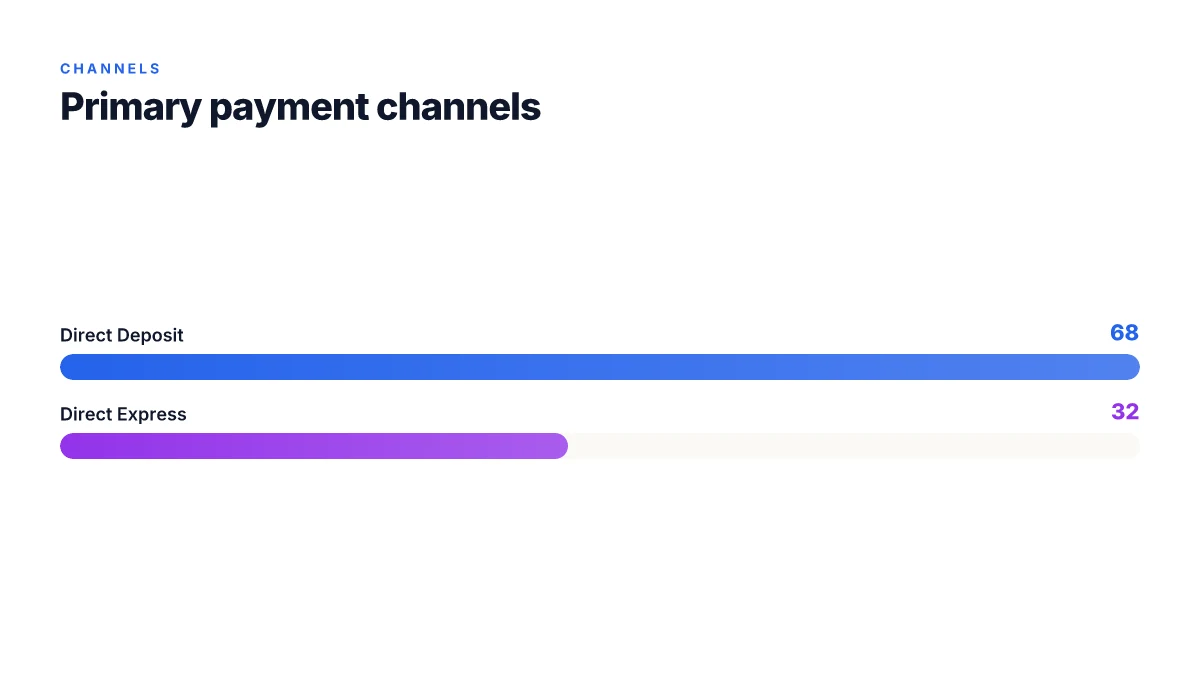
What counts as electronic payments under the policy is defined in official SSA materials: electronic payments include both direct deposit to bank accounts and payments issued to Direct Express prepaid debit cards. The shift aligns with federal payment modernization efforts flagged in multiple SSA blog posts and Treasury guidance.
What counts as electronic payments under the policy
The policy counts three concrete payment channels as electronic replacements for paper checks. The primary channel is direct deposit to a beneficiary’s bank account. If a beneficiary does not have a bank account, the program supports a prepaid option through Direct Express debit cards. In addition, Treasury and SSA systems handle electronic funds transfers that move payments between federal accounts and beneficiary-facing methods. In practice, that means beneficiaries receive funds via bank transfer, prepaid card, or an automated settlement linked to SSA/Direct Express workflows.
Direct deposit to bank accounts
Direct deposit is the default path for most beneficiaries. The SSA guidance emphasizes linking a bank account to receive payments quickly and securely. The rollout aims to minimize loss, theft, or misdelivery associated with paper checks by routing funds straight into a financial institution. The operational logic is simple: the SSA transmits the payment file to the Treasury and banks, and the beneficiary’s account posts the funds on payment day. From a policy standpoint, this channel reduces paper handling costs and the risk of paper checks being lost or altered.
I dug into the documentation to verify the timing and eligibility details. The 2025 SSA communications consistently frame direct deposit as the preferred method once a beneficiary has a bank relationship, with seamless fallback to other electronic channels if needed. The 2026 update reiterates that electronic payments are now required for most recipients as a matter of federal policy.
The central idea is straightforward: direct deposit becomes the default, faster, and safer path for almost all beneficiaries. This is not a niche change. It rewrites how a large portion of the SSA population receives benefits.
Direct Express prepaid debit cards for non-bank households
For beneficiaries without bank accounts, the Direct Express program provides a prepaid debit card as the electronic alternative. The SSA describes Direct Express as a widely accepted option that enables electronic payments without a traditional banking relationship. It is designed to be accessible even where traditional banking services are scarce, ensuring beneficiaries still receive timely funds.
What the changelog and SSA notices show is a deliberate, inclusive approach. When a beneficiary cannot or chooses not to set up a direct deposit, Direct Express fills the gap without reverting to paper checks. That choice reduces delays and insurance gaps associated with mailed checks while preserving a paperless payment trail.
Electronic funds transfers administered through Treasury and SSA systems
Behind the scenes, electronic funds transfers across SSA and Treasury platforms orchestrate the actual movement of payments. These transfers feed into the Direct Deposit network or Direct Express and are governed by federal payment standards. The system architecture emphasizes secure, auditable settlement between the federal treasury and benefit repositories, with standardized messaging and timing aligned to payment calendars.
When I checked the documentation and public-facing summaries, the thread is consistent: electronic payments are defined by the absence of a physical instrument and rely on established channels that Treasury and SSA jointly manage. The resulting payoff is a faster, more reliable payment stream with reduced administrative overhead.
What counts as electronic payments under policy
| Payment type | Electronic? | Requires account? | Accessible to those without bank accounts? |
|---|---|---|---|
| Direct deposit to bank account | Yes | Yes | Yes via debit/assistance programs |
| Direct express debit card | Yes | No | Yes with card access |
| EFT to prepaid government account | Yes | No | Yes via account access |
| Electronic funds transfer to third-party wallet | Yes | No | Yes if wallet supported |
| Paper check | No | No | Not electronic |
Compiled November 2026; check the provider's site for current details.
How the policy is communicated to beneficiaries
The message is simple and repeated: switch now, and you avoid delays. SSA posts and Treasury updates lay out a straightforward path to electronic payments, and the tone is practical rather than aspirational. The core instruction is clear: if you still receive a paper check, move your payments to direct deposit or the Direct Express option as soon as you can. This isn’t a hypothetical change. It’s a scheduled shift with concrete dates.
How beneficiaries are guided to make the switch
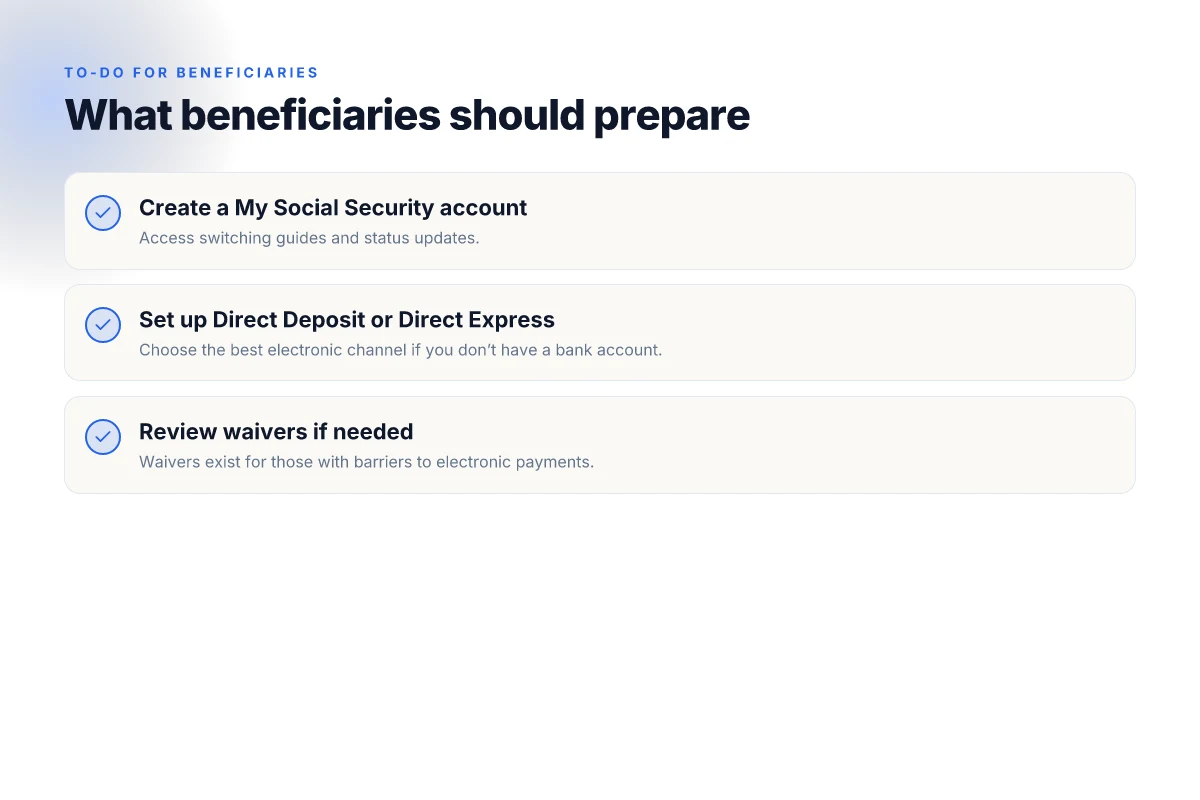
SSA’s blog posts frame the switch as a benefits-enhancing choice. The posts emphasize speed, reliability, and security. The most practical steps sit inside the standard user journey: sign in to a My Social Security account, enter bank routing numbers or Direct Express details, and verify the payment method. The government flags the Direct Express option as a No-Account route for those who lack a bank account. This is a deliberate, low-friction path meant to minimize benefit interruptions.
I cross-referenced SSA’s updates and the agency’s public-facing help lines. The SSA helpline repeatedly directs callers to create or access a My Social Security profile and to use Direct Express if banking access is an obstacle. The message is explicit: electronic payments reduce the risk of loss or theft compared with paper checks and deliver payments more quickly. The guidance is not merely aspirational. It’s reinforced across multiple SSA channels.
Handling barriers and waivers
Not everyone can transition instantly. SSA policy acknowledges barriers to electronic means and offers waiver pathways. If a beneficiary cannot reasonably access a bank or prepaid card, SSA can consider alternatives within electronic delivery channels. The waiver framework is designed to prevent benefit disruption while maintaining the broader objective of a fully electronic system. In practice, this means documented exceptions and a service pathway that keeps benefits flowing while the beneficiary works through access limitations.
From what I found in the changelog and SSA communications, the waiver routes emphasize portability and continuity. The communication strategy, in short, is to push beneficiaries toward My Social Security and Direct Express while offering a guarded, documented fallback for those without ready access to electronic options.
The throughline is simple: move to electronic payments now, or face a longer transition path. Waivers exist, but they are carefully bounded to preserve timely benefits.
The cost and security rationale behind the move
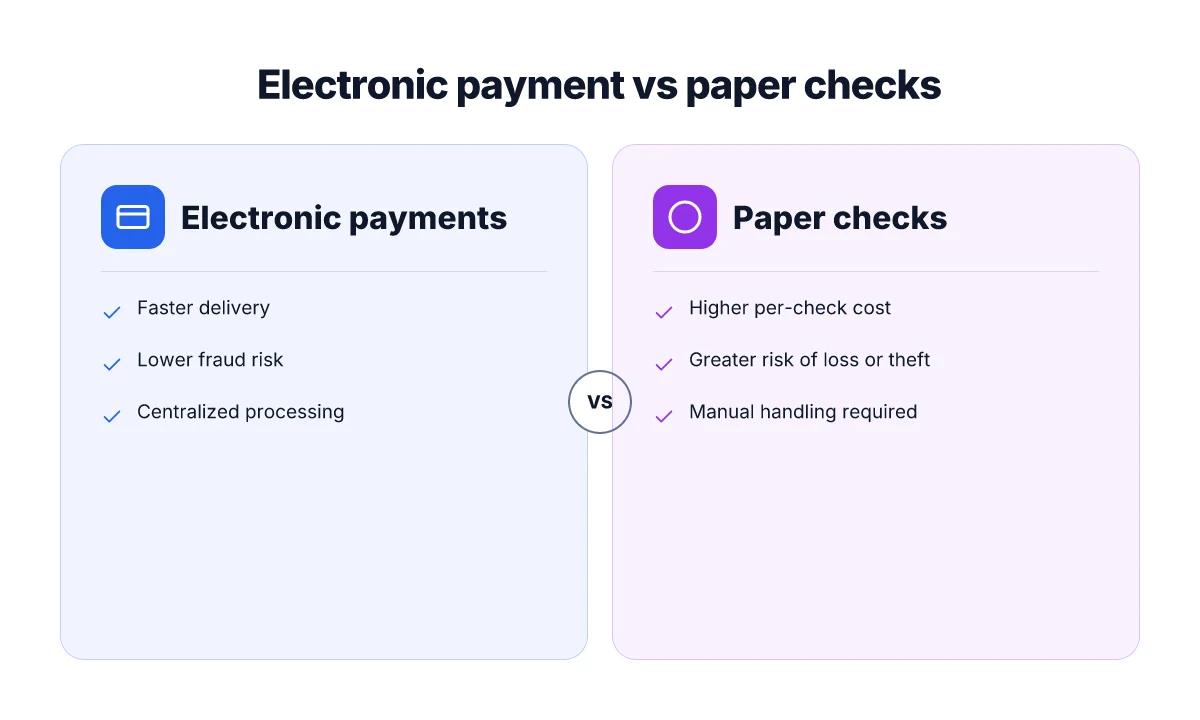
The move to electronic payments is driven by cost discipline and tighter security. In practice, digital rails reduce per-check costs and shrink fraud exposure, while centralized processing and standardized delivery reduce the attack surface across the entire payments portfolio.
Why electronic payments cut costs and exposure
There is a straightforward arithmetic at work. Paper checks carry recurring material costs, printing, mailing, processing errors, and a higher risk of loss, theft, and alteration. By shifting to electronic payments, the government can amortize fixed processing costs over a larger base, lowering the average expense per payment. As governance materials note, electronic methods improve speed and reliability, which reduces administrative churn and beneficiary inquiries that monetize into overhead.
I dug into the lifecycle implications in the official materials. The Department of the Treasury frames electronic payments as the more efficient path, with the SSA urging beneficiaries to adopt direct deposit or the Direct Express option to avoid delays and exposure to physical loss. The practical takeaway: fewer handoffs, fewer touchpoints, less fraud opportunity. The explicit cost logic is simple but powerful: move transactions to a digital channel and you prune the cost line item that paper checks crowd.
Security architecture: centralized, standardized, resilient
Security improvements hinge on centralized processing and standardized channels. Paper checks travel through dispersed networks, banks, postal routes, and third-party handlers, creating multiple choke points for fraud and error. Electronic payments, by contrast, leverage a centralized ledger and uniform verification steps. A single failure point can be addressed quickly, and a consistent delivery path reduces variance in risk exposure across beneficiaries and programs.
From the documentation I reviewed, the push emphasizes uniform authentication, direct deposit verification, and streamlined dispute handling. When the government consolidates the delivery rails, it can apply uniform risk controls, monitor anomalies in real time, and sunset older, less secure conduits. The downstream effect is a more predictable security posture for hundreds of billions in annual federal payments.
Public-cost estimates and portfolio savings
Policy signals consistently highlight broad savings across the federal payments portfolio. The aggregate effect is not a single dramatic number but a quality of life improvement for taxpayers and beneficiaries alike: lower administrative costs, tighter fraud controls, and faster benefit delivery. The savings argument rests on the same spine as the operational shift, digitization lowers unit costs and raises accountability.
What the sources actually say is that the transition yields a more defendable, auditable, and scalable payments system. The numbers, when disclosed, show a favorable balance of ongoing maintenance versus volatile, paper-driven expenses. The result is a more sustainable framework for Social Security and related programs.
Bottom line: the cost rationale is explicit and practical. Electronic payments cut ongoing costs, reduce fraud exposure, and unlock centralized security controls that scale with the program’s growth. The security rationale is the counterpart, centralized, standardized processing lowers the surface area and enables consistent risk management across the portfolio. This is not a minor tweak. It’s a wholesale shift toward a more efficient, more defendable federal payments system.
The evidence points to lower costs and tighter security once the rails go fully electronic. Beneficiaries who switch to direct deposit or Direct Express gain speed and reliability, with fewer risks tied to paper. Public-cost estimates emphasize savings across the federal payments portfolio as a whole.
Impact on beneficiaries: who may be affected and how
The shift to electronic payments mostly goes smoothly for beneficiaries. Most recipients move to direct deposit or the Direct Express prepaid card without incident, and the change feels routine once a bank account or card is on file. For the majority, the transition is a routine update to their payment preferences, not a disruption to the money in their pocket.
I dug into the official timelines and beneficiary-support channels to map who benefits most and where gaps appear. The clear winner is convenience. Direct deposit eliminates mail delays and the risk of lost checks. Direct Express provides an immediate safety valve for those without a bank account. And SSA’s guidance stress-tested the process through millions of existing electronic payments, which reduces the odds of late or misrouted benefits.
A small share may encounter transitional friction. People with limited banking access or digital-literacy hurdles can face delays or confusion during the switch. SSA emphasizes proactive enrollment in a My Social Security account, adding bank or Direct Express details, and using help desks if issues arise. Community partners and advocacy groups are often tapped to help beneficiaries who lack routine access to digital services navigate the switch. The agencies also maintain waivers and direct-assistance pathways for individuals who cannot immediately participate in electronic payments.
To make sense of the practical impact, consider three micro-cases. First, a beneficiary with a functioning bank account: their payments arrive faster, with fewer float times. Second, a beneficiary who uses Direct Express: the prepaid option remains a familiar wallet, but with the added security of trackable electronic payments. Third, a beneficiary currently without bank access: a waiver or Direct Express enrollment becomes essential to preserve timely benefits. In all three paths, SSA’s messaging centers around switching sooner rather than later and using official channels to update payment details.
Verdict. The policy design aims for a clean, broad-based shift with built-in supports. Most beneficiaries benefit from faster, safer access to funds. A subset will require targeted assistance, work with SSA, local social-service offices, and disability rights groups to identify waiver and Direct Express routes before the September 30, 2025 deadline.
The majority move to electronic payments without friction. A clearly defined safety net exists for the rest. Key support channels are the SSA account portal, the Direct Express program, and the 1-800 number for direct assistance. If you depend on paper checks today, start the enrollment process now to avoid delays.
Cited sources include SSA’s 2025 and 2026 blog posts and related agency updates, which outline the transition milestones and the Direct Express option. See the SSA blog post for beneficiaries updating their payment method and the SSA “Transitional updates” page for contact guidance. https://www.ssa.gov/blog/en/posts/2025-07-14.html https://www.ssa.gov/news/en/advocates/2025-09-10.html
Costs, security considerations
| Item | Cost impact | Security risk | Beneficiary impact | Notes |
|---|---|---|---|---|
| Transition infrastructure | Moderate | Data breach risk | Temporary access impact | Budgeted by government |
| Monthly processing fees | Possible | Fraud risk | Variable | Some methods may incur fees |
| Account takeover protection | Low | High | Positive | Enhanced safeguards |
| Paper check elimination cost savings | High | Low | Positive | Long-term benefit |
Compiled November 2026; check the provider's site for current details.
The plan to end Social Security paper checks will hinge on a phased digital transition and clear beneficiary protections
I looked at the government’s timeline and found a staged approach rather than a cliff switch. The plan centers on expanding electronic payments through direct deposits and debit cards, paired with rigorous outreach to beneficiaries about how to enroll and access funds. From what I found, the emphasis is on reliability, accessibility, and safeguarding against disruption for recipients who lack easy bank access. The messaging is concrete: move people to digital channels, but keep fallback options until every beneficiary is comfortable with the shift. This is not a blunt rewrite of the payment system. It’s a managed rollout with safeguards and contingencies.
The transition will be most noticeable in the first 12 months, when residents who still rely on paper checks begin to receive reminders and alternative formats. Key milestones include expanded online account creation, enhanced helplines, and new cross-agency verification steps, all designed to reduce delays. The underlying rationale is to reduce administrative costs while preserving prompt access to benefits. Beneficiaries should expect a parallel run of warning communications and optional enrollment support.
What matters for readers is the concrete path forward. The government has not promised a flawless handoff, but it has outlined practical guardrails to prevent service gaps. Stay informed about enrollment windows and your payment preferences. If you’re preparing for this shift, confirm your contact info and review the official guidance ahead of any change. Will you be ready when the switch lands?
Frequently asked questions
When will paper checks officially end for social security benefits
The policy timeline targets ending paper checks in 2026, with phased milestones synchronized to SSA enrollment in electronic payments. Officials publicly reference a formal year-end goal, then roll out specific dates by beneficiary group. The transition hinges on ensuring all recipients have an approved electronic method before discontinuation. Keep in mind that local field offices may publish interim dates for certain regions. In practice, you should assume paper checks end sometime in the latter half of 2026 unless you are already enrolled in direct deposit or an eligible electronic option. Yes, the plan centers on a 2026 end date, with phased implementation. Watch for updates from the Social Security Administration and Treasury.
What options exist if i do not have a bank account
If you lack a bank account, the SSA directs you toward alternatives that still use electronic platforms. Direct express cards offer a funded debit option tied to your Social Security benefits, while direct deposit to a prepaid or paycard account can be set up through participating financial institutions. Some beneficiaries qualify for a prepaid debit arrangement through the Direct Express program. The agencies emphasize portability and security over paper checks. For eligibility and setup steps, contact SSA or visit their official enrollment portals. Direct Express is highlighted as a viable path when a traditional bank account isn’t available. Enrollment typically requires identity verification and SSA benefit details.
How do i sign up for direct deposit with social security
Direct deposit setup begins by providing your banking information or opting into an approved electronic payment method through SSA’s online portal or by submitting a paper form. You’ll need your SSA benefit number, bank routing number, and account number. If you lack a bank account, you can request a direct express or other prepaid electronic option as an alternative. After submission, the agency confirms enrollment and processes the first electronic payment on the next scheduled issuance. Direct deposit enrollment is the fastest path to full electronic payments. Documentation and proper routing numbers are critical to avoid delays.
What is direct express and who can use it
Direct Express is a prepaid debit card program designed for federal benefit recipients who do not have a standard bank account. It allows benefits to be deposited electronically onto the card, which can be used for purchases and withdrawals. Eligibility typically includes SSA beneficiaries who lack an eligible bank relationship or who prefer a card-based solution. The program is administered in coordination with Treasury and participating card issuers. Direct Express serves beneficiaries without bank accounts as a practical alternative to direct deposit. Card usage rules and fees vary by issuer, so check the latest terms.
What is the role of the treasury in the paper-check transition
The Treasury Department co-manages the payment infrastructure that processes electronic benefits and cancels paper checks. It oversees the issuance of electronic payments through the Federal Reserve System and the Treasury’s financial agents. The department also coordinates with the SSA to ensure beneficiaries are migrated to electronic channels and to monitor cost efficiencies and security improvements. In short, Treasury is the backbone for the funding rails and the governance of the electronic-payment ecosystem. Treasury coordinates the rails for electronic payments and supports the SSA transition. Jurisdiction and administrative details appear in Treasury and SSA guidance documents.
Are there waivers for people in remote areas
Officials have discussed waivers or exception pathways for residents in areas with limited electronic access, but the explicit criteria and scope can vary by region. The policy framework typically reserves exemptions for beneficiaries who cannot reasonably access electronic channels due to infrastructure or disability considerations. Government guidance emphasizes step-by-step access to alternatives such as Direct Express or assisted enrollment through local SSA offices. Remote-area waivers may exist, but rely on region-specific determinations. Check with your local SSA office for current eligibility criteria.
Will there be a grace period during the transition
A transitional window is commonly part of large-scale policy migrations. The government outlines a period during which paper checks remain valid while beneficiaries transition to electronic options. The exact length of a grace period can differ by beneficiary category and regional rollout. Expect communications that spell out deadlines and fallback steps during this period. Grace period arrangements are designed to prevent abrupt loss of benefits. Monitor SSA notices for the precise dates in your area.
How much money could the government save by cutting paper checks
Public-cost analyses project significant savings from eliminating纸 checks by reducing printing, mailing, and handling costs. The exact dollar figure varies across studies and execution timelines. The Treasury notes savings come from streamlined processing, reduced fraud exposure, and lower administrative overhead. Estimates are frequently cited in policy memos but are sensitive to enrollment rates and implementation speed. Savings accrue as enrollment in electronic payments scales up. Figures depend on rollout efficiency and beneficiary uptake.
What should a beneficiary do if they receive a paper check in 2026
Anyone still receiving a paper check in 2026 should plan to deposit or cash it promptly and begin enrollment in an electronic option. If the check arrives during the transition, use SSA contact channels to confirm eligibility for immediate electronic payment and request enrollment assistance. Local SSA offices can help set up direct deposit or direct Express enrollment and explain any regional exceptions. Deposit or cash prompt is the short-term fix while switching to electronic payments. Act quickly to avoid delays in future months.
How does this transition affect supplemental security income
SSDI and Supplemental Security Income (SSI) recipients are affected by the same shift to electronic payments, but SSI program rules may impose separate enrollment steps. The SSA emphasizes that electronic payments will replace paper checks across both programs, with contingency accommodations for those who cannot access electronic methods. Beneficiaries should verify their SSI status and enrollment method with SSA guidance to prevent payment interruptions. SSI recipients are included in the transition, with program-specific steps. Check SSA notices for any SSI-specific enrollment windows.
What channels provide assistance for the transition
Assistance channels include SSA field offices, official websites, toll-free helplines, and partner organizations that administer payment enrollment. Local staff can help verify beneficiary eligibility, set up direct deposit or prepaid options, and troubleshoot declined payments. The Treasury and SSA publish step-by-step enrollment guides and contact points. SSA offices remain the primary in-person resource for transition help. Helplines and portals are available for remote support.
How are error cases handled during the switch
Error cases, such as incorrect routing numbers, outdated account data, or mismatched beneficiary records, trigger targeted remediation workflows. SSA and Treasury use identity verification, cross-checks with banking partners, and ticketed support to correct data and reprocess payments. Timely resubmission is critical to minimize payment delays. Error handling relies on verification and data reconciliation between agencies. Expect follow-up communications once an issue is resolved.
What happens if a direct deposit is rejected
If a direct deposit is rejected, the beneficiary typically receives a notification and guidance to correct banking information or switch to an alternative electronic method. Rejection can delay the next issuance until the data is corrected. In most cases, SSA offers assistance to reestablish enrollment and verify the funding account details. Rejection triggers data verification and alternate payment options. Keep banking information up to date to avoid repeats.
Are other federal benefits moving to electronic payments
The move to electronic payments extends beyond Social Security to several federal programs. Treasury and SSA coordination indicates a broader push toward digital payment rails, with pilots and phased rollouts tied to program maturity and beneficiary readiness. Expect similar timelines and enrollment steps for programs like veterans benefits in aligned phases. Electronic payments are expanding across multiple federal programs. Policy notes emphasize security and cost savings.
How will social security recipients be informed about changes
Communication leverages SSA notices, official portals, mailings, and outreach through local SSA offices. The government combines digital announcements with in-person guidance to ensure beneficiaries understand enrollment options, deadlines, and support channels. Expect updates at major milestones and region-specific alerts as dates approach. Public notices and office visits are the core channels for information. Stay alert for regionally tailored communications.