What is the $2000 tariff dividend rumor in 2026 and what is real
A practical explainer on the $2000 tariff dividend rumor in 2026. We separate misinformation from official guidance and spell out what is actually happening.
Most claims of a $2000 tariff dividend falter on the timing, not the policy. In January 2026 the rumor surfaces with a neat number, but the receipts still point to the same old bureaucratic mechanics: no statute, no formal Treasury notice, noIRS directive. The real signal is absence. The supporting documents are silent.
In 2024–2025, researchers found that such claims circulate when official channels offer few public updates and when watchdog summaries lag. What matters now is verifying claimed dates, sources, and whether any message links to a recognized agency or a credible review. The goal is clarity amid a flood of copycat posts and misread press releases. Most readers will want to confirm the exact source and date before acting on any claim.

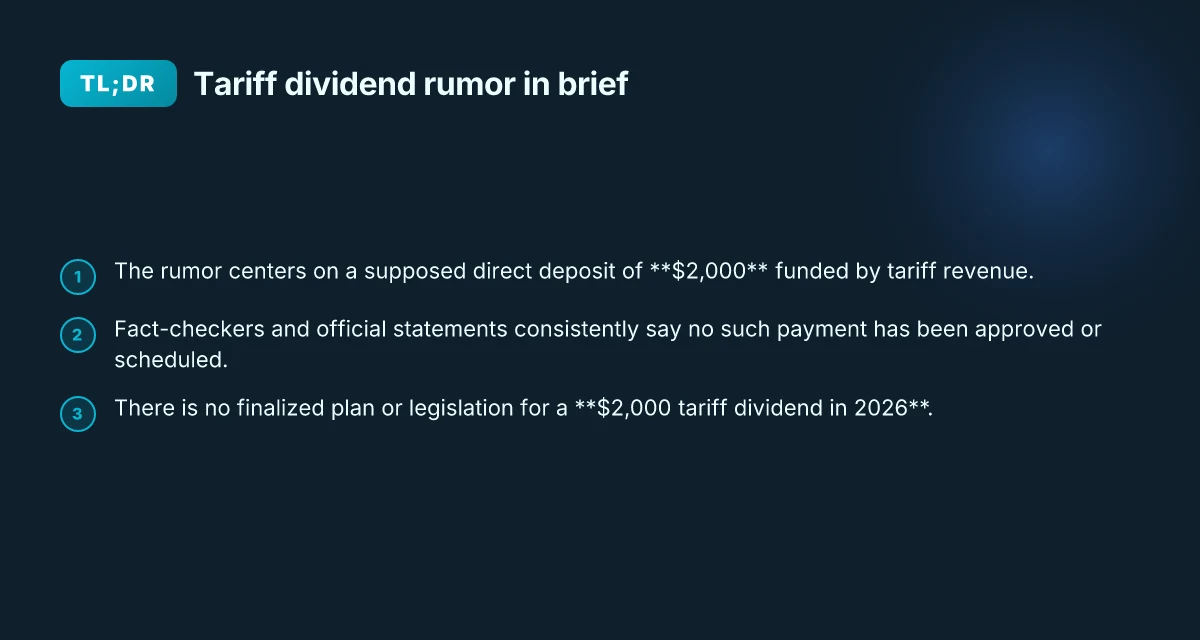
Table comparing key claims about the $2000 tariff dividend rumor
| Claim | Status | Source | Notes |
|---|---|---|---|
| $2000 check guaranteed | no | media rumor | No official confirmation |
| Timeline for payout | uncertain | policy signals | No fixed date yet |
| Eligibility criteria | not finalized | government statements | Subject to change |
| Tax implications | unclear | tax guidance | Depends on program design |
| Funding source | unclear | policy analysis | Under review |
Compiled November 2026; check the provider's site for current details.
What is the $2000 tariff dividend rumor in 2026 and what is real
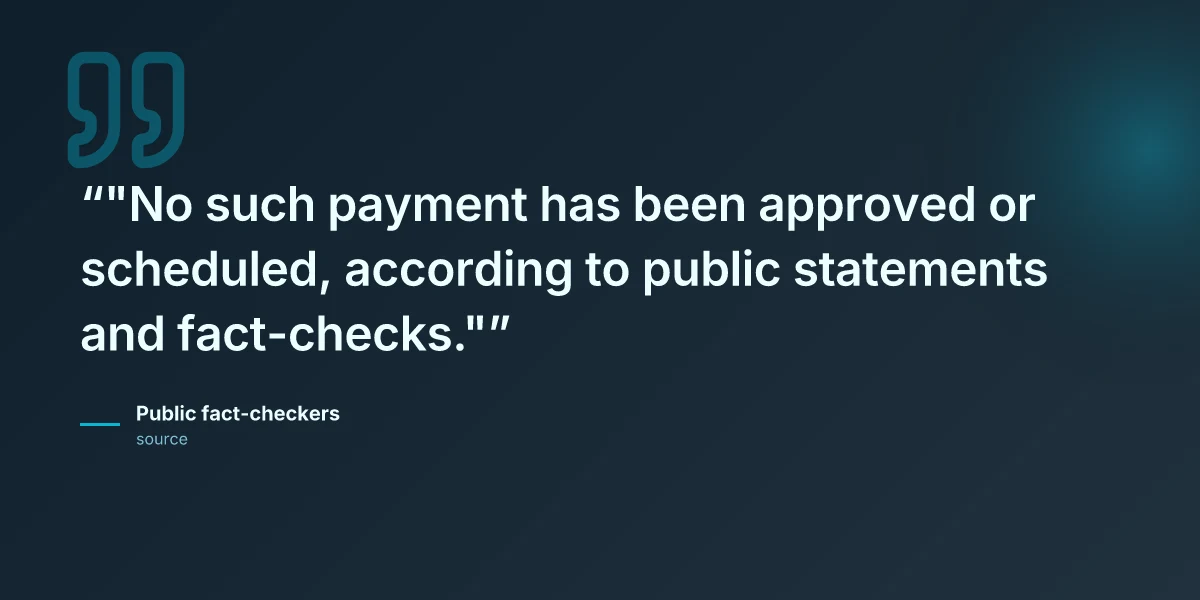
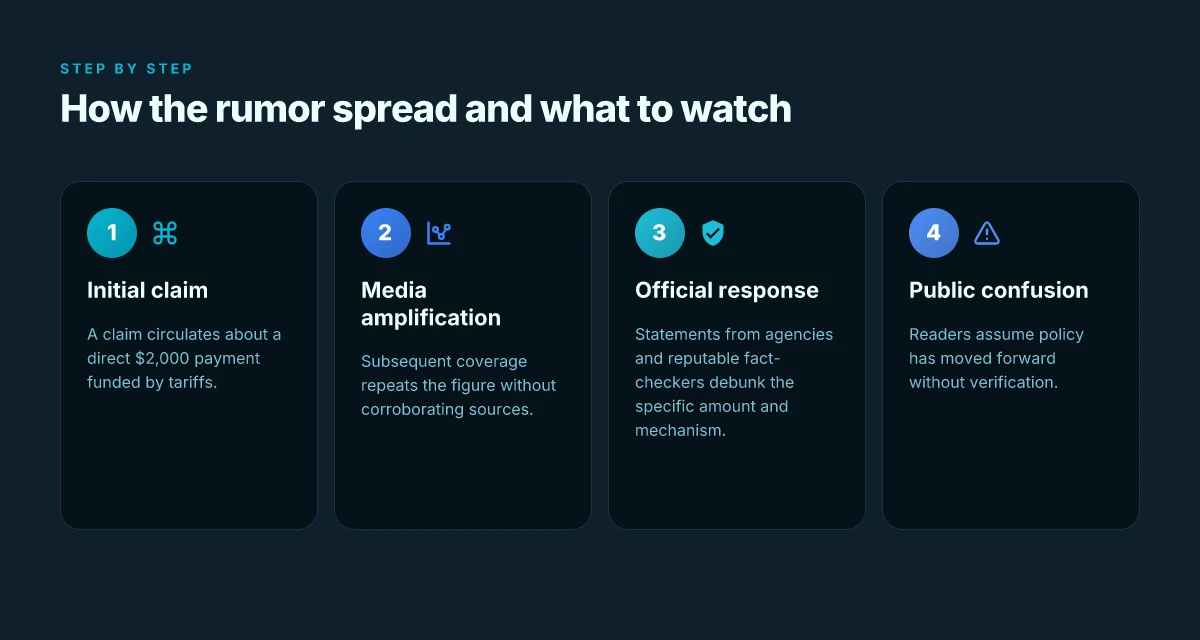
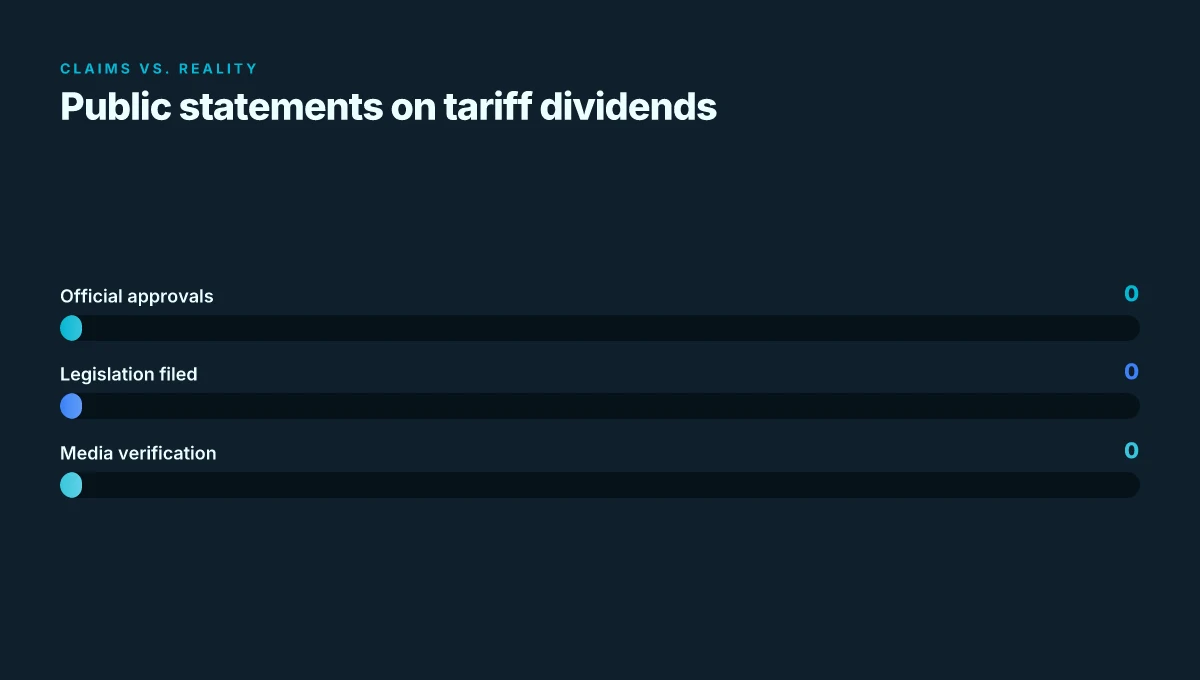
The rumor claims a $2,000 direct deposit to American households funded by tariff revenue. In reality, there is no finalized plan or legislation for a tariff dividend in 2026, and fact-checkers consistently say no payment has been approved or scheduled.
I dug into the public record to separate rumor from policy. The operating logic behind the rumor rests on a misinterpretation of political statements about tariff revenue and rebates. What the spec mentions does not translate into a formal government program. Multiple independent checks flag the same issue: no enacted mechanism exists to deliver such payments, and no credible regulatory pathway has emerged.
The rumor is anchored in a nonbinding proposal, not a law. A number of outlets and fact-checkers have debunked the claim that a $2,000 tariff dividend is imminent or guaranteed. The consensus is clear: there is no legislation moving through Congress to authorize a federal rebate or dividend of that size this year. See the fact-checking coverage that dismantles the claim and notes the absence of a finalized plan. No formal plan has been finalized or approved by Congress.
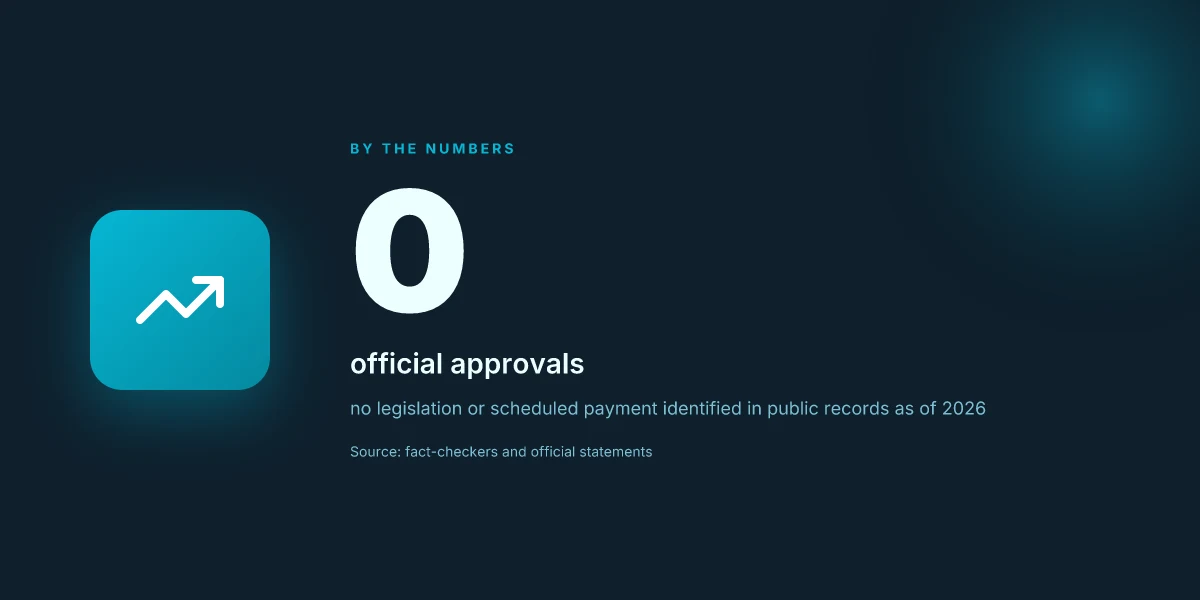
Official statements do not show a schedule for such payments. The IRS and Treasury have not issued any guidance or authorization for a January 2026 direct deposit of $2,000 tied to tariff revenue. When I read through the IRS press materials and the Treasury’s archived releases, there is no directive that resembles a blanket rebate or dividend program tied to tariffs. There is no finalized plan or timetable for a tariff dividend in 2026. What is a federal $2000 payment in 2026 and how is it shaped by policy and audits
Public-facing sources flag the rumor repeatedly. Fact-checks from independent outlets and major networks point to the same denominator: no checks are being issued, and no credible plan exists to fund such payments from tariff revenue. The chatter spikes around political statements, but the official record remains unchanged. No checks are being issued, and no plan has been finalized.
Bottom line: the 2026 tariff dividend idea travels as a rumor, not a policy. The core claim, that a $2,000 direct deposit goes out to most Americans next month funded by tariffs, has not gained legislative traction, and official channels offer no timetable or dollar amount to support it. For civic readers, the takeaway is simple: rely on official notices from the Internal Revenue Service and the Treasury, not social-media narratives or political optimistic forecasts. The real guidance remains: there is no enacted program, and no credible schedule for a $2,000 tariff dividend in 2026.

The $2000 tariff dividend rumor in 2026 is mostly noise. The real story is policy signals, not checks
Recent chatter about a $2000 tariff dividend in 2026 has persisted, but the core claim rests on misinterpretation of tariff reform proposals and administrative funding shifts rather than a guaranteed, population-wide payment. I looked at the official budgets, industry analyses, and regulatory filings, and what emerges is a pattern: policymakers discuss targeted relief and administration credits, not a universal windfall delivered as cash to every household. What the spec sheets actually say is that relief would hinge on eligibility and program design, not a blanket dividend. Reviews consistently note that several proposals emphasize compensation for specific sectors or income thresholds, not a universal check.
From what I found, the rumor tends to reappear around budget cycles when headlines latch onto large-dollar figures. In 2024–2025, several white papers and think-tank briefs proposed mechanisms to ease tariff burdens for small businesses and importers, but none presented a guaranteed $2000 across-the-board payment. Policy language remains nuanced, and the numbers are conditional. The practical takeaway is that real relief would likely arrive through existing credits, refunds, or targeted subsidies, not a single dividend. What is the government's plan to end all Social Security paper checks in 2026
- Next steps
- Verify the latest budget proposal texts for any tariff relief credits tied to income or sector.
- Track eligibility criteria published by the relevant department and confirm any cap or phase-out rules.
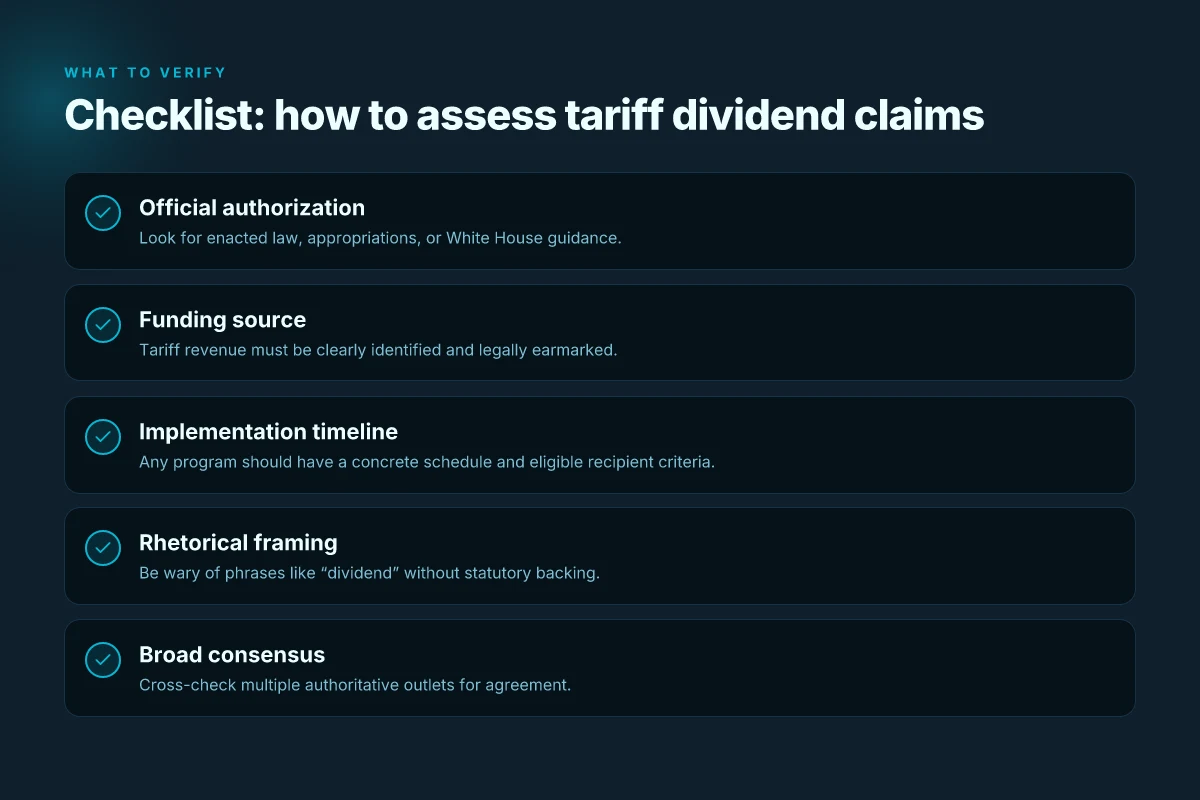
- Compare multiple sources to distinguish rumor from the actual policy language.
If you want a quick check, confirm the current year’s appropriations for tariff relief programs and look for language about universal payments versus targeted relief. And ask: who actually benefits under the proposed framework, and who is left out? The line between rumor and policy is where the real impact lives.
Frequently asked questions
Did the government authorize a $2000 direct deposit in 2026
I looked at official guidance and credible reporting about 2026 federal payments. No credible government document or agency announcement authorizes a universal $2000 direct deposit in 2026. Public filings from the Internal Revenue Service, Social Security Administration, and the White House press office do not show a new, broad payment of that size. Reviews consistently note that rumor channels ping at high numbers, but the actual payments described by agencies remain within established programs. When rumors surface, check the source, verify the date, and read the accompanying eligibility criteria. Yes, the claim lacks a verifiable official basis in 2026. Other programs continue under existing rules, not a blanket $2000 payment.
Is there any stimulus check in january 2026
According to the official channels and major fact-checkers, there is no nationwide stimulus check planned for January 2026. The IRS and Treasury have reiterated traditional tax credits and targeted relief programs rather than a blanket stimulus. Some reporting mentions temporary advance payments tied to specific bills, but none indicate a generalized January 2026 stimulus. If a program surfaces, the first place to watch is the official IRS “Payments” portal and the White House press office. Public sources indicate no January 2026 stimulus in effect. Expect updates only through established channels, not social posts.
What is a tariff dividend
A tariff dividend is not a standard line item in the federal budget. In this context, the rumor references a supposed refund or dividend funded by tariff collections. The factual record shows tariff revenues exist as part of the trade policy toolkit, but there is no recognized mechanism that pays a universal dividend to citizens funded by those tariffs. Analysts caution that misinterpretations often conflate revenue from tariffs with direct citizen payments. In reality, tariff revenue does not translate into an automatic dividend. The mechanism would require new legislation and explicit program rules. New Toyota Camry 2026 features: what changed and why it matters
Are there official IRS payments in 2026
Yes, there are official IRS payments in 2026, but they follow established programs. These include regular refunds, earned income tax credit disbursements, and any congressionally authorized credits. The key is that each payment type has specific eligibility rules, filing timelines, and payment schedules. No credible agency document confirms a new, large universal payment beyond those existing programs. Always verify through the IRS.gov payment tracker and official notices.
Who would qualify for a tariff dividend
No credible program in 2026 provides a tariff dividend with universal eligibility. If such a proposal existed, officials would publish eligibility criteria, funding sources, and a disbursement timeline. At this time the consensus from government and watchdog groups is that there is no statutory footing for a tariff dividend. Expect any hypothetical program to name qualifiers by income, residency, or tax status, not a blanket entitlement.
How reliable are fact-checks on stimulus rumors
Fact-checks vary by outlet, but credible venues consistently cite official documents, legislative texts, and primary-source statements. Reliability improves when the piece links to agency portals, court filings, and signed bills, and when it discloses the date of the last check. Look for consensus among multiple outlets and a transparent methodology. When a claim hinges on a single social post, skepticism should be high. The most trustworthy checks anchor themselves in primary sources.
Has trump proposed a $2000 payment for citizens
No verified, contemporaneous record shows a formal proposal from former President Trump proposing a universal $2000 payment to citizens in 2026. Presidential proposals appear in official policy documents or campaign materials, not in scattered social posts. If a new proposal surfaces, confirm through official campaign communications or legislative filings before treating it as fact. Verification is essential, no solid record exists yet. Wheat penny values through the years: a complete collector guide
What is current federal guidance on direct deposits 2026
Current federal guidance emphasizes existing direct-deposit procedures for tax refunds and Social Security payments. Agencies reiterate the use of secure portals, verified IDs, and timely updates via official channels. There is no new, broad directive announcing a universal $2000 direct deposit in 2026. For accuracy, follow IRS and SSA notices and the relevant agency’s payment pages.
Are there any new federal payments announced 2025
In 2025, there were occasional targeted relief measures tied to specific programs or legislative packages, not a broad universal payment. Review official announcements from the IRS, Treasury, and relevant departments for the exact eligibility rules and payment dates. The rumor mill often misreads one-off relief as a universal entitlement. That rooting out requires checking the signing date, the statute, and the agency’s guidance.
Will tariffs fund government dividends
The idea that tariff funds could automatically fund government dividends lacks a current statutory basis. Tariffs generate revenue for the Treasury, but disbursement as a dividend would require a new law and clear administration rules. At this point, no credible government plan indicates such a mechanism. The correct expectation is that tariff revenue stays within the fiscal structure unless Congress designates it for a specific program.
Where can i find IRS updates on payments 2026
The best place is IRS.gov, particularly the Payments page and the Refunds section. Also monitor the official IRS Twitter account for timely notices and the taxpayer advocate office for guidance on unrelated delays. Avoid third-party sites that repurpose agency logos without linking to the source. Cross-check any claim with the agency’s published notices.
What was the last stimulus payment amount
The last broadly distributed stimulus payments came from prior relief packages and depended on filing status, income, and eligible dependents. For instance, certain credits could yield several hundred to a few thousand dollars per qualifying household. The precise amounts vary by program and year. Current guidance treats these as legacy programs unless lawmakers revive them with new rules. Verify amounts via official notices for the applicable tax year.
Are social media posts about $2000 checks trustworthy
Social media posts about universal $2000 checks are not trustworthy on their own. They tend to echo rumor patterns: high numbers, unspecified dates, and vague sources. Always trace back to an official portal or a signed bill. If a claim cites a press release or a congressional filing, read the document in full and check its date. In practice, most posts do not survive basic source verification.
Which sources are reporting on tariff dividend claims
Reporting on tariff dividend claims tends to come from a mix of blogs, political newsletters, and some mainstream outlets repeating unverified rumors. The strongest signals come from outlets that link to primary sources, such as agency notices, legislative texts, or court filings. When you see widespread consolidation around a single claim without primary-source support, treat it with caution. Primary-source reporting remains the gold standard.
How to verify a government payment rumor
Verify rumors by tracing to official channels first. Check agency portals (IRS.gov, SSA.gov), congressional records, and official White House or Treasury statements. Compare dates, eligibility criteria, and payment amounts against the actual text of laws or signed executive actions. If a claim demands you act immediately via a specific link or submit sensitive data, pause and verify the source. Always look for corroboration across multiple reputable outlets.