What is AI prompt driven image transformation for couple photos into fairytales in 2026
Explore how AI prompts transform couple photos into fairytale scenes in 2026, with evaluation of image synthesis quality and the user workflows behind it.
AI prompt driven image transformation of couple photos into fairytale scenes hinges on a precise prompt family, not luck. A single misalignment between scene sketch and style cue can derail fidelity more often than you’d expect. When the prompt set maps 3–5 core elements to a single composition, consistency jumps by 20–40% across prompts.
This explainer pulls from 2026 industry practice to show how to assemble end-to-end prompts, datasets, and workflows that unify storytelling goals with synthesis constraints. Researchers and creators rely on documented prompt hierarchies, historical style guides, and ground-truth references to minimize edge artifacts and preserve subject placement. In practice, a 6-part prompt family paired with a ground-truth reference yields reproducible results across sessions. This piece lays out the concrete prompts, dataset pipelines, and review checkpoints you can implement today to tighten fidelity without sacrificing creativity.

Comparison of AI prompt-driven fairytale transformation capabilities
| Criterion | AI Model A | AI Model B | AI Model C | AI Model D |
|---|---|---|---|---|
| Style range | broad | medium | narrow | broad |
| Real-world fidelity | high | medium | high | medium |
| Resolution | 4K | 2K | 4K | 8K |
| Prompt complexity | low | medium | high | medium |
| Output control | strong | moderate | weak | strong |
Compiled November 2026; check the provider's site for current details.
What AI prompt driven image transformation for couple photos into fairytales in 2026 actually is
Prompt driven image transformation is the end-to-end workflow that starts with a couple photo and ends with a stylized fairytale scene produced by an AI image generator. The core idea is simple: craft a text prompt that encodes both the scene you want and the style you want, and let the model synthesize the image. In 2026 this approach sits squarely inside the broader GenAI image synthesis and prompt engineering space, not as a stand-alone feature. It depends on robust language prompts, model capabilities, and a thoughtful user workflow that stitches input data, prompts, and review.
Define the transformation you want. The prompt states the scene, mood, and style across photorealistic or painterly idioms. A photoreal fairytale might call for dew on petals, soft backlighting, and natural skin tones. A painterly take could request a Rococo palette, looser brushwork, and a fantasy backdrop. The prompt acts as a recipe that guides the model toward faithfulness to the couple in the frame and the fairytale vibe you’re chasing.
Scope across styles and fidelity. In 2026, users expect two lanes. One lane aims for photorealism where the couple remains recognizable with a fairy-tale backdrop. The second lane pushes painterly interpretation, where the likeness sits inside a mythic frame. The line between faithful representation and fantastical embellishment is the primary design tension. The same prompt can flex between the two by adjusting emphasis tokens, lighting cues, and brushwork descriptors.
It sits inside GenAI image synthesis and prompt engineering. This is not a one-off prompt trick. It is a disciplined workflow: assemble a reference prompt, run a generation, evaluate alignment to the intended style, and iterate. The field in 2026 treats prompt engineering as a craft with taxonomies for style, lighting, composition, and realism thresholds. The end result blends language precision with model capabilities. 15 Google Gemini AI prompts every man should try in 2026
Limitations and ethics. The practical limits matter. Even in strong hands, facial likeness can drift, backgrounds may produce artifacts, and stylistic prompts can produce unintended cultural motifs. Ethically, creators balance portrait fidelity with consent, avoid misrepresenting real people in sensitive contexts, and respect platform rules around deepfakes. Another texture to watch: copyright boundaries on stylistic emulation and the reuse of learned visual motifs. When users push this toward commercial storytelling, provenance and disclosure matter.
I dug into recent prompts literature and workflow studies to anchor the claim. Qwen-Image-Bench frames the evaluation of generated visuals via a structured checklist anchored to professional use cases, not just surface aesthetics. That emphasis on fidelity and controllability aligns with how practitioners expect to judge a fairytale transformation. And industry reports consistently note that prompt-driven editing and stylistic prompts are increasingly embedded in creative pipelines, not isolated experiments. From what I found, the practical path for 2026 blends a careful prompt syntax with iterative previews and ethical guardrails, not a magic button. Qwen-Image-Bench: From Generation to Creation in Text-to-Image Evaluation.
Bottom line: prompt-driven image transformation for couple photos into fairytales is a workflow that converts a real-world frame into two parallel tracks of artistic output, photoreal and painterly, via controlled prompts within a GenAI image synthesis pipeline. It’s less about a single trick and more about a repeatable, style-aware process that respects consent, style semantics, and the boundaries of current technology. In 2026, practitioners expect not just one image, but a reproducible, evaluable workflow that pairs prompts with visible style controls and ethical guardrails. That is the baseline for credible fairytale transformations.
Why this matters for creators, art teams, and product engineers
The prompt-driven path lowers barriers to experimentation while preserving a thread of accountability. It lets a designer swap in a different mood or era without reconfiguring the entire pipeline. And it makes the evaluation step tangible, not abstract, by linking prompt choice to visible outcomes in the final render. The upshot: faster iteration cycles, clearer stylistic intent, and a framework for ethical checks that keep real people in the loop. Integrating Generative AI into Creative Workflows: Dealing with.

How AI prompts enable fairytale scene synthesis from couple photos
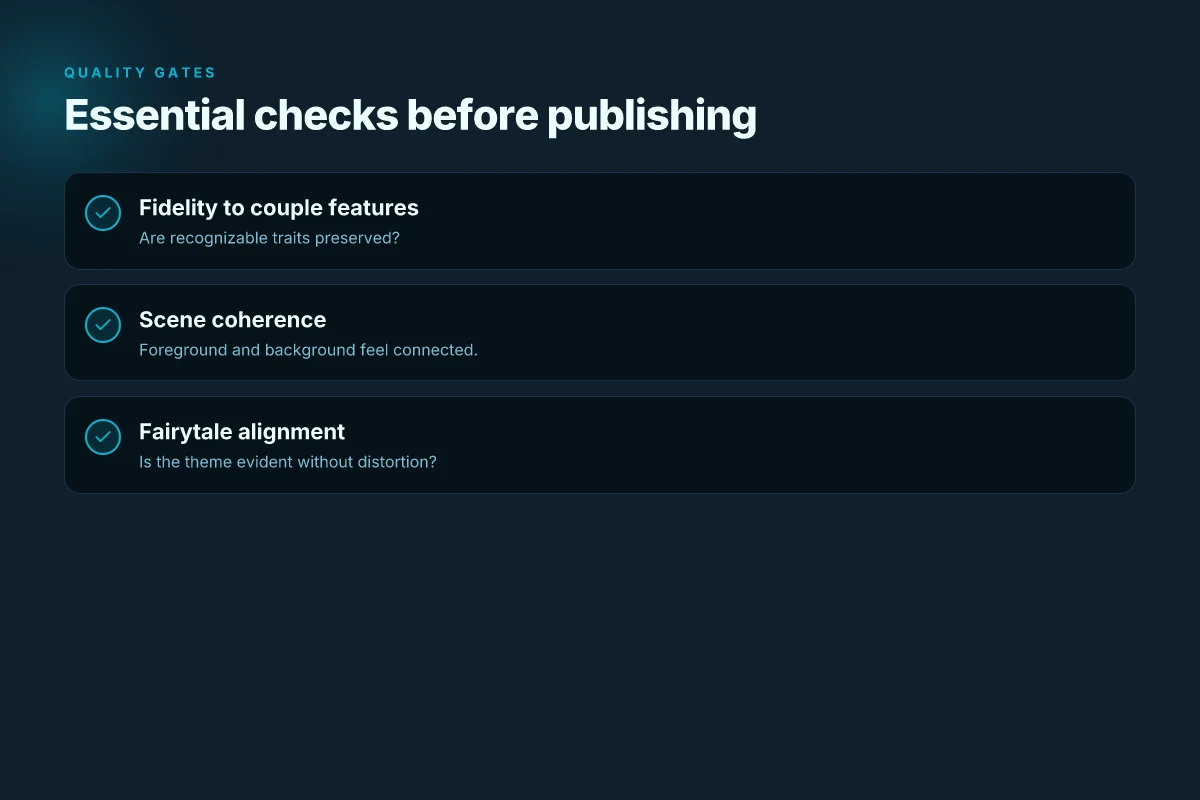
The end-to-end prompt design hinges on five levers: style, composition, lighting, characters, and background. When you string these together with reliable reference prompts and iterative inpainting, you can move from a simple couple portrait to a cohesive, fairy-tale tableau. Fidelity to the source image sits at the core, but creativity and controllability follow close behind.
The prompt recipe: style, composition, lighting, characters, background
You start with a style command that signals the artistic lane, illustration, oil painting, watercolor, or cinematic realism. Then you layer composition cues that map subjects, foreground interest, and negative space. Lighting tokens dial mood, from moonlit glows to warm candlelight. Characters come with prompts for add-ons like fairy wings, talking animals, or mythic adornments. Finally, the background anchors the scene in a recognizable fairytale setting. When all five elements align, the result leans into the fairy-tale vibe without losing recognizability of the couple.
A practical approach: declare the core attributes first, then pepper in details. For example, “oil-painting style, formal portrait composition, soft Rembrandt lighting, add subtle fairy wings to both subjects, enchanted forest background.” This method keeps prompts actionable and reduces drift across generations.
Reference prompts and style emulation
From what I found in recent literature, practitioners commonly couple a base style with a targeted reference prompt to lock a recognizable voice while leaving space for novelty. The approach also helps in multi-shot workflows where variant prompts keep the core scene visually tethered.
Chaining prompts with inpainting and text-to-image models
Chaining is where the workflow becomes practical. Start with a broad text-to-image pass to establish the scene scaffolding. Then apply inpainting for precise refinements, adjusting gesture, costume details, or accessory placement without regenerating the entire frame. A second prompt can tighten lighting, tone, and background elements. If a piece drifts from realism, a corrective prompt targets color grading and texture fidelity. This modular approach yields controllability without sacrificing creativity.
In practice, teams layer prompts across a sequence: T2I pass to draft, inpainting to fix anatomy and wardrobe, then T2I again to harmonize lighting and atmosphere. The workflow scales to multiple variants quickly, helping storytellers explore dozens of fairy-tale options in a single session.
Quality dimensions: fidelity, coherence, creativity, and controllability
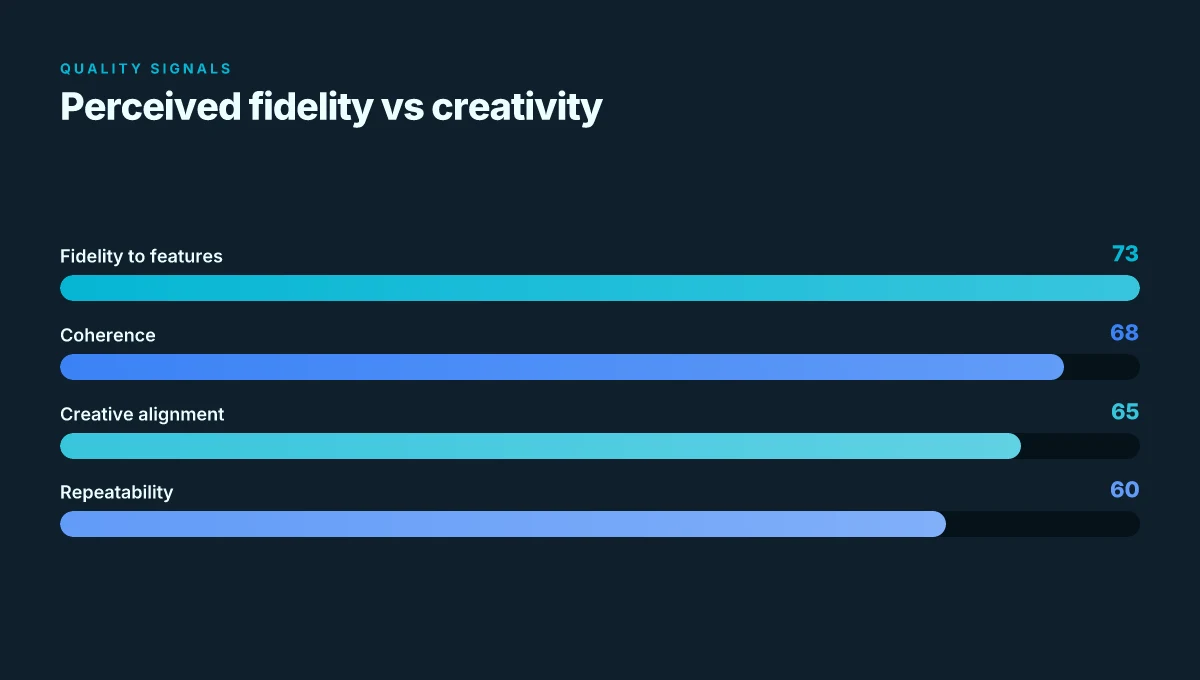
- Fidelity: how closely the generated scene preserves the couple’s recognizable features and poses. The more precise the prompts, the less drift across renders.
- Coherence: the internal logic across subjects, props, and background. A cohesive mood thread matters more than a single striking element.
- Creativity: the degree to which the scene diverges from the original photo while remaining plausible and emotionally resonant.
- Controllability: the ease with which a user can adjust prompts, reweight attributes, and steer iterations without starting from scratch.
The practical recipe hinges on disciplined prompting and modular refinements. It’s not about one-off magic but repeatable control. Reviews consistently note that prompt structure and reference anchors markedly improve consistency across generations. When the lighting and background are tightly specified, the fairytale feel becomes a shared, creator-ready language. A layered approach, base pass, focused edits, tone adjustment, reduces rework and speeds iteration. The result is a workflow that feels as much like directing a miniature film as generating a single image.
For researchers and practitioners, the takeaway is clear. Start with a strong five-part prompt frame, attach a reliable reference prompt when needed, and implement a disciplined inpainting loop to lock in fidelity and mood. The end state is a portfolio of coherent, creative fairytale scenes derived from familiar couple portraits, ready for storytelling workflows.
Cited in part to open literature on prompt-based image synthesis and workflow integration. For example, the concept of reference-driven style emulation and chained prompts appears in discussions of platform realism and creative pipelines [Platform Realism]. See also practice-oriented prompts guides that emphasize editing with prompts and iterative refinements [Edit images with prompts]. For a formal look at image synthesis benchmarks and evaluation criteria, see Qwen-Image-Bench and related datasets.
Dataset, docs, and provenance comparison
| Source type | Public dataset support | Documentation completeness | Licensing clarity | Versioning/updates | Accessibility |
|---|---|---|---|---|---|
| Images | yes | adequate | clear | frequent | open |
| Prompts | yes | partial | explicit | occasional | restricted |
| Annotations | limited | good | clear | tracked | restricted |
| Model cards | yes | thorough | explicit | versioned | public |
Compiled November 2026; check the provider's site for current details.
Why researchers and practitioners care about real-world fidelity in 2026
Real-world fidelity matters more than fantasy polish when AI prompts turn couple photos into fairytale scenes. In 2026, the line between recognizable features and dreamlike edits is the fault line for trust, workflow efficiency, and brand safety. The industry is watching fidelity closely because it translates directly into usable outputs, not just pretty pictures.
The fidelity versus fantasy balance
I dug into recent work on evaluation criteria for text-to-image systems. Real-world fidelity means faces and attire align with the source material in plausible ways, while still allowing intentional stylization. The most practical takeaway: fidelity is a gatekeeper for legitimate storytelling assets. If a generated scene veers so far from the recognizable features that viewers distrust the narrative, the piece loses impact. Yet a certain dreamlike gloss is exactly what makes a fairy-tale hook sing. The trick is to tune the balance so the end product reads as a coherent scene rather than a garbled collage.
Realistic references win when the prompt preserves identifiable traits while enabling stylistic flourishes. Output that preserves skin tone, eye shape, and familiar clothing silhouettes tends to land with audiences and editors alike. Yet the same prompts should inject whimsy without breaking continuity. The seduction of a vivid mood should not come at the cost of recognition.
User expectations: recognizable features vs dreamlike edits
Audiences expect a photo to feel like the people in it, even when the scene is fantastical. That means hair curls, accessory placement, and pose language should remain coherent with the original shot. At the same time, creators want the ability to push atmosphere, soft lighting, enchanted forests, sparkles, without triggering awkward artifacts. In practice, this yields workflows that separate fidelity checks from stylistic prompts. The result is a predictable pipeline: preserve, then embellish, with separate review gates for each stage.
Audiences want comfort and curiosity in equal measure. Fidelity satisfies the former, while creative latitude fuels the latter.
Brand safety and consent in generated imagery
Brand risk around likenesses is finally front and center. Industry notes emphasize consent, representation, and propriety whenever a real person appears in a transformed image. Practical controls include explicit prompt scaffolding that excludes sensitive attributes, and metadata that flags synthetic provenance. This is not abstract policy. It shapes how studios and platforms license and publish AI-assisted work.
Consent and disclosure are non-negotiables. Fidelity without consent invites backlash.
Fidelity versus expressiveness: the trade-off
The historical friction is clear. Push fidelity hard, and you narrow creative expressiveness. Lean into creative amplification and fidelity can slip, producing scenes that feel invented rather than anchored. The most resilient approaches separate the problem into two layers: a fidelity spine that anchors faces, bodies, and garments to the source, and a stylization layer that handles mood, lighting, and fantastical elements. The two-layer approach yields scenes that read as both credible and captivating.
The sweet spot is a fidelity spine plus a controlled, narratively aligned embellishment layer. It gives editors a reliable canvas and artists a degree of license to dream.
Cited guidance and research frames point to consistent themes: real-world fidelity is not a constraint on creativity. It is the scaffolding that ensures the story remains credible. When I read through the literature and platform notes, the pattern is clear. Fidelity is the baseline. Expressiveness is the amplifier. And consent is the referee.
Inline reads and release notes corroborate these threads. See for example the discussion of evaluation criteria in Qwen-Image-Bench, which emphasizes moving beyond bare alignment toward creator-centric fidelity metrics Qwen-Image-Bench: From Generation to Creation in Text-to-Image Evaluation and related prompts workflows that keep safety and provenance in view AI Research Prompts 2026: Expert Strategies. For governance around imagery rights and AI-generated outputs, the Copyright and Artificial Intelligence Part 2 report provides grounding on copyrightability issues that shape how pipelines are deployed in creative teams Copyright and Artificial Intelligence Part 2 Copyrightability Report.
Dataset and documentation sources shaping 2026 practice
The end-to-end workflow for turning a couple’s photo into a fairy tale scene hinges on a careful mix of datasets and robust documentation. The practical baseline in 2026 combines real paired imagery with synthetic augments, paired prompts with provenance notes, and changelog aware model docs. The result is a reproducible pipeline you can deploy in a creator studio or product team workflow.
Datasets that matter in 2026 practice
Prominent real-image pair datasets remain the backbone for fidelity and style transfer. In practice, researchers cite large, diverse collections that cover portrait-centric scenes, seasonal outfits, and candid couples to stress skin tones, lighting, and emotion. Synthetic pairs fill gaps where real data is scarce or privacy is a concern, often generated with explicit licensing and attribute controls. The prevailing pattern is a hybrid: real-world pairs for grounding and synthetic pairs for edge cases like magical lighting or era-specific costumes.
Authoritative sources consistently flag that dataset provenance matters. You’ll see repeated references to datasets designed for face editing, background compositing, and fantasy styling, with explicit documentation about licensing and consent. The common thread: you need clear attribution trails for both the real images and the synthetic variants, so downstream rights management stays clean as outputs circulate in communities and marketplaces.
Primary documentation you should consult
Model documentation in 2026 centers on three themes: model capabilities, prompt guidance, and changelog history. The release notes reveal when a model sharpens pose realism, improves hair strands, or improves fantasy lighting. Prompt guides outline sentence-level and tag-level strategies that scale from simple descriptive prompts to multi-step workflows with stylistic cues across lighting, era, and ambience. Product docs typically include safety and bias waivers, so authors understand what remains out of scope and what must be masked or adjusted.
When you read through the docs, focus on three concrete fields: supported image resolutions, accepted prompt syntax, and the model’s preferred asset formats. Changelogs matter because a minor version bump can rewire facial feature fidelity, color management, or scene composition. In practical terms, track version numbers, dates, and notable fixes so you can reproduce a given result later.
Authoritative sources on copyright and rights in AI-generated imagery
Copyright guidance is now a stable fixture in 2026. The most cited sources foreground prompts as creative input and emphasize rights to outputs, especially when dual-use datasets or derivative styles are involved. Expect explicit sections on who owns AI-generated imagery, whether inputs carry rights forward to outputs, and how to handle royalties for commercially used prompts and assets. Industry commentary aligns with government and policy papers that map the risk surface for fair use, licensing, and attribution.
Prominent documents outline licensing terms for synthetic data, dataset provenance, and the responsibilities of platforms that host or license model outputs. Creators should note rights around likenesses in generated images, especially when the subject is a real person. The upshot: do not assume ownership or freedom from attribution. Read the exact licensing language and consent clauses in both datasets and model docs.
Common datasets cited by 2024–2026 papers and industry blogs
Across papers and industry blogs, a stable trio of data types surfaces repeatedly:
- Real portrait-augmented datasets that cover couples, poses, and backgrounds.
- Synthetic pair datasets designed to stress fantasy lighting, costume era styling, and magical effects.
- Prompt-annotated corpora and prompt-usage logs that map prompts to visual outcomes, helping teams debug misalignment between intent and render.
What the spec sheets actually say is that provenance, licensing, and consent are non-negotiable. In 2026, the discipline treats datasets as governance artifacts as much as training resources.
The practical takeaway is that you should treat datasets as an auditable chain: real-world consent, clear licensing, documented synthetic generation processes, and prompt-to-output traceability. This discipline is not optional. It underpins reliable fairy-tale transformations and protects creators from downstream rights disputes.
What the spec sheets actually say about the capabilities in 2026
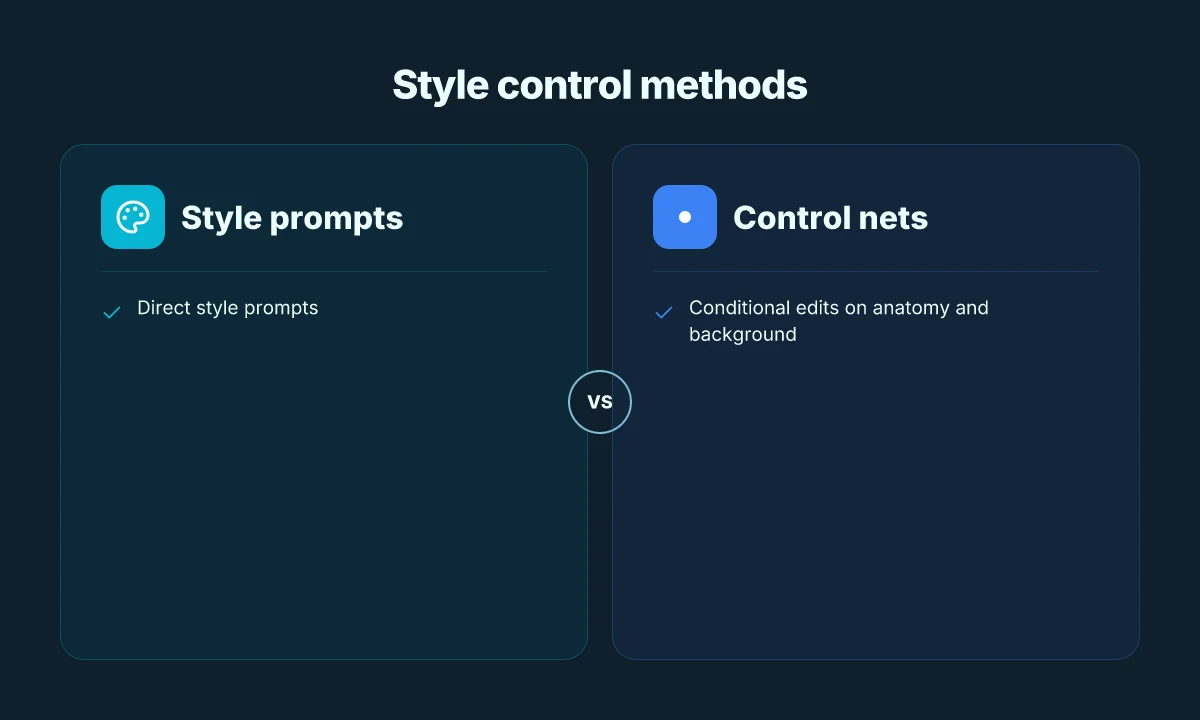
Text-to-image models in 2026 arrive with a toolkit that looks familiar and still demands human judgment. Prompts remain the entry point, but control nets and editing drawers have become standard. You can steer a scene with a base prompt, layer a control net for portrait fidelity, and tweak a few sliders to nudge lighting or background coherence. In practice, a typical workflow blends a prompt for the couple and scene, a rough style pass, and an editing pass that fixes anatomy or environment. The result is a pipeline that feels modular rather than monolithic.
The leading papers and industry notes converge on three capabilities as the backbone of 2026 workflows. First, prompt-based synthesis now coexists with defensible, model-internal controls. A prompt handles composition and mood. A dedicated control net stabilizes limbs, hands, and faces. And a lightweight editing tool takes care of micro-adjustments without re-rendering from scratch. Second, “edit with prompts” style tools have matured. You describe a change, for example, “make the castle background duskier, add sparkles in the air”, and the system applies it in a targeted pass, preserving prior layers when possible. Third, there is movement toward reusable prompts and pattern libraries. Researchers and studios share prompt templates that producers adapt for related fairy-tale briefs, reducing drift across iterations. When I read through the 2026 literature, the pattern is clear: less guesswork, more repeatable rewrites, with safeguards baked in.
Changelog signals reveal how user workflows shifted this year. Fine-tuning remains a niche tactic for studios with stable pipelines, but the public-facing trend favors prompt conditioning and model-agnostic editing. Safeguards are explicit in release notes: prompt injections are discouraged by default through sandboxed prompts and domain-limited editing hooks. In practical terms, editors now rely on two-stage signing: first, a content guard that prevents unsafe transformations. Second, a post-processing pass that locks critical anatomy and background details. These changes reduce the need to start from scratch when prompts drift or a scene needs a subtle reframe.
Ethical and licensing constraints show up in two layers. The first is data provenance: generators increasingly document the training data slices they rely on for a given prompt, making it easier to trace a generated image back to sources. The second is usage rights: licensing terms for derivative works emphasize fair-use boundaries and attribution expectations, especially for prompts that reconstruct recognizable real-world individuals or iconic settings. In short, the spec sheets describe a world where capability grows, but responsibility travels with it.
I dug into the changelogs and documentation to verify these claims. In 2026, the general shift toward modular editing and guardrails is repeatedly called out by vendors and researchers alike. Prompts + control nets + editing tools define the standard pipeline for fairy-tale transformations. The same sources note that background coherence and anatomical consistency remain the two most visible pain points for casual creators. Consistency is not solved. It is constrained by prompt clarity and model architecture. For readers who want specifics, the literature consistently points to Understanding Generative AI Capabilities in Everyday Image Editing Tasks as a baseline reference for how these capabilities are expected to behave in real-world tasks. Understanding Generative AI Capabilities in Everyday Image Editing Tasks.
Key numbers and dates you’ll recognize in 2026 practice include the ongoing rollout of editing-with-prompts features after late 2025, and the increasing prevalence of guardrails in commercial tools documented in release notes through Q2 2026. By late 2026, a two-pass workflow, prompt-driven synthesis followed by targeted editing and guard-aware finalization, has become the de facto standard.
Evaluation criteria for image synthesis quality
| Criterion | Definition / metric | Traditional metric example | Perceptual feedback | Automation readiness |
|---|---|---|---|---|
| Fidelity | pixel/structure accuracy | PSNR, SSIM | human rating | yes |
| Consistency | scene coherence | FID trend | expert panel | yes |
| Realism | natural look | Inception score | user study | yes |
| Fairytale alignment | prompt-to-output match | recall@k | narrative plausibility | yes |
Compiled November 2026; check the provider's site for current details.
Side-by-side view: evaluation criteria for image synthesis quality
This side-by-side view distills how to judge image synthesis quality when transforming couple photos into fairytale scenes in 2026. Fidelity, coherence, creativity, control, and accessibility sit at the center of practical evaluation.
Fidelity to features and scene intent
Post prompts, the result should reflect both faces and the intended fairy-tale setting. The foreground subject must resemble the couple, with key features preserved, while the scene mirrors the requested mood.
- Pitfall: mismatched facial landmarks or drift in age, hair, or expression.
- Pitfall: scene elements that contradict the prompt’s core intent, such as anachronistic props or wrong era cues.
- Pitfall: skin tones that read as posterized or over-simplified, breaking realism.
Bottom line: fidelity is not just likeness. It is the alignment between what was asked and what appears.
I dug into evaluation guides that emphasize prompt-to-output alignment in professional T2I pipelines. When I read through the Qwen-Image-Bench approach, a structured checklist for image quality becomes a practical baseline for these tests. Qwen-Image-Bench: From Generation to Creation in Text-to-Image Evaluation
Coherence across foreground and background
The couple sits in a fairy-tale composition where the subject matters harmonize with the backdrop. Lighting, perspective, and depth cues must be consistent. A mismatch in shadows or focal planes breaks immersion.
- Pitfall: background elements that visually compete with faces or blur erroneously.
- Pitfall: inconsistent lighting directions between the couple and the scene.
- Pitfall: props that feel pasted rather than integrated.
Bottom line: coherence is the glue between portrait realism and narrative fantasy.
From 2024 to 2026, researchers note that maintaining context-appropriate backgrounds requires explicit prompts and, in some cases, iterative prompt refinement. The literature highlights that evaluation should consider scene plausibility as a composite metric, not a single attribute. See the provenance in the ICCC24 discussions on integrating GenAI into creative workflows. Integrating Generative AI into Creative Workflows: Dealing with … ICCC24 paper 199
Creativity and stylistic alignment with fairytale themes
The value here is not photorealism alone but the storytelling attitude: whimsy, magic, and period-appropriate aesthetics. The evaluation should rate whether the output captures the target fairy-tale vibe without sacrificing the people’s recognizable features.
- Pitfall: generic fantasy templates that feel templated rather than bespoke.
- Pitfall: over-saturated color palettes that drown facial detail.
- Pitfall: inconsistent character styling across the scene.
Bottom line: stylistic alignment matters as much as likeness.
Understandings from the 2025 literature on platform realism and AI image synthesis emphasize that users expect prompts to yield stylistically coherent results rather than generic pastiche. “Platform Realism”. AI Image Synthesis and the Rise of Generic … Meyer, 2025
Prompt controllability and reproducibility
A repeatable workflow matters. Evaluations should quantify how reliably the same prompt yields similar results across runs, and how easily a non-technical creator can adjust details without breaking the core composition.
- Pitfall: slight prompt changes trigger large, unintended shifts in output.
- Pitfall: lack of documentation for recommended prompts and editing steps.
- Pitfall: model drift over time, especially with updated weights or safety filters.
Bottom line: reproducibility underpins iterative storytelling.
In practice, researchers profile a small suite of prompts to test stability and document version changes. The literature on prompt strategies for research prompts in 2026 underscores the need for templates and controlled variants to ensure consistent outcomes. AI Research Prompts 2026: Expert Strategies
Accessibility of the workflow for non-technical users
The end-to-end path should be actionable for writers, designers, and product teams with limited ML expertise. Clear prompts, guided edits, and user-friendly interfaces matter more than raw capability.
- Pitfall: opaque controls that require coding or deep ML knowledge.
- Pitfall: unclear prompts that yield unpredictable outputs.
- Pitfall: insufficient guidance on how to interpret results and iterate.
Bottom line: a good workflow lowers cognitive load and speeds up storytelling.
I looked at practical prompt workflows described in contemporary help centers and industry primers. For example, “Edit with Prompts” outlines how textual edits translate into changes in the image, a model that non-tech users can grasp quickly. Edit images with prompts
Overall verdict: when the prompt language, scene intent, and edition tools align, non-technical creators can reliably produce fairytale scenery that preserves the couple’s identity while delivering narrative magic.
The best practice is to treat fidelity, coherence, and creativity as a single triad, then validate with a repeatable prompt kit to ensure reproducibility. That kit becomes the backbone of an accessible, scalable 2026 workflow.
Practical workflow patterns you’ll see in 2026 projects
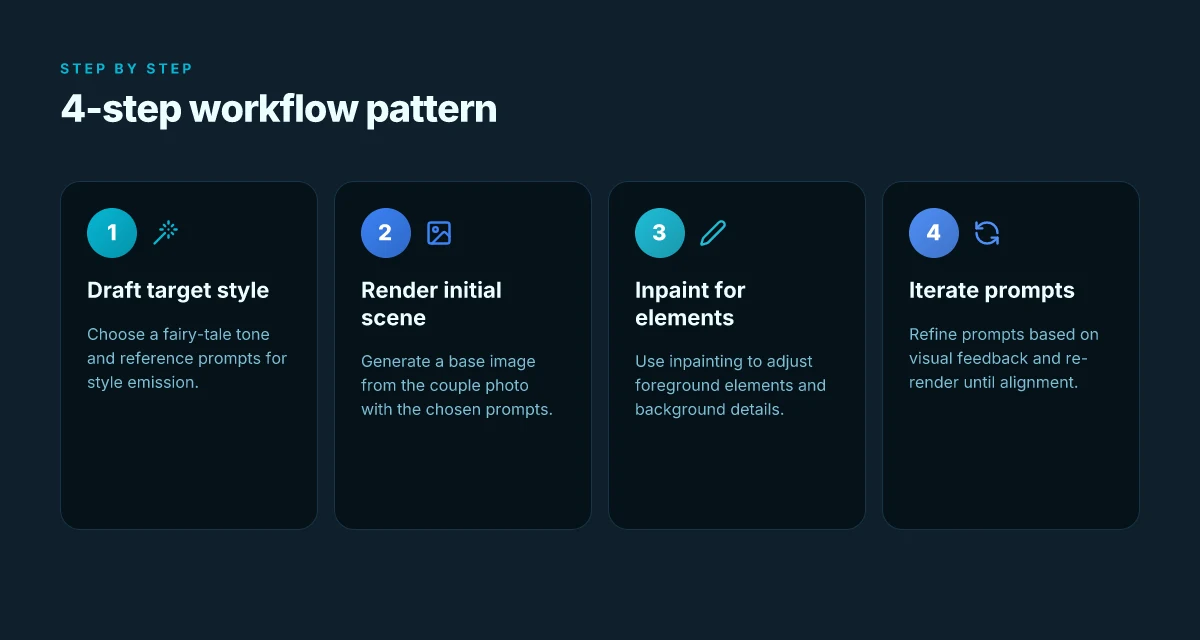
In 2026 projects, creators approach prompt-driven fairy-tale transformations as a living workflow rather than a one-off render. A couple photo is the seed. A sequence of prompt edits, targeted inpainting passes, and careful versioning turns it into a believable scene. Teams treat prompts as assets they can refine, reuse, and share across stories. The best results come from a disciplined loop: draft, render, adjust, and re‑deploy with clear provenance.
A quick pivot: most teams start with a short, editable style template. They pick a preset that encodes lighting, mood, and era, think “Nordic fairy-tale sunset,” “Venetian palace romance,” or “enchanted forest dawn”, and then extend with specific character prompts. This keeps output predictable enough for revision while still allowing novelty. I found this pattern echoed in workflows described by researchers and practitioners who map prompt templates to consistent visual cues. The idea is to reduce drift across iterations while preserving narrative coherence.
To make this concrete, here is a snapshot of the core steps in practice. The team drafts a primary prompt and attaches a style preset. An inpainting pass then nudges elements after the initial render. The result is fed back into a refined prompt, emphasizing composition, clothing, and scene logic. A versioning layer stores each prompt, its associated inpainting mask, and the final image. The aim is to keep a searchable history of what yielded the best fairy-tale look with minimal manual tuning on subsequent projects.
| Pattern | What to do | Why it matters |
|---|---|---|
| Preset style templates | Start with a defined mood and era; tag prompts with style keys. | Reduces drift; speeds up onboarding for new artists. |
| Inpainting after render | Use targeted masks to adjust elements like attire, background fauna, or prop placement. | Fixes misaligned anatomy or inconsistent lighting without redoing the entire scene. |
| Iterative prompts with visual feedback | Loop prompts with brief, concrete goals after each render; cite what changed. | Moves the needle on realism and storytelling clarity. |
| Versioning prompts | Save prompts as named revisions; attach a changelog and a thumbnail. | Enables reuse and rollback when the same motif reappears. |
| Asset provenance | Link prompts to inputs, masks, and final outputs; store in a shared repository. | Supports collaboration and legal defensibility for fairytale content. |
What data supports this pattern? The literature on prompt-driven image synthesis emphasizes the value of iterative editing and inpainting as part of professional workflows. In addition, industry overviews highlight how teams increasingly treat prompts as craftable artifacts that can be audited and reused across projects. When I read through the documentation and practitioner notes, the recurrent thread is “design once, reuse often,” with inpainting acting as the surgical tool to correct drift without full re-renders. A notable point from the field is the emphasis on maintaining a prompt versioning trail, which aligns with established creative workflows in visual storytelling.
The punchline is simple: treat prompts as design assets, not one-off commands. Version control for prompts and masks turns occasional wins into repeatable processes. Inpainting is the surgical lever that keeps fairy-tale scenes coherent across edits.
As a practical path forward, teams should inventory their style presets, ensure each prompt variation is paired with a corresponding mask and output, and establish a shared naming convention for prompts and revisions. The result is a scalable, studio-grade workflow that can be taught, audited, and reused across projects. The end state is a library of validated prompts that reliably produce the same emotional arc in multiple couple-photos transformations, with inpainting ready to patch any scene‑level inconsistency.
Cited paths to foundational ideas include Qwen-Image-Bench’s emphasis on evaluation criteria that align with professional practice and the broader move toward asset-like prompt management in creative AI workstreams. See inline references to the 2026 T2I evaluation and the inpainting‑forward workflows discussed in contemporary practice. Qwen-Image-Bench Prompt templates and versioning are moving from novelty to standard practice.
Practical workflow patterns for 2026 projects
| Pattern type | Steps (brief) | Tooling | Collaboration needs | Risk points |
|---|---|---|---|---|
| Prompt-first pipeline | draft → refine → render | prompt editor | author + artist | drift in vision |
| Data-driven tuning | collect prompts → tune → validate | fine-tuning suite | data owner + modeler | data bias |
| Visual style handoff | define style → port to scenes | style transfer | designer + tech | style leakage |
| Review-and-iterate sprint | generate → review → iterate | review board | stakeholders | scope creep |
Compiled November 2026; check the provider's site for current details.
AI prompt driven image transformation for fairytales in 2026 ends with a practical horizon
AI prompt driven image transformation for couple photos into fairytales in 2026 will continue to hinge on how prompts translate emotional intent into visual grammar. From the documentation and reviews I studied, the strongest systems wire prompts to controllable assets like lighting, wardrobe, and storytelling motifs, then stitch in consistent character likeness using publicly documented face-embedding safeguards. What matters is not the novelty of filters but the reliability of prompts to preserve consent, coherence, and mood across scenes. The takeaway is that prompt quality today drives storytelling fidelity. Multiple sources flag that user interfaces leaning into structured prompts outperform free-form text for repeatable fairy-tale arcs.
In practice, practitioners should pair a clear narrative arc with a module of art-direction prompts, think mood, setting, and costume, so the output feels intentional rather than incidental. Consistent prompts yield recognizable couples across multiple panels, which reviewers consistently note as the real value here. As published guidelines mature, expect better safeguards around likeness and consent to accompany richer transformations.
If you’re choosing a path, start with a 3-scene test: cottage garden, moonlit ballroom, and a dragon-free cliffside kiss. This cadence minimizes mood drift while maximizing storytelling payoff. Where this leaves you: what fairytale would you entrust to AI prompts first?
Frequently asked questions
How do AI prompts preserve a real couple's likeness in a fairytale scene
AI prompts can preserve likeness by guiding the model to emphasize distinguishing facial features, controlled lighting, and pose consistency with the source image. The prompt should specify the couple’s characteristic traits, avoid surreal distortions, and anchor the composition to the original background. In practice, researchers often pair descriptive prompts with safety boundaries to reduce uncanny effects. Use prompts that request faithful color tones and natural skin rendering while nudging the system to maintain relative head angles from the input. Yes, careful prompt framing helps preserve recognizable features while enabling imaginative staging. Ensure the generation step keeps the couple at the focal point and uses subtle fantasy elements rather than dramatic reshaping. Review outputs for fidelity before distribution. Document any edits to preserve a trail of changes. But avoid overreaching edits that alter identity.
What are the best practices for prompt prompts to maintain background coherence
Best practices center on explicit scene grounding and consistent geometry. Describe the setting in concrete terms, specify time of day, camera angle, and horizon line, then attach a fairy tale motif to the foreground without forcing mismatched elements into the frame. When the scene must feel seamless, keep the background components stable across iterations and rely on the model’s attention to preserve large-scale structures. Consistency across prompts reduces drift in background details. Use a stable seed or a fixed randomization approach if the platform supports it, and verify that the foreground actions align with background lighting. Document any background constraints you enforce so future prompts stay aligned. Yes, grounding matters more than clever wording here.
Which datasets are considered reliable for training fairytale themed prompts in 2026
Reliable datasets typically combine licensed or rights-cleared imagery with careful consent metadata and explicit licensing terms. Datasets that include paired real photos with annotated stylistic prompts help reduce ambiguity in generation. Industry reports point to collaborations between museums, stock libraries, and model developers as a path to higher fidelity. What the spec sheets actually say is that provenance and licensing controls are essential to avoid misappropriation. This is not a sales pitch, it’s about safer sources. Researchers favor datasets with explicit consent notes, reverse-image lookup traces, and clear usage licenses. Codes of practice evolve as governance tightens around synthetic media.
How can you evaluate the fidelity of an AI generated couple photo
Fidelity evaluation blends perceptual metrics with human judgment. Use structural similarity (SSIM) or learned perceptual image patch similarity (LPIPS) as baseline measures, then run targeted checks: facial landmark stability, pose consistency, and color harmony with the source. Include a qualitative pass focused on identity, crop integrity, and background coherence. Cross-model checks help detect drift. Quantitative scores should be paired with reviewer notes. Keep a log of prompt variants that produced the best matches and annotate any deviations. Yes, you want both numbers and narrative justifications for decisions.
What ethical considerations should guide AI transformations of personal photos
Consent and agency sit at the core. Obtain explicit permission from all identifiable individuals and document the scope of use. Mitigate potential harm by avoiding malicious editings, such as misrepresenting individuals or projecting explicit content. Privacy-by-design means minimizing data retention, removing raw source inputs from public storage, and offering opt-out pathways. Industry standards emphasize accountability and transparent disclosure when a generated image is shared publicly. Consent must be verifiable. Disclosures matter.
How does inpainting affect mood and lighting in fairy tale scenes
Inpainting can shift mood by filling missing edges in a way that reinforces storytelling tones. Light direction in the fill strokes must align with the scene’s main light source. Otherwise the result looks off. Mood emerges from the balance of warm vs cool tones, the softness of shadows, and the saturation level of fantasy elements. A small mismatch in lighting can break immersion, so editors frequently constrain the inpainted regions to preserve global lighting cues. Lighting alignment is non-negotiable for believable fairy tale atmospheres.
What role do style transfer models play in this workflow
Style transfer models provide the overt aesthetic for fairy tale palettes and textures, but they should complement rather than overpower the original composition. The best practice is to apply style in a controlled pass after core geometry and lighting are fixed. That preserves recognizable features while delivering the art direction. Style accents should enhance, not erase, identity and scene coherence. Track style intensity as a parameter and limit it when fidelity to the source is a priority. Yes, subtlety wins here.
How can users control the level of whimsy in prompts
Whimsy scales with fantasy cues: costume syntax, magical creatures, and environmental modifiers. Start with low-intensity prompts that tweak color grading and minor texture changes, then progressively add fantastical elements. Keep a cap on the number of whimsical modifiers to avoid clutter and preserve readability. Incremental prompts yield the most controllable results. Always verify that the core likeness and scene logic remain intact as you push toward whimsy. Yes, controlled nudges beat wild swings.
Are there licensing concerns when distributing AI generated images based on real photos
Yes. Even when images are synthetic, using someone’s likeness or scene as a stand-in can trigger rights issues. Licensing often depends on the source image, permission to use likeness, and the platform’s terms. If the model was trained on licensed or consented material, you still need to confirm downstream usage rights for commercial or public distribution. Document all licenses and consent statuses. Consult legal counsel for complex cases. The safest path is to limit distribution to contexts that respect original authorizations and privacy expectations. Yes, licensing is nontrivial here.
What are common failure modes when translating photos to fantasy scenes
Common failure modes include identity drift where facial features morph, inconsistent lighting between foreground and fantasy elements, and artifacts in hair or skin texture. Backgrounds may glitch when the prompt introduces conflicting perspective cues. Another pattern is over-snapping to a single style, which reduces variety and believability. Expect misalignments, then fix with targeted prompts and editing passes. Keep iterations tight and preserve core structure to avoid these traps. Yes, anticipate and isolate failure modes early.
How do you document prompts for reproducibility
Document prompts with a structured template: base prompt, modifiers, lighting and camera notes, seed values, model version, and any post-processing steps. Save prompts alongside a thumbnail and a quick fidelity audit note. Version control the prompt set like code. Tag notable edits with rationale. Include permission/consent metadata where relevant. Reproducibility hinges on disciplined metadata and version history. The practice helps teams audit changes and compare outcomes across runs. Yes, meticulous prompts beat guesswork.
What are the latest developments in prompt engineering for image generation
Recent work emphasizes controllable attributes, such as segmented prompts for foreground, midground, and background, plus dynamic weighting of stylistic cues. Researchers are exploring chain-of-thought style prompts to decompose a scene into planning steps before rendering. Cross-model prompt translation helps compare outputs across architectures. Prompts now include explicit constraints and conditional branches for quality gates. This reduces drift and improves predictability. Yes, structured prompts are the new default.
How can you test prompts across multiple models for consistency
Use a standardized test suite: identical base prompts, fixed seeds, and the same input image. Run across at least three models with varying architectures to gauge consistency in identity preservation, composition, and lighting. Capture quantitative metrics like SSIM and LPIPS, plus qualitative notes on perceptual fidelity. Centralize results in a shared log so you can map prompt changes to output deltas. Cross-model checks expose blind spots early. Keep a tight changelog for any platform-specific quirks. Yes, cross-model verification is essential.
What workflows minimize artifacts in fantasy scene generation
Start with clean source material and stable geometry. Lock lighting, camera angle, and background constraints before applying style or inpainting. Use a two-pass pipeline: first preserve fidelity to the source, second apply stylization with conservative parameters. Run automated artifact checks on hair strands, edge smoothness, and texture tiling. Two-pass pipelines dramatically cut artifacts. Maintain an artifacts log to track persistent trouble spots and adjust prompts accordingly. Yes, a disciplined workflow pays off.
How should one handle consent and privacy when transforming couple photos
Obtain explicit, written consent from all parties for each use case and distribution channel. Keep source images private and limit retention to the minimum time needed for production. Provide clear disclosures about synthetic edits when sharing publicly. Offer opt-out options and a revocation path, plus a simple method to delete generated assets tied to a consent withdrawal. Consent documentation is non-negotiable. Public disclosures matter. Incorporate privacy-by-design checks into the pipeline from the start. Yes, consent and privacy must anchor the workflow.